Thursday, June 3, 2021

Passaic High

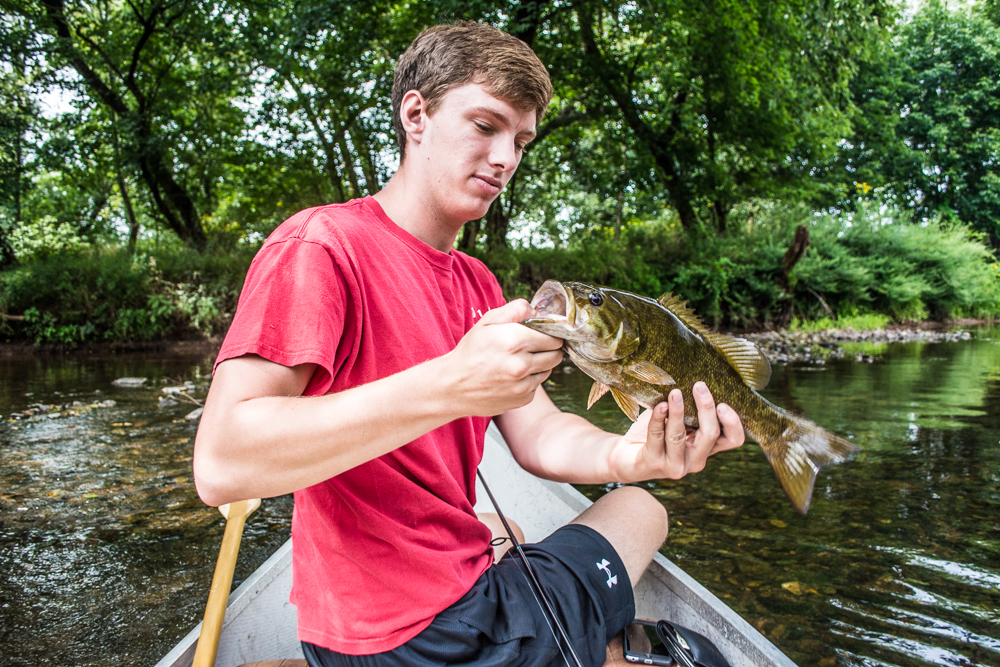
Oliver and I tried the Passaic River yesterday, finding a high flow not very off color. We chucked plugs as we made our way downstream away from the bridge, where the river gets fished less, but came upon flowing water blocking the trail. Neither of us wanted to go in up to our waists and find out how soft the mud underfoot. 

So much for the pike.

It was nice working my plug close to cover. Gave me the feeling, anyhow.

We hit a couple of ponds afterwards. One of them allowed me to fish a Senko under and along overhangs and some pads. 

My line spooked a nice bass and a couple of small ones.

Wednesday, May 26, 2021

May on Lake Hopatcong


So many years on Lake Hopatcong. Have been coming to Dow's regularly for almost 15 years. When you're young and feel things are getting old, you turn to something else; when you get to my age, there's nowhere to turn! You savor what's left of life and if you've lived well, it's enough. But knock on wood. I'm only 60. It could be interesting to see what I have to say another 15 years from now.

Oliver and I got on the lake at dawn. Heavy cloud cover had just moved in. It would seem promising, but although I never voiced this feeling, it just didn't feel right. Many times I said, as Oliver concurred, that the conditions were right for feeding activity: The clouds had just come. The water was 67 degrees. We were fishing just after daybreak. But he lake was dead.

We trolled my favorite lanes, not a hit. We put Senkos on spots in my favorite little cove, not a take. We trolled my favorite shallow-water cover for pickerel, bass, and crappie, not a hit. But finally, not long before the sun came out, I caught a 13-inch smallmouth on a Senko. Shortly thereafter, I boated another about the same size. And shortly after the sun did come out, we enjoyed our best trolling action: a yellow perch, a largemouth maybe better than 14 inches, and a 17-inch hybrid for me.

Oliver had also caught a hybrid, maybe 15 inches, on a retrieved paddletail. We caught some rock bass on the Senkos, too.

It was a successful day. There have been days when much bigger fish got caught, and days when many more got caught, and in any event, there's a need to make the connection. Once I caught that first smallmouth, I began talking more fluently. It was suddenly a different day. 

And today was a day for the shallows. Oliver suggested jigging deep a few times, and I won't deny it could have worked, judging the amount of fish we marked down there. Another thing we could have done would have been to have lowered live herring to them, but we bought no herring; even though Oliver had asked about that before we departed, I didn't want to mess with them. It's May. The water is warm (rose to 70). And although many times I thought I should be letting Senkos drop into 15-foot depths, and even tried that a few times, I'm waiting a few weeks or so before I start letting unweighted worms drift down below. 

Ironically, the pickerel came from the deepest water, 16 feet. But it seemed closer to dock boards it was underneath than to the bottom.

Oliver and his hybrid.


Oliver remarked that this slide seems custom made.
Big Hybrids


Wednesday, May 12, 2021

Tried for Hybrids, Got Brown and Crappie


We came for hybrids, and the nice fish Brian lost just as it would begin to run might have been one. I had 41 degrees coming in, Brian said it was 40 at his house, and it was 39 at Jimmy's house when he left for Dow's. Some clouds did roll in later, as you can see in the photo, but skies were bluebird to begin with, the wind strong, the water getting cooler. It dropped from 55 to 54. 

I've never caught a hybrid on the troll in water cooler than 57. One would expect the lake to be at least that warm by mid-May, but according to Joe, also from the shop, it was 39 here in the morning yesterday, too.

We fished for close to four-and-a-half hours. Afterwards, I parked elsewhere and plugged the shoreline for 10 minutes or so. Brian had to work, and I could have gone back out in the boat, but with whitecaps bearing down, I was beat. 

I could have gone afar to certain little coves I know about from last year, but under today's condition, I doubted they would produce.

The 15 1/2-inch brown trout hit a #7 Rapala Floater. Brian caught an 11 1/2-inch crappie on a pretty big plug at the last minute. Earlier, I had had another trout on for moment that hit over 25 feet of water. In the shallows something nipped the plug very subtly and then was on in the next moment, but only for a moment. It felt very small but didn't I detect the wriggle of a trout? 


Monday, May 3, 2021

Laurie's Report

Laurie Murphy:

Hybrid Striped Bass are starting to hit, with some fish still shallow and others out in deeper water. A 9 lb 13 oz fish , along with some smaller stripers, were caught by Jake Bozik, fishing with herring in deeper water off the Main Lake. Jim Welsh landed his 10 lb 1 oz Hybrid in shallower water, also caught on a herring. Pete Pelligrino is catching carp up to 18 pounds on dough balls fishing in the Woodport section of the lake The walleye bite was outstanding this week and are being caught consistently during the day and night. Daytime efforts should focus on deeper water fishing off the bottom. The nightbite will be shallower and stickbaits are the way to go. The larger walleye caught by Lake Hopatcong Guide Service this week were all mostly out of deep water. Some giant yellow perch were also landed while fishing in the deeper water. Crappie fishing continues, using fatheads and small rubber jigs. Jim Macaluso’s crappie hit the scale at exactly 2 pounds.


Sunday, May 2, 2021

Pickerel at Swartswood Lake


Hard to believe it's been over 10 years since I last fished Swartswood Lake.

I selected an available shoreline that looked promising. Tree branches gave some shade. I found water shallow in close to them, but variegated by large rocks. I saw the water attained maybe four or five feet of depth within the length of a good cast. A definite breakline between visible and invisible bottom. I was really thinking smallmouths, but noticed my worm rubbing against some newly emerging vegetation, though it was sparse.

"I catch them from shore at Round Valley, Merrill Creek, Spruce Run...I ought to be able to do it here,"  I was thinking to myself. And besides, last I was here, I did just that.

A basstoat positioned not far from me. The fishing seemed dead for that guy, best I could judge. But that was no reason. 

A few minutes later, I came up with a pickerel of about 21 inches that hit my Chompers worm just a few feet beyond that breakline in the dark water. Really good fight. I fished maybe 20 minutes in total. My wife sat at a picnic table, reading, while after hiking we waited on our reservation at the Boathouse Restaurant. 


Pickerel

Wednesday, April 28, 2021

Senko Smallmouth Bass


Senko Smallies

By Bruce Edward Litton


          Senko-style worms long ago eclipsed the popularity of traditional and twister-tail plastic worms for shallows and middle depths, especially when rigged Wacky, hook in the middle. Typically, the hook is attached by an O-ring, which prevents the worm from breaking free. A tool specifically designed for placing them on these worms is easily available. Most anglers intend Senko-style worms for largemouths, but in my own experience over the last decade, I’ve settled on catching most of my largemouths on traditional-style worms, while most of my smallmouths come on Senko-style worms. They sink faster, provoking the quicker responses of smallies. By comparison, largemouths are slow fish. An aggressive smallmouth will charge a worm plummeting towards bottom, which a largemouth might refuse.

          Lake, reservoir, pond, stream, river—during summer you may enjoy catching smallmouths from all five types of water. None excludes the Senko. While so much gets written about smallies 20 to 25 feet deep on lake drop-offs, plenty get caught in close to shore anywhere from three to 15 feet deep, so long as rocks provide habitat. Summer smallies ambush prey eagerly compared to largemouths. From comfortable lairs of concave formations, and from between and underneath rocks. They explode outward like artillery fire to snatch meals. Smallies can seem as active during summer as largemouths during fall, but much of the time—not always—I will let them pounce on a Senko, rather than provoke any to chase down a crankbait or whomp a spinnerbait. Bronzebacks strike a wide range of lures during summer doldrums, and I’m interested in increasing my knowledge of uses, but often I feel most comfortable with the simplest approach.

          There’s irony about that claim. Fishing a Senko, no weight added, just a size 2 plain shank hook under the O-ring, involves wider awareness than using other lures limited to various retrieve actions. I wouldn’t say turn-handle retrieves are mechanical, but they do narrow focus relative to the line reeled back to the spool. During patient intervals while letting a Senko sink, repeatedly pausing after you take up line by moving the rod—more so than turning the reel handle—the mind can open up to what might happen, and this added awareness can put you more in touch with the fishing to gain practical results.

          Even topwater plugs fished slowly might not have the subtle appeal of letting a Senko sink as deep as 15 feet or more among rocks. All the while you wonder if a bass will transmit a tick before that plastic reaches bottom. If nothing happens, you can visualize how much the Senko flutters when you barely twitch it. Maybe if you then give it a jerk to make the ends pull back quickly like spreading crayfish claws--that will do the trick. Or instead, by just lifting it off bottom, easily, this might seem as if forage is trying to sneak by. The possibilities are as open as the given situation and imagination allows, and imagination is more important for seeing what goes on under the surface than the visual feedback electronics provide. Looking at a screen is a lot easier than developing a habit of immediately visualizing how your worm might behave, relative to a bass’s possible inclination to take. Fooling around with a worm in plain view to observe how it reacts to your rod tip can help cement this ability to your neurons.  

          Just as varied a cadence can be created retrieving a Senko as working a topwater plug. A bass won’t crash in view, but it’s thrilling when you anticipate a take you can’t physically see. I don’t buy the new presumption that claims maybe, after millennia of human denial about the issue, fish do think, but I don’t underestimated their acute perceptual sensitivity, which determines what fish will do. Every individual bass is different. Radio telemetry studies prove this point, so the better you get at creating possibilities teasing hits, the more and bigger you catch.

          A five-inch Senko is heavy enough for some bait-casting outfits, but I’ve always preferred spinning. Reel position is easy on the wrist manipulating the rod, but a bait caster may find his outfit fitting to his own style. A five-and-a-half-foot rod allows better accuracy than longer, although longer rods cast farther. Shorter also means the wrist is closer to the tip, so you have better control while working the worm. It’s not sticks and brush fishing, or not for the most part, nor heavy weeds, so six-pound test monofilament suffices.

          Six-pound test works in a stream as it does in any of New Jersey’s reservoirs. The average stream bass is nine or 10 inches long, but they aggressively take fat five-inch Senkos. One of the advantages of fishing Senkos in streams is the long cast. Smallmouths often inhabit shallow stretches a couple of feet deep during summer afternoons, and if you get too close, they spook in that clear water. Catapult a Senko, and a bass may rush from five or more yards distant. Catching bass this way can seem too easy, but when it happens, enjoy the excitement, because New Jersey streams see a lot of pressure. Bass usually don’t react as eagerly to get on your hook as—once and awhile—they might. Any of our freestone streams offer opportunity, but especially to catch big smallmouths, you have to spend time and endeavor seriously.

          Reservoirs, on the other hand, offer tough summer smallmouth fishing, pressure intense, but I’ve heard stories of fast action on the Newark Watershed Reservoirs, which have boat restrictions and involve a yearly fee. Fred Matero and I have done fairly well at sunset on Round Valley Reservoir, but nearly all of the bass are stream-size. Fred’s done better on Merrill Creek Reservoir.

         Lake Hopatcong, however, shines in the memories of me and my son, where on a number of summer occasions we’ve caught and released multiple smallmouths of nearly three pounds and larger. Dow’s Boat Rentals offers anyone with a New Jersey Boating Safety Certificate the opportunity to get on the lake.

           I’ve caught smallmouths in 12-acre Saffin Pond, but the Delaware River always feels as if its resource is inexhaustible. That’s not true, but anyone with any imagination can feel the mystery of its expanse, acres upon acres of bass habitat expressed in myriad variations of the river’s course. Productive float tripping is a foregone conclusion, but wading works out if you read water closely and find spots that hold a few.

          Wherever you fish these worms, it’s the type that matters—the fat heavy-bodied worms you can rig Wacky. A number of brands exist, and I choose Strike King almost exclusively. I’ve tried scented Gulp! but haven’t noticed any increase in catches. Unless you meticulously organize equipment, you might repeatedly forget to place these worms back in the sealed packaging. They shrink. I’ve lost a couple of worm hooks, not to mention worms. It’s all but impossible to separate the hook, once that bait hardens.

          Summer is the stable season. The bite is steady and the days long. There’s lots of opportunity in New Jersey to get out and slow down at catching smallmouths.  


On Down    


Tuesday, April 27, 2021

Jaw Spreader

Used a jaw spreader on a pickerel while fishing with Brian recently. It made removal of a deep-set spinner treble easy, but it looked almost as if the pressure from the coil would split the fish's head in two. 

That was the first time I ever used one. I had my Nikon D7100 hanging from my neck, and when I separated the spreader's prongs, they shot apart from the coil tension, which is very strong. One of the prongs took out a chunk of plastic from my camera, down at a corner by the battery housing. 

I showed the damage to Brian, and said, "Good thing I left my new camera at home." Yeah, that new camera is a $3300.00 value and I certainly wouldn't want a chunk of it ripped out by an eight-buck set of jaw spreaders. 

Applied electrical tape to my old camera. That one a $1500.00 value, no less. 

Works. Not much complaint about it. I'm really more curious if any of you have used spreaders and feel the same I do about possible damage to fish we want to return in good shape.