Showing posts with label walleye. Show all posts

Friday, October 4, 2024

Sometimes You Find Few Fish Feeding


Big day of fishing with Kevin Murphy. We met at Dow's Boat Rentals shortly after 11 a.m., when I walked Loki the black Labrador, then backed my car down to unload. A couple of guys hung out by the shop, while Joe Welsh entertained them with more of his antics--throwing live herring into the water where dozens of hybrid bass snatch them up instantaneously, splashing the surface. 

I figured with temperatures over 70, today's catches would match October 3rd last year, when Kevin's biggest hybrid weighed nearly eight pounds. As things turned out, Kevin felt really good about the fishing. He caught his first walleye and a lot of panfish and perch. It was a long and great day on the water, but I did feel disappointed. I wasn't the only one. 

"What have you caught?" I asked.

"Fishing sucks," the guy at the controls of a bassboat said. "We've caught two bass. We've been fishing for five hours." 

It happens sometimes that you find only few fish feeding. Whatever you do, results are sparse, so it's up to you to keep trying and make it good day. Perhaps you expected much better as I did yesterday, or perhaps you expected nothing, as I did last week at Sunrise Lake, and instead a little action is a very pleasant surprise. 

We marked fish like crazy along the deep end of the Ledge drop-off, most of them about 30 feet down over 45 feet of water, but even though I had live herring weighted and set under the boat, only one of those fish hit. The drag set loose, I heard the sound of drag giving and looked sharp at the rod tip. Seeing no bend or motion, I figured Kevin must have pulled on his line. Sometimes it really makes sense to voice concern! It was like 20 minutes later when I reeled up the bare hook. Then I asked if his drag had sounded off! No. 

I also saw the rod tip on one of the other herring rods start dancing, but by the time I tightened up on the line, nothing was on. Again, I reeled in a bare hook. On several other occasions I lost herring, too, though we had no evidence as to what happened on those occasions. I caught a couple of tiny hybrids out there. Little fish somewhere from seven to nine inches long. Many of the fish showing up on the graph were small but many were medium size along with some large ones. 

I had fished a Yum Dinger long and fished it hard. Around rocks. Among sparse weeds. Nothing ever hit. I fished the same spots that produced largemouths and a smallmouth last year. And I fished more spots than that. I remember how much I enjoyed catching bass on a couple of Yum Dingers. Enjoyed them a great deal. 

I also cast and cast a Binsky from another rod, and I did get knocked just once. I fished anywhere from about 10 to 35 feet down. 

I did catch a smallmouth on live herring from about 15 feet of water. A little one of about 11 inches.

Kevin caught his walleye within the first 20 minutes of fishing. He cast half a nightcrawler to the depths where I was casting live herring. I said, "You'll do better by casting to the rocks, but you might catch a walleye there." About 20 seconds later, he was hooked up to one.    


Saturday, September 28, 2024

Bestow Value on the Adverse Brave the Weather


I should have photographed Oliver Round fighting his 18-inch smallmouth bass. He's had a breakneck busy schedule at work without much opportunity to get out and fish, so it's especially unfortunate he lost that bass, though his having hooked and fought it, complete with aerial display, was a lot better than not. 

Caught the smaller walleye and a hybrid on an ultralight-light power, 5 1/2-foot spinning rod I built from a St. Croix blank that put me back $70.00--just for the blank--years ago. Six-pound mono. What a fight! The big one fought very hard on my son's Speed Stick, but the walleye that I'm pretty sure didn't weigh four pounds--I put it back--put up a great fight on that light rod. "Maybe a catfish," I said at one point, as if 10 pounds was dragging. 

The hybrid was 17 1/2 inches.

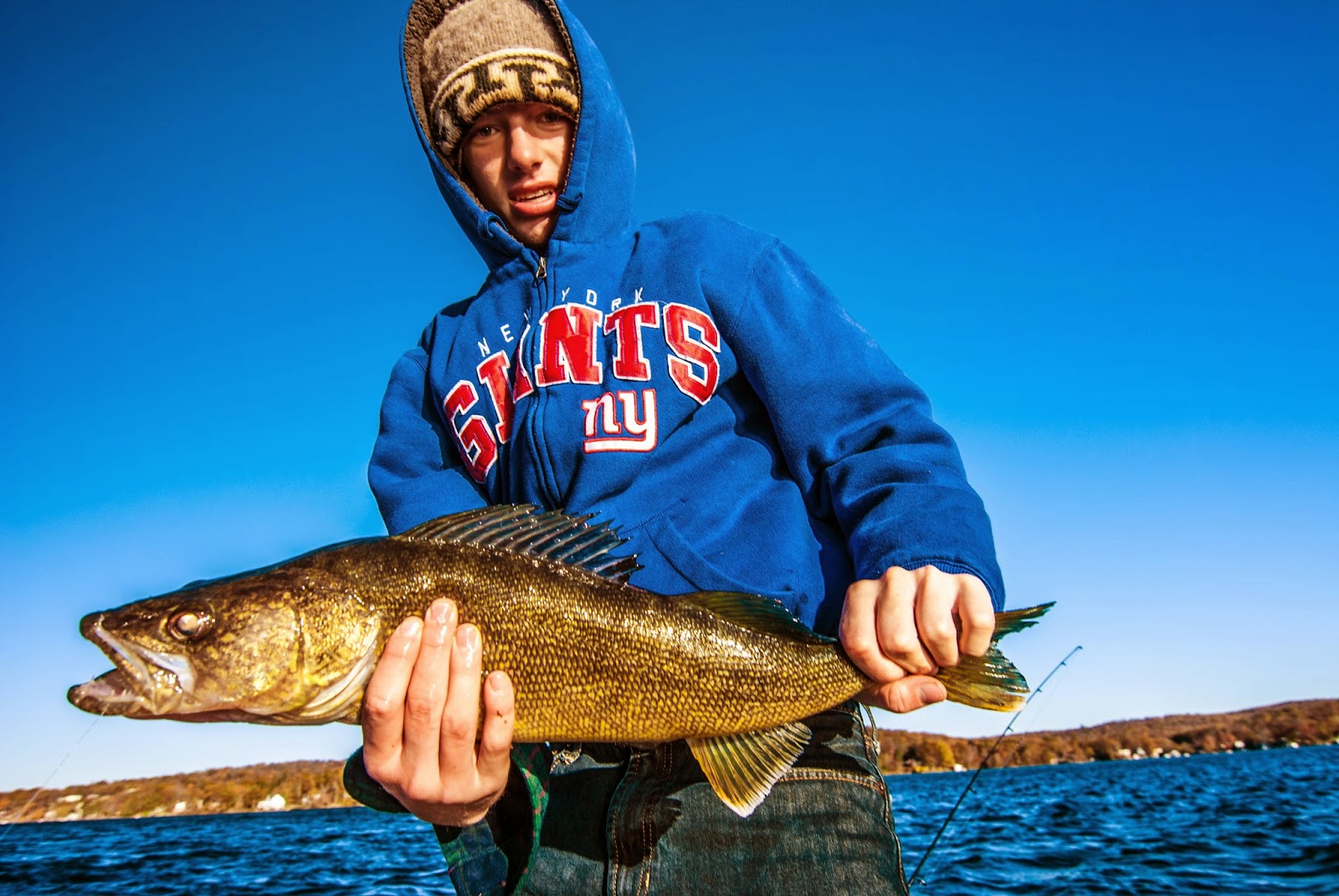
That big one in the photograph above? It's the third five-pound, 15-ounce walleye I've had weighed in at Dow's. Unless any of the three weighed six pounds before I had them weighed in, I've never hit the six-pound mark! I was so sure I did today!

Raw weather felt good because fishy. There's no doubt the fishing was good today, and I'm sure because of the weather. I know people think wretched weather is that. No matter how you romanticize it--and I do romanticize it--there's an objective element in its being adverse. I don't argue against that. I just know--otherwise--that you can bestow value on things adverse. And probably live to ripe old age, too...if not live longer than you would had you not been brave. 

Even cigarettes. Jeez, I confess I used to smoke. They are medicinal. I never hear anyone say that or write that, but they not only put off anxiety--if just enough to get an edge over it that lasts a bit--they put you in a meditative space. They will kill you, if nothing else will, though it remains likely something else will. Of course, they complicate one's health, too, so whatever kills you might not have if you didn't smoke. But a lot of medicines are adverse for health otherwise, which is not to say, either, that smoking is wise to take up. I really do not recommend it. I wish cigarettes would go away, because I hate to see people hooked on them. It's better to find out what causes you anxiety and deal with it. It's even possible that the attempt to escape anxiety by smoking only elevates that anxiety. 

All I know is that since I quit three years ago, I've desired smoking very little. It makes me feel I should have quit at age 25, but of course, I really should never have smoked. 

Nevertheless, to attest to smoking's medicinal quality, I began smoking in the University of Pennsylvania Hospital, aged 19, while suffering "the most severe manic-depression I have ever seen in all my 20 years of practice," according to the Director of Psychiatry of that Ivy League university hospital, Richard Brecht, who served as my doctor. 

My father knew whatever hit me was immense. He was not wasting a cent on anything less than great care. When Dr. Brecht told me about the severity of my mania, after I had come back around, he held my gaze unflinchingly, a big smile growing on his face. He was truly amazed, and I loved the man for loving his subject matter and admiring such survival of total annihilation. He started to talk about Abraham Lincoln, Teddy Roosevelt, Ernest Hemingway--manic-depressives he admired, but this guy! Right in front of him in his office! 

But I took a cigarette from another patient on the hall and smoked it...Dr. Brecht never complained at all. Ah, smoking did help. But talk about things adverse! Many people think manic-depression is horrible, but if you yourself are manic-depressive, I doubt you really believe that. You suffer a lot of pain, but like they say, to suffer for the fish is a noble thing. Inherent to life itself is suffering, which might involve why the fish symbolizes spirituality, and to suffer all the more might be to move all the closer to life. To have more of it in greater abundance. Why else is suffering so closely associated with Christ? The artistic temperament overlapping with the qualities of illness facilitates the ability to romanticize manic-depression, and no matter what others tell you, they can't take that from you. Sturm und drang! Heavy weather, man!  

I had four days of fighting urges after I quit smoking. I just said no to them. Never bothered with any of the techniques. No drug. No nicotine patch. Just NO.

A little more on the great adversity, the best book on manic-depression I've read is Kay Redfield Jamison's Touched With Fire: Manic-Depressive Illness and the Artistic Temperament , but according to another book, Manic-Depression and Creativity , even Isaac Newton, the physicist, was manic-depressive, not to mention that the illness is that of the saints. (Often nicknamed the Divine Madness.) And rock 'n roll. Certainly.

The artists Jamison's book refers to are mostly writers and musicians, like poets Lord Byron and Samuel Taylor Coleridge, composers Robert Schumann and Sergei Rachmaninoff.


Who wants to leave the world without letting his readers know just a little about him? I've got 30 years left, perhaps, but I don't want to pass on the opportunity when it arises. 

But more about the fish. They got caught on small herring. A point worth making. 

I always used to believe the big herring are better, but they told us at Dow's the small herring have been doing it. So we got a dozen-and-a-half small, a dozen large. The small ones proved to be better!

Besides fishing bait, I cast & cast a Binsky. Oliver cast a Sonic. No hits. Oliver did miss a hit along rocks on what I think was a Senko-type worm. My Yum Dinger only got pegged once by what I believe was a yellow perch. 

I did mark fish as deep as 39 feet, which really surprised me, but most were 20 to 30 feet deep. Water temperature 70 degrees at the surface, go figure with fish swimming as deep as 39 feet! All of the fish I caught came on no more than size 10 trebles as weight. The biggest came from the shallowest water, besides Oliver's smallmouth, which came from the same 15 feet or so. Don't know how deep the herring swam down otherwise.     


Released the smaller walleye


Teeth! They don't cut line.


Tuesday, October 25, 2022

First Walleye

I didn't photograph the pickerel I caught, which came on one of the live herring weighted on bottom. A first after 15 years of fishing Lake Hopatcong during October., but not the only first today and much less significant. Other than that, I caught a small hybrid on herring and Brenden Kuprel caught a bullhead. All of our other fish came on lures, but another hybrid did take a herring and take off with it at high speed, peeling line off the spool, bail opened. By the time I tried to hand the rod up to Brenden at the bow, the line was spooled! I had an extra reel to put on the rod and rig for more of the herring. 

Brenden caught his first walleye today. That leaves me with lasting satisfaction, because we work together and he's talked about catching a walleye for years. Finally, we got out on Hopatcong in the fall when walleyes are vulnerable. He caught it on a Binsky after sunset. His big hybrid weighed five pounds, one ounce, according to a scale I once tested on a five pound bag of sugar. The weight was spot on. The light plastic grip I attached to the scale might have weighed an ounce or two. We didn't want to harm the hybrid's mouth. Caught it on a jig tipped with a dead herring fished about 30 feet down.

Most but not all of our fish hit about that deep. My second hybrid hit a Binsky in about 13 feet of water close to shore. Brenden even caught a yellow perch on a sizeable jig intended for bass among shoreline rocks. Water temp was 56 to 58, though, so the lake is all but thoroughly turned over, giving walleyes and hybrids reign of the depths. 

It was a comfortable day. As predicted, fog had moved in, but by the time I got up to Dow's later than expected, it had rolled back out. Temps were near 70 and it rained a little only at the end. We even enjoyed a little sunlight on the colors of the leaves. 

Walleye hit a Binsky.

Hybrid hit a Binsky.


Walleye hit a Binsky
 

Tuesday, October 26, 2021

Walleye, Hybrid Striped Bass, Panfish


Kevin Murphy's first time on the lake, he drove to Dow's on Sunday, just so he could be sure of the route in the dark very early Tuesday morning. They told him Bruce wasn't going to take anyone out on Tuesday, there would be a big storm. Meanwhile, I was coming home from an afternoon in New Hope with my wife, and I didn't learn of  the storm until after we got home. So we met up there yesterday at 11:00 a.m. to stay until a little after sunset. 

I figured live herring would be the best approach for a beginner, and we also bought a dozen nightcrawlers, which kept Kevin occupied a long while. He caught nice-sized bluegills and a pumpkinseed. Tending herring lines, I felt a fish on one of them and insisted that Kevin take it; I had already told him we take turns on the bait lines, but he said, "Nah! I just feel good being out here. The fish is yours!" He wouldn't take the rod and I reeled in a walleye about 18 inches long. Unhooked, photographed, and released it. There I was, catching the fish when we bought the herring expressly in the interest of Kevin's getting acquainted. 

Later on, he caught a yellow perch on one of the herring rods, and then, after we moved the boat for the third time, something jerked one of the four bait rods forward violently--I immediately thought hybrid!--and I just grabbed the rod and set the hook. Since the fish was on and the rod was in my hand, I let the situation be as it already was defined and fought the small hybrid of 16 inches. I keep bails open, but even so, hybrids rush away with the bait so fast that anything hampering the line from flowing smoothly off the spool means the rod will jump.

I cast a Binsky bladebait repeatedly and eventually hooked a walleye of at least four or five pounds, lost at the net. The fish never took drag, but walleye never do no matter how big, Like other big ones I've caught, however, it stubbornly refused to come to the surface, and being a big fish, was hard to raise. A moment or two before Kevin would have slipped the net under the fish, the treble hook just gave out under the force I exerted.

We moved to a fourth spot where I put out the last herring and Kevin fished a dead one. I cast the Binsky, missing a hit and finally hooking something that came in easily at first. Then it began fighting and took off on the several powerful runs only a hybrid striper could exert. The fish measured 20 1/2 inches, a fair-sized bass. I worked the same water, maybe 25 feet deep, not letting the Binksy hit bottom before I began a yo-yo retrieve. I felt another hit, missed it, then hooked and caught a small white perch. 

The other hybrid and walleye came from water probably no deeper than 20 or 22 feet  The big one I lost might have been 15 feet down. Water temp was 62. The trees are still mostly green, although some color has definitely worked through a fair percentage of the leaves. It' s almost November, I would hope there's some color, but the lake is turned over only so deep. I never noticed a fish mark on the graph deeper than 21 feet yesterday..

Last year, when I fished the lake in October with Jorge, we finished the day by jigging Binskys. (Jorge did try other lures.) I think I never got hit, but I was into the exercise and considered coming out here the next season--this one--only to jig. That's how I feel again about nest year, and maybe we'll really limit ourselves to Binskys, besides nightcrawlers for some panfish. Kevin was talking about his learning how to jig a Binsky. One thing for sure. By anchoring in place to set bait, I've jigged the water thoroughly. It would be possible to jig spots all too superficially before moving on to others.


Kevin's pumpkinseed. I wanted to get a close-up.

Kevin also caught a nice white perch on one of the set lines.


Wednesday, October 20, 2021

Put Four Walleye, Two Crappie, in the Boat


Leaving Dow's Boat Rentals, we headed into whitecaps, but beyond the lake's midpoint, wave action moderated. I found fish on a drop-off where I never fail to find fish, although I saw none on the graph deeper than 16 feet. Water temp was 63. We began to prepare as the boat drifted over a 13-foot flat. Having marked some good fish there, we put herring out without weight, but before we would have stayed there long, I got my best idea yet.

We motored maybe half a mile to a third spot, anchoring in 20 feet of water, intending to fish as deep as 24. I put a herring out without weight, and two weighted by 3/4-ounce slip sinkers, 20-24 feet deep. I had felt moved to come here by one of those deep, abdominal affirmations that seem to know of success before it comes. I'm an older man, so when it happens, I don't get especially headstrong, but in a way, it feels better than it can at any other age. As you get older and job stress still plagues you, to get moments like that assure you of life remaining real.

Soon, I caught a small walleye on the unweighted herring, realizing it couldn't have hit in water deeper than 14 feet. Not that the situation was terribly surprising. The other day, my wife commented on how we used to imagine moving to Maryland or North Carolina. "Now there's no reason to,," she said. "Their climate is ours." 

I got another small walleye from 20 or 22 feet, before Oliver caught one from directly under the boat at 20 or 21 feet, his fish about 20 inches. He had weighted a herring by a split shot. He caught a crappie and another walleye, 18 inches. I caught a big crappie on a Binsky, and then I missed hits on two consecutive casts and very soon thereafter hooked the biggest walleye of the afternoon on that Binsky, the fish lost at the net. 

I hooked it in about 14 feet of water. I'm used to catching them as deep as 33 or 35 feet this time of year.

We fished not quite four hours, excluding dock prep and boat travel. It was a great time. It made me feel beyond any doubt that I need more time like this yet.


Sunlight on the trees made them appear more golden than they are, but they are coloring just a little bit.

With no sun on the trees, you can see how green.


Sunday, October 20, 2019

State's Algae Agenda a Bad Blow

Rick told me his hat is good for keeping rain off him. My camera proves to be weather-resistant, too.


My brother Rick and I looked forward to this trip for a long while. My brother-in-law Jim planned on coming, but changed plans.

Early on, our set lines yielded only a bullhead for Rick, as I let him have the first take. Line moved off slowly, and so I thought it could be a walleye. As always, we marked plenty of fish on the sonar graph, but like most times--every fall since 2007--these fish we see electronically don't hit. We put live bait and jigs right in among them and they don't hit. Rick watched his jig on the sonar screen, right next to fish. I've been party to few exceptions, but one of them, in 2012, resulted in a catch of about 75 hybrid striped bass for Marty Roberts, all of them released. I don't know why walleye are predictable and the stripers are not. We invariably catch at least one walleye, but never more than four. Also, we catch the walleye relatively blindly. It's not fish on the screen we target. We either set lines along drop-offs by casting away from an anchored boat, or catch them by methodically casting jigs or otherwise drifting the boat with the breeze while jigging along the drop regardless of fish showing up on the graph, the sonar used to keep in line with the drop-off, some of these deep-water spots well out away from shore. (Most of the stripers I've caught have come this way, too.)

The sun having come up just barely over the horizon, we moved to a reliable spot behind an island. Often, a walleye is in the boat before sunrise, but today I hoped I would see line slowly curl off the spool where trees blocked sunlight. It happened, but the fish amounted to three white perch about eight or nine inches long, and a yellow perch. Unfortunately, Dow's Boat Rentals has only small two- or two-and-a-half-inch herring right now. That's all Joe's getting in his nets. I like big four- or five-inch herring, and I think the larger gamefish do, too. We decided to put all the set rods out of the way in the front of the boat and jig instead, so I pulled anchor and began a process of using the electric motor to position, keeping pretty much to the drop-off, venturing back out into the main lake. We missed a few hits. They could have been perch or crappie, but walleye hit subtly, too.

We felt more intensity fishing this way, the method relying on mental concentration, but I grew tired of it and decided to set lines again in the main lake. By then, the sky was completely overcast. I will be honest in spite of myself, because I can seem as silly as a psychic with my ability to home in on fish by hunches, but I felt it was high time to hook up, and setting lines was the ticket. I guess it took 15 minutes. I saw line peeling from the spool quickly, and excitedly said, "Hybrid!" I grabbed the rod and set the hook. That little walleye took line faster than any other we've caught. Later, while driving home, I felt I should have handed the rod to Rick, but I hadn't reflected. In a peculiar sense, it was as if the fish was mine for finding it, but more to the point, it was a little walleye, and I still have hopes that Rick will catch larger.

It's so hard to find time.

Soon thereafter, the anchor came loose, the breeze carrying the boat, set lines dragging, and though we repositioned along the drop, at the top of it, I never felt right about the spot. Why's that? I didn't know. We cast jigs and a Binsky while waiting endlessly on the set lines, rain falling steadily, our rain jackets and rain pants on, and I caught a pickerel on a Binsky. A pickerel from deep water, odd for this species always associated with weeds. Mostly, my bad feeling for this spot involved an uncertainty of just how deep where, but that's usually the case, if maybe a little better informed. Two p.m. neared, when we would leave, and I decided we would give a spot further along the drop 15 minutes, but nothing happened.

I introduced Rick to Laurie on our way out. I told her I hope they don't shut down. Earlier, I had introduced Rick to Joe, who told us algae blooms like this past summer's happen every summer when rain washes too much nitrate into the lakes. He's known them since he was a boy, and I find as particularly pointed evidence that they're no big deal Joe's having worked all summer on the lake through the advisory, pulling nets bare-handed, getting his arms soaked every night, never developing a rash. The state has authority. Everyone certainly knows that. But that's not to say the state is always right. Authority is often, if not usually, wrong. We the people have a voice in the state, and in this case of Lake Hopatcong's demise, I think that voice by and large went very wrong. To this day, Dow's business is down--because people are afraid of the lake. Pathetic.

Joe told us Dow's may shut down next year. That's up to us. (Will we be patrons?) I reminded him that during the last ice season, business was great. He enthusiastically agreed that was true when I was there in February, then said, "But we can't count on it anymore. If we could, that alone would carry the business. Four or five weeks won't do." It's a double whammy. The overblown reaction to algae, and the very real threat of climate change already here and getting much worse quickly. At least for the time being, ice fishing still exists on Lake Hopatcong, but not as it used to.

If Dow's goes, that's it for herring bait in New Jersey. Joe is--far and away--the lead supplier. Who else in today's age will step in and fill the market demand? I've said it before, without word, we anglers have no political voice, and our endeavors on the water would swiftly be outlawed, the voice of animal "rights" theorists at universities like Princeton, for one example, motivating activists to move in directly and take over. Ira W. DeCamp Professor of Bioethics at Princeton University, Peter Singer, is an intellectual founder of the animal rights movement. The movement doesn't win because we have verbal defenses. But deeds are important, too, and to see herring disappear from bait shops would be a sad farewell. A vital nerve lost.

The dock was dry when we left it for the open lake.


https://littonsfishinglines.blogspot.com/2012/10/lake-hopatcong-hybrid-stripers-strike.html

Friday, October 5, 2018

Deep Drop-Offs: October Top to Bottom


Deep Drop-Offs: October Top to Bottom


Lakes and reservoirs with enhanced fisheries offer anglers the possibility of catching multiple species from a single anchored position, thanks to New Jersey Division of Fish & Wildlife and organizations like the Knee Deep Club and Round Valley Trout Association. In October, many steep drop-off’s hold largemouth and smallmouth bass, yellow perch and pickerel among rocks and weeds as shallow as a foot or two, perhaps crappie in mid-column depths, and walleyes, hybrid striped bass, and in some reservoirs, trout, 20 to 45 feet down. Classic grand slam catches of various species take laurels among many angling circles, but it’s possible to do three or four better, if you include channel catfish as factor 8. Sunfish don’t amount to nothing, either, and a variety of colorful species inhabit our waters. If you succeed in lifting a painter’s panoply of all sorts of gamefish over the gunnel, an outing can feel like a dream, fulfilling the sort of action making fishing feel easy for a while. Hitting it just right, especially after mid-October, isn’t all that difficult to do, once you’re clued into the right spots.


Anchor Mid-Point


As a general rule, setting anchor in 15 to 20 feet of water allows you to fish herring weighted by ¾-ounce slip sinkers on bottom with two rods per man, while fishing shallows with the likes of Senkos, spinners, jigs, or nightcrawlers. Perch and sunfish provide plenty of action if you use what my son used to call his “secret weapon.” Under Matt’s influence, I deeply succumbed to using nightcrawlers, contrary to my typical preference for artificials. They teach me a lot about nature’s rewards. When offering a nightcrawler, if a bass awaits nearby, sunnies or perch scatter and let the aggressive predator have the bait. I’ve caught October largemouths on several or more consecutive casts without a tap from panfish. You can also jig 10 to 15-foot depths and score crappies in some situations.


When Round Valley Reservoir fills again, rip-rap will produce. Weight rigs for trout 15 to 30 feet down, and catch smallmouths and largemouths situating among shallow rocks. Merrill Creek Reservoir may offer similar opportunities. Spruce Run Reservoir (northern pike possible) has rocky drops with hybrids possibly on the deep end. Greenwood Lake and Monksville Reservoir have sharp drops, walleyes and bass. Is a musky an impossible factor 9? Of course not.


Finding the spot is everything. If you don’t own a boat, Dow’s Boat Rentals at Lake Hopatcong will accommodate you. If you’re not familiar with the structure of the lake or reservoir you intend to fish, go to NJ Division Fish & Wildlife Lake Survey Maps online, buy the same in book form or purchase a Fishing Guide Map of the lake or reservoir in question. You’ll see deep drop-offs holding fish designated by close contour lines. A fish finder will possibly help you pin-point schools of hybrids or walleye pods, although especially walleyes may hug so close to bottom that they don’t mark on the graph. Chiefly, use the sounder to orient where to anchor and set bait deep.


Deep Drop-Offs and Oxygen


An all-around figure for walleyes and hybrids is about 35 feet deep, but experimentation yields results. By using multiple rods, you can set bait up and down a drop-off from 20 feet to the bottom edge. In my experience, the bottom edge is key, and I like to spread herring apart by 15 yards or so, casting so the sinker drops where I know the slope ends. Don’t worry about getting this exactly right. Experience will teach you, because walleyes and hybrids will take your generous offers, even if they have to swim a few yards from that edge we only suppose they like to follow closely.


By October’s third week, Lake Hopatcong usually isn’t entirely turned over with oxygen re-established in the deepest depths of greater than 40 feet or so. By noticing how deep fish mark on the graph, you get an idea of how far that oxygen has penetrated. Far from cove and shoreline protection, out on the main lake, Nolan’s Point and the Ledge, for examples, take greater wind action and may feature oxygen deeper than other spots. When you first set herring, let them be for 5 or 10 minutes, and then reel back at moderate speed so as not to force them off hooks. See if they’re alive. If so, you’re good to let them bait your quarry a long while. If the spot is new to you, try to determine if bottom is rocky by graph indication or by feeling rocks while retrieving the sinker on bottom. That’s hazardous and you may get snagged, but this will tell you the spot is fishy. Rock is better than mud. And any sort of snag usually means additional cover.


Worthy of mention, a hybrid striped bass revolution has occurred in recent years, many anglers switching from live herring to chicken livers. In my opinion, this is about as close to the definition of revolution fishing can come, since the difference between a super-lively (but delicate) herring, and a piece of dead bait from the innards of a bird is divergent, but the new method, involving chumming with liver cat food, is very productive. For our purposes of anchoring in one spot to access both shallows and depths, chicken livers are problematic, not best right on bottom. You would have to use slip floats, and that is doable, though less so with heavy chop. Part of the beauty, however, of letting a herring do its thing on a 4 or 5-foot leader anchored deep by a slip sinker is simpler focus on fishing. Frequently looking at reel spools with bails open to spot any movement is easier than the demand on attention a bobber inevitably compels. Line either rapidly leaping from the spool (hybrid striper), or slowly unwinding towards the pick-up guide (walleye), may feel more thrilling than noticing the same associated with the drag of a slip float out there.


Largemouth and Smallmouth Bass, Pickerel


As mentioned earlier, October largemouth and smallmouth bass often inhabit very shallow depths of as little as 1 or 2 feet. Fifteen feet is about maximum, pickerel sometimes in the mix. Rocky shallows top side of the best drop-offs are great for both bass species this time of year, especially with some weeds associated. Water is cooling quickly and bass like a sharp incline into depths as they begin orientation for the cold water season.


Especially if you can find a large, undercut, flat-topped boulder—cast a jig, weightless Wacky rigged Senko, or a nightcrawler inflated by a worm blower and impaled on a size 6 plain shank hook, weighted by a split shot. Right on top, slowly pulled over the edge so it drops as close to the rock as possible. If any bass is waiting in shadow to ambush something highlighted outside, it will likely pounce. Some lakes have huge boulders with 10 feet of water or more directly in front of them. We’ve caught bass after bass in situations like this.


Walleye, Hybrid and Trout Rigs


Walleye and hybrid rigs are simple: 6-pound test monofilament, size 8 treble hook through a herring’s nostrils, 4- or 5-foot leader of same test tied to a small barrel swivel, ¾-ounce steel egg sinker allowed to slip on the mainline. Whether a rod is fast action, slow action, moderate, 5 feet or 7 feet, this matters little, though you will get a longer cast with a longer rod and better accuracy from shorter. We use medium power. Set the herring; let it swim wildly on the leader. Tangles happen less often than not, but if you want to spend the money, fluorocarbon mainline sinks and gets out of the way of that herring. Braid line does tangle much easier than monofilament or fluorocarbon. I don't recommend use of braid for this kind of fishing.


For trout, use single shank size 6 hooks, same rig otherwise, although leaders as long as 10 feet by use of longer rods may prove effective on suspending trout. Marshmallow and mealworms, Power Bait and shiners produce.


Don’t wait to set the hook, once you notice line moving. Line passing through an egg sinker can get caught around an obstruction or gut hook, if you don’t tighten up and set immediately. The herring wear each treble hook like a crown. Single shank hooks placed through nostrils turn awkwardly against the bait’s head. Usually, walleyes or hybrid stripers get hooked near the outside of the mouth, but have a pair of plyers or a hemostat handy for a walleye that gets hooked in the back of the mouth.


High Winds and Interesting Results


If you double anchor, you can beat wind swinging the boat side to side. We simply use a single 10-pound mushroom anchor. If windy, a long length of rope allows the anchor hold. Even with the boat moving left and right, the herring lines manage not to tangle, but for some, this might feel nerve wracking.


Some of our best catches have accompanied high winds. Motoring from one spot to another, we’ve noticed everyone else fishing out of the blow. Asking them about catches, unhappy reports came. Gamefish like a lot of commotion in the fall, rough surface overhead just right. Brave it, and you might do especially well.


Bass and pickerel get caught on crankbaits, jerkbaits, spinnerbaits and traditional plastic worms in addition to jigs, Senkos or nightcrawlers, possible choices too many to mention, but my son and I, friends besides, like keeping it simple. Whether you fish lures or nightcrawlers, catching bass and pickerel, perch, sunfish, and crappie while keeping an eye on lines out for deep denizens makes fishing more interesting, particularly when a good-size bass rivals big walleyes and hybrids down below. 


http://littonsfishinglines.blogspot.com/2012/05/lake-hopatcongs-enhanced-fishery-is.html   

Monday, January 1, 2018

Sunrise Point


Happy New Year. Beginning with a solid ice season, much more is to come. Here's a true tale published in the June 2017 issue of The Fisherman.

Sunrise Point
Every young boy lives in the sunrise of life. A gathering of conscious light growing taller like his body. During Matt’s eighth summer, Lake Hopatcong felt like a limitless mystery, potentially rewarding my son and I with fishing success that would impress us as deeply as the lake seemed to fill an entire world.

          In July, I motored off from Dow’s Boat Rentals before sun-up, our first time in a boat on the lake. We wanted to catch hybrid striped bass. While fishing a drop-off along Air Castle Isles, we caught a couple, but they were little fish not even nine inches long. A stiff breeze from the north blocked by that shoreline made fishing here pleasant compared to Pine Tree Point, where we tried first, though Matt wanted to fish Sunrise Point because the man who rented us the boat said we should. Here to the south and east of Matt’s longed-for destination we live-lined herring with no weight added just as the proprietor had recommended, but heavy surface chop only seemed carry the bait as would a river current. Air Castle Isles awaited right around the corner out of the wind.

          When we returned to Dow’s much later, the proprietor met us again. I offered a detailed report; he listened to every word. And then he said, “If you had gone where I said you should go, you might have caught big hybrid bass. A guy caught two six-pounders there this morning.”

          “We’ll go where you point next time,” I said.

          As I gathered belongings to hike to the car, I considered well this beginning of a long relationship between my son and me as customers, and the proprietor with his finger on the lake’s pulse. There would be a next time. Many.

          In August, we got word from him on where to go while I paid for the boat rental and herring bait at the desk. Sunrise Point. As if the sun rises eternally for any who hope, the spot seemed as ubiquitous as the fact of daybreak always happening somewhere on this planet.

          “That’s where we’re going,” I said. He said nothing, offering a steady look. I gazed back to confirm no breaking of my promise.

          A 9.9-horsepower outboard drives a 14-foot fiberglass boat with all the sufficiency needed on this lake. Our destination less than a mile-and-a-half distant, the journey seemed longer than it really took. Not an impatient passage, but a breaking away from routine. The world is too much with us. We took leave in hopes of catching a dream. Business can’t afford such a bet. The bottom line ties everything down for results, but nature upholds destiny for any who dare conspire with abundance.

          Who doesn’t know dreams may beguile in a deceptive way? Catching just that fish imagined is as rare an event as cornering market demand. Matt talked about hybrid bass as Sunrise Point beckoned in view. Not a dramatic-looking spot. A few boathouses jutting out from land protruding slightly. He spoke of walleye also. He had only seen the nine-inch hybrids we caught in July, except for big ones featured in photographs in Dow’s shop. Two big ones mounted on two of the walls. He had seen me and a friend catch walleye on the Delaware River.

         We anchored over 25 feet of water. This allowed us to put out two lines apiece baited with live herring and to cast broken nightcrawlers weighted by split shots using ultra-lights, tempting panfish from shallower water. Matt had caught plenty of sunfish, largemouth bass, smallmouth bass, trout, striped bass, bluefish, pompano, some pickerel from age two until now, but this morning was another day; his responses to taps on his line hadn’t jaded at all.

         I enjoyed bluegills, pumpkinseeds, also. A perch or two. But as I would check on the herring lines, I felt a larger order of possibility. After an hour or so, I heard a loosened drag cricket. One of Matt’s reels.

        “You’ve got one!”

        “Give me the rod!”

        I lifted. At that moment, the fish took line rapidly, entangling between the spool and pickup guide. The spool had continued to spin when the fish slowed. My fingers began working like lightning to right what I knew could be disaster.

         “Hold the rod ready to set,” I said under my breath, getting the mess straight with a split second to spare. With line running free, giving the fish some excess so I could tighten the drag about right was a cinch. The two of us set the hook together, and then Matt enjoyed a dogged fight before I netted the five-pound walleye. He had never before displayed such pride for any catch.       

Tuesday, November 7, 2017

Long after the Cowards have Gone Home


Matt Burke and I go back to Ben Franklin Elementary School in Lawrence Township, Mercer County. The second time we've fished together, this morning we departed for Lake Hopatcong under unlikely circumstances, since I had intended to show Mike Maxwell the fall fishing for more than a year now, but he couldn't make it. I felt a driven urge to get out on the lake once more this year, faced with the unlikelihood of finding a friend willing to go during the workweek, wasting no time at contacting Matt and getting a quick reply, all this within about 48 hours before departure from Bedminster at 4:50 a.m. He drove here from West Trenton more than an hour distant.

We unloaded at Dow's Boat Rentals almost an hour before the store would open. I had a moment alone, sitting on a big polyethylene crate, when I assessed my situation in the cold and dark. I felt perfectly comfortable and very naively judged no need to take more layers of clothing from my car. It's embarrassing, but for all of my 54 years outdoors, I still make mistakes like this. Sometimes I think I am carried off by deeper levels of prescience within me, as if a very brisk test of the elements today would be worth the experience, as if something in me knew this.

As always, Joe and Jimmy opened the shop early for me. Forty-five minutes early. Half hour. Around that early. I had meant to apologize for making their dog bark (possibly waking them), but had forgotten, so maybe we waited a half hour, but it didn't seem we waited nearly that long. Joe told us fishing was excellent over the weekend. Walleye, pickerel, largemouth bass, crappies, hybrid stripers. Fools we mortals be, at least my hopes rose, though Matt seemed soberly circumspect. Later I told Matt that excellent fishing doesn't usually persist. What goes up...comes down. And fishing has a way of peaking out very quickly, and then coming down hard. Nature is bipolar like this in every aspect. I knew all about this likelihood of fishing flopped, but when Joe enumerated the recent catches, I didn't think of the way things are. In any event, we headed out, and I guess it felt right to enjoy an illusion to get started.

I wanted to start where Jorge caught his walleye recently, so that's where I pushed the outboard out of gear and turned on the fish finder, finding that it refused to offer any more information than a water temperature of 55. "If I can't get this thing to work, we can't fish here. We'll have to fish that spot in close over there." That spot is a nice drop, but I was really set on this mid-lake shelf with 10-foot depths on the shallow side, 45 deep, and felt alarmed at my relatively new technology reduced to circuits askew, but suddenly, after I fiddled blindly, it worked. Until then, no clear idea where any of this all-important drop-off was would have helped, and more specifically, I needed to find the right-angle bend I especially like that leads towards the drop by the island I know thoroughly.

There were fish right there under the boat all over the place. I recognized immediately--the bottom was flat, 43 feet deep--that we must be yards from the drop-off's bottom edge. Schools of herring like mid-summer cumulus clouds, and dozens of fish filling out the largest icons on the graph (big hybrid stripers) and on those schools of forage defied my expectations. "Drop that buoy over the side," I said. It would mark these fish for reference as we would drift in the breeze. And as we drifted while I frantically baited hooks, the buoy quickly seemed insignificant, since fish kept marking. I felt as if Lou Martinez might have had it right after all in an article he wrote for New Jersey Federated Sportsmen News, which I read earlier this year, speaking of 80-day hybrid striper catches. I've seen it happen once, though the bass were only two and three pounds--until after we left and got a cell phone call from across the lake. Four- and five-pounders came over Marty Robert's gunwale, until Joe Landolfi and I got back to that school he found, and they had dispersed. Marty might have caught a hundred total, but it was probably half that amount.

Now just getting those hooks baited felt absurdly involved. How waste a minute of this action? It wasn't happening yet. For all I could really tell, the bass were just cruising with the herring and not eating any. You don't catch fish the way you can pop quarters into a soda machine. We drifted live herring and shiners weighted by 3/4-ounce slip sinkers at the depths the fish showed on the graph, and after a minute without takers, I felt my pie in the sky crumble like the liver cat food between my fingers I would soon use as chum to try to get these bass interested.

It was a hardscrabble morning. With my insouciant attitude regarding the usual state of affairs on this lake, which involves taking my time and methodically and thoroughly fishing drop-offs to catch two or three, maybe four, really good-sized fish, I felt as if we should be catching what was right under us, but it just wasn't happening. I managed to get lines tangled, and though I managed to get them retied in sane amounts of time, it almost felt as if we were cheated, but I recognized my own gullibility and slowly worked myself back to things as they normally are out here, submitting to the strenuous act of keeping four baited lines on bottom with bails opened, including frequent checks to make sure live bait was still on the hook, line wasn't tangled around a barrel swivel, or that live bait had become dead bait. Above all else, my enjoyment of this madness came home, if you might want to think of a big cold lake as a home, and I shared what I could of it with Matt. Chaos had struck in the beginning, as if it really would be chaos with five- and seven-pound striped bass coming over the gunwales, and now that I imparted order, life felt good. Such is the godlike episode of a cold day fishing as November falls towards winter. But really, any of these days are filled with human folly throughout, and it's only stories that make them seem otherwise.

Before any greatness would be fulfilled, Matt had to catch that four-and-three-quarter-pound walleye photographed. (Weighed at Dow's later.) This broke the tension, and without that fish, the day wouldn't have felt half as good. And it wasn't easy feeling good. Submitting to strenuous acts of fishing maneuvers was absolutely needed in the face of submitting to temperatures in the 30's with a brisk breeze...as I found my winter coat baggy. I've lost 65 pounds since I fit in this coat! Underneath, only a Woolrich plaid. No base layer underneath. Not even cotton. Matt's mid-body stayed warm, he told me, though his hands and feet got cold. Other way 'round for me. "You were shaking," he said after we got off the water later. And through the last hour or two, my speech was broken, too, but spirited anyway. We caught a catfish, a bunch of yellow perch, and one of those perch I reeled in got attacked by a muskellunge about 40 inches long. It never got the forage between its jaws, but swooped in my full view below the gunwale.

It's a funny thing about some madmen. They're affected by whatever seizes them, but their attitude remains productive. "Never give up," they say. And they succeed, not in spite of their folly, but because they exercise it long after the cowards go home.


1980's Penn reel I used today and with Jorge.


Saturday, October 28, 2017

An American Fishery


To think of life as if it were a plotted novel is unrealistic, given the reality we each traverse--wild, chaotic, a plethora of unknown influences from which we turn to stories in a hopeless attempt to impart order on an existence which just is. If any of us were to strip from mind anything and everything comprising sense and meaning, we would confront an irreducible primary impossible to designate, and yet by an inexplicable miracle, absorb the fact that existence is. And if we were not to then proceed, naming this and that thing, we would certainly go quite insane. First principle: existence exists, which implies particularity, since nothing stands out--exists--except in a certain way. Already, we're interpreting reality and beginning to make up a story.

Problem is, things happen to us, regardless of how we attempt to have life our own way. I haven't yet written a successful novel, though I have one perhaps in the making, but given time and security to finish a plot that works, a novelist--I suppose--is afforded a luxury life can't offer, and his readers in turn: a self-contained story that works just so, even though the best novels allow interpretative takes upon the work of literature which may be potentially infinite, as philosopher Jean Paul Sarte, for example, noted.

Art in any form can fuel the mind with power to produce purpose and order in life, a function that works subconsciously more than at the conscious level. Not one of us is without personal preferences for art, because without formal images giving meaning to our desires, they could have no identity and direction. This "hopeless" life we each live gains an edge on chaos, though order attained will always slip under our feet as if something elusive cheats an entitled dessert. I still learn lessons about limitation. I can't control my life to degrees I often desire, but I am sometimes happily surprised.

Last night, I got home from work exhausted, and with what proved to be more than two hours of preparation yet for the day with Jorge on Lake Hopatcong. The alarm would be set for 4:45. I mentioned my destination offhand to my wife. Lake Hopatcong with a friend. She looked at me with surprise and told me she was going to Manhattan. Manhattan! Why didn't she tell me. My jealousy put her off a little.

"You don't communicate."

Well, she hadn't, either. I turned quickly to loading my car with what I had as yet prepared, and felt my energy gather just as quickly. It would be a good day on the lake.

Jorge had told me where he worked in April, but I confess a forgetful mind. For some reason more subconscious than known, I wanted to ask him again. He works in Manhattan. I've written in a previous post about my wife's plans--hopes more than plans, I think--for she and I to move to Manhattan when I retire. A studio apartment. I always think that if I were to earn the money, almost impossible, I would buy a boat, dock it on the Hudson, and besides pleasure cruises--fish, of course. Good striped bass, bluefish, some fluke pretty nearby. Great way to hang out with friends. Not to lose the main idea, of course not. The culture. Plays, Comedy acts. Museums. These seem to be Trish's big three. I think more of philosophical, literary, and photography organizations. I might not be the best mind to entertain, but maybe I can hold my own. Manhattan is a big city with powerful minds more than matching it. They make it work on all levels but the natural.

Lake Hopatcong was the typical fishery today, regarding what we caught: two walleye, five or six crappies, a perch, bluegills, a bullhead catfish, and a white perch. Kind of slow fishing, but involving enough action to pique interest and form some indelible memories. Jorge had never seen a walleye. The first we caught, mine, was small at little over a pound and quickly released. His was about three pounds, also released. His biggest crappie was a nice fish, regarding this smaller species. Catches accompany celebration because we manage to haul something to ourselves which matters. Always a struggle to some degree. Fishing is addictive not because it results in boons that grace the table, though it can and in very special ways--walleye is hard to find on the market, and you'll never find crappie, to the best of my knowledge. Fishing is addictive because there's no escaping the fact on a deep level that fish have food value. What we do is as ancient as the formation of our own species. Built-in.

After we came back in to Dow's Boat Rentals, Jorge clarified an issue about renting boats. For five dollars, he can waive the Boater's Safety certificate. So he may bring his sons out fishing, now that he has some first-hand lake familiarity, knows some spots. We anchored on four total. We were unloading the boat when he invited me for a coffee, if I knew somewhere to go after packing it all in.

"Sure. Jefferson Diner is a great place."

He treated me to lunch--a sandwich platter for him and a dozen steamed clams for me--and we hung out for more than an hour, conversing nonstop. Then we parted. He for Union County, me for Somerset County. On the drive down I-287, it occurred to me lunch was a little like Manhattan. Another level. A higher level. But a level impossible without the ground at our feet or the water under a hull. "Nothing without Feet on the Floorboards," as I named a post from early May this year. In another essay, I wrote about how outdoor experience replenishes life to meet opportunities later for higher levels with interest and zest.

There might be plenty to praise about a life lived at high levels, but there's no getting there for anyone--it's a privilege--without earning it, although this sort of effort always implies people holding up the structure like a foundation. I dislike people above who don't recognize the importance of people below, and I have in mind particularly a philosopher from the 19th century I will denounce in the next paragraph. I've always been a heady individual, but nothing else has compensated as valuably as getting back into fishing with my son more than a decade ago. It hasn't been easy for me as a wage earner to learn what low paid work is all about, since I come from a highly professional family, but it's just my preference that I wouldn't trade the knowledge I've gained for the B.A. I never completed.

Friedrich Nietzsche, that philosopher from the late 19th century, seemed to possess little more respect for the likes of me than to call us slaves. We live so the best can be happy, according to Nietzsche, not to pursue our own happiness. I don't presently think of a more un-American thinker than this German.

If my wife and I move to Manhattan, and today was auspicious in this way I mentioned of art affecting the subconscious mind and helping to organize life, I will not forget this post, nor will I reject the life I've lived as a wage earner, as if I should instead resent it in a rabid way similar to so much of Nietzsche's ranting.


http://littonsfishinglines.blogspot.com/2012/05/lake-hopatcongs-enhanced-fishery-is.html

Thursday, November 24, 2016

Delaware River at Interstate 80 and Delaware Water Gap


A sudden cold snap typically puts fish off from feeding, but we've had cold weather here in New Jersey for days now, and though I hoped the stable quality of the weather might mean some fish feeding despite cold water, the Delaware River seemed completely deserted. Thirty nine-degree water clear as a bell, bottom visible 12 feet down, current slow with low water as severe drought persists; we never sighted a fish of any species, and the structure near the pillars of Interstate 80's gateway into Pennsylvania proved to be less of a fish attractor than I had hoped. I'll explain this in a moment.

We bought 2-cycle oil in Chester for Mike's untried 3 1/2-horse outboard many years old, and then gas in Flanders, listening to Stevie Ray Vaughan after I had switched off WQXR classical music to play "Shake for Me," my hybrid striped bass theme song from May when we trolled for these lightning streaks. Nothing shakes on the line like a hybrid bass. Conversation had just got started back in Bedminster and for more than seven hours total, never quite ceased. The music played under what we had to say.

At 13 State Route 183, Stanhope Bait and Boat--13 my favorite number and not surprisingly the name of a Door's album--we found the shop closed and surmised that Diane, think that's the proprietor's name, must have left for a Thanksgiving destination along with the many others crowding the highways. I shot a photo of Lake Musconetcong covered by skim ice from aside her shop.

So we continued north on 183 to connect with U.S. Highway 206, drove through Andover and stopped at a shop chiefly advertising guns and ammo. I muttered my bewilderment about live bait; Mike quickly pointed a sign to my left advertising it. So we stepped inside to immediately witness a man trying out an AK-15, I think Mike said it was. Not firing it, but peering through the sights. I better liked the shotgun typically used for hunting that I might have noticed in passing as another man examined the weapon. The woman proprietor was one of the many kinds I like--steely backbone, fit to deal with tough customers, attractive, and friendly in no way obnoxious. As she scooped our three dozen shiners, I asked her of any fishing report. She told me Aeroflex is down 15 feet, salmon coming over the gunnels. I told her we were after walleye on the Delaware and before she said more, the two gun prospectors chimed in to confirm that now's the time for those fish.

It is and isn't. I didn't say that, but of course that's what I thought. When the river warms by as little as less than a degree or two, on those unusually mild days as we enjoyed here in New Jersey just days ago--temperatures above 70--or maybe when it's considerably cooler than that but warming the water--walleye get caught on plugs in the shallows as sunset approaches during winter. Otherwise, it's jigging pretty deep and possibly tipping those jigs with live shiners, or just using a plain shank size 6 hook and a medium-size or large split shot. Shiners tempt a take or two more likely than lures, or maybe half a dozen hits rather than one or two, as back in the 1970's I fished down river at Bull's Island with my brother Rick and we caught that many walleye on a chilly December day. My coldwater history on the Delaware doesn't encompass much experience, but I have caught smallmouth bass while wading the river in December, also. How I managed to keep my feet from going numb involved standing on rocks above water level. Those were boot-foot waders I used, but not of high quality. I've fished the river enough in the cold to have rich memories.

I began succumbing to fantasies of doing what Mike and I did today about 10 years ago. In December 2004 or 2005, my son and I fished the river below Carpentersville from shore on a December 7th, trudging through a foot of snow. We rode out to Phillipsburg and cast plugs in February sometime around 2006. All well and nice, but not in a boat like that time with one of my brothers. I dreamed and dreamed of just a 12 or 14-foot boat with a 9.9-horse outboard. Artistic temperaments like mine have chemistries more potent than hallucinogenic drugs which only mimic what comes natural to us, at least if any of us has such chemistry to the pronounced degree I experience, which isn't to say I suffered my dreams of the Delaware, but enjoyed them deeply. Of course, I imagined some pretty great fish, though I knew the likelihood of getting skunked if I ever were to get out on the river, rather than fish it from shore, since after all, you can't rent a raft to float downriver in November, and I knew the unlikelihood of ever affording a boat, given my chronic financial straits. The truth is, years after the deepest of these dreams, I spent more money on camera equipment than to have paid for that 14-foot boat and outboard, minus the charges of storage space, since condo association rules where we live prohibit trailers in the lots. Finally, I had a solution after experimenting with an inflatable for a few years. The squareback canoe I keep hidden behind bushes flush against a wall of our unit.

Mike's outboard failed us today, but my 55-pound thrust electric got us way upriver without any problems. Those pillars in the photo below create eddies that I know hold bass during the warm months, since my son and I have done well wading and fishing those closest to the Jersey bank. We fished eddies only a few feet deeper mid-river, seemingly great for relieving bass and walleye from fighting cold current, but I don't think any fish were present at all. We fished very methodically, thoroughly, and then began to poke our way back downstream with the sonar graph on, finding that the same depth of about 10 feet extends some 400 yards down below the bridge before water deepens to about 12 feet for at least another 400 yards, before finally deepening to about 16...until reaching 28 feet deep across the river from the ramp at least a half mile below the bridge. So fish that must have some relation to deeper water--55 feet deep at most further downstream--don't have much structure in the form of rocky edges and deep water rising to those relatively shallow pillars, which would draw and guide them to and fro. The bottom we could plainly see beneath us is featureless and uniform. Just hand-size rocks for the most part, leading nowhere. I had hoped for a hole of about 20 feet deep just downstream of the bridge, assuming depths would increase on downward. Well, a long way downward.

And we fished those depths way downward, drifting with slow river current, keeping shiners at bottom. We came upon another boat, two anglers complaining of catching nothing, as they said they often do catch bass in the cold, though they didn't manage to find a bait shop open for the shiners they wanted, and fished jigs instead. Not that hair jigs, or jigs with plastics, don't work at all in the cold.

Always important to get out. I forgot everything else, and a lot of what is otherwise becomes very stressful and not rewarding of much pay, not that I don't recognize it's more important. It's just that it's more important yet--to forget what's important.