Friday, November 2, 2012

Try the Delaware and Raritan Canal for Pickerel, Largemouth Bass, Muskies, Walleye, Smallmouth Bass, Channel Catfish, and Giant Grass Carp


This piece is fitting for November, on through winter, into the warm water season, and once again in November, because fishing the Delaware and Raritan Canal is a yearly circle. For nearly 40 years, I've most enjoyed it during the months of October, November, and on through January. It's a very special place for me because my father is an acute amateur historian--being an Episcopal church musician necessitates this, epi-scopal meaning overseeing scope--and his introducing me to the canal at age 10 made history concrete like nothing else had for me. From 1830, when the canal's construction by individual man and shovel was completed, the coal industry was served by manned mule barges. The canal nowadays has many fish species, including gigantic grass carp as large as 55 pounds or more, as well as channel catfish, the more common gamefish, and rare muskies, walleye, and smallmouth bass. I once heard report of an 11-pound northern pike that someone probably caught in the Raritan or the Millstone River and released in the canal.  All of these species and some more are to admire and pursue. Fish have scales you can almost see a human reflection upon. After all, we evolved from fish. They are the central symbol of all that is fishy within us. But what makes this place--all 66 miles of it--particularly special for me is the history, an interest for as long as I can remember. My brother-in-law Iain does hands-on historical preservation work, is presently busy trying to defeat architect Hillyer in Princeton for George Washington's sake, and if it's inevitable that the Princeton Battlefield looses, his fight is worth the gain in the loss, absolutely. All of this goes on record and good men will judge. I best admire hands-on work, like his, above financial boards and other organizations that involve committees, which tend to lose touch with reality for abstractions that are groundless. However necessary boards and the like are, in fact, the little that they may be effective tends to be lost to the sorts of complications I have written about in previous posts. Without finances, what can be done? But without the creativity that makes money possible, everything civilized collapses anyhow. I am a grass roots intellectual who does not know much about institutions that move money about; I certainly know enough to work within them, but what I know most of all is that the greatest intellectual ability of any kind has close connections to the source of reality--nature. I honor both George Bernard Shaw and the rock band named after William H. Davies' Supertramp, Shaw having written the book's preface, because an angler always finds a way, at least so long as I'm concerned. If one has to abandon all and go live off the countryside, isn't that better than sleeping over the grating of a Manhattan sidewalk? 
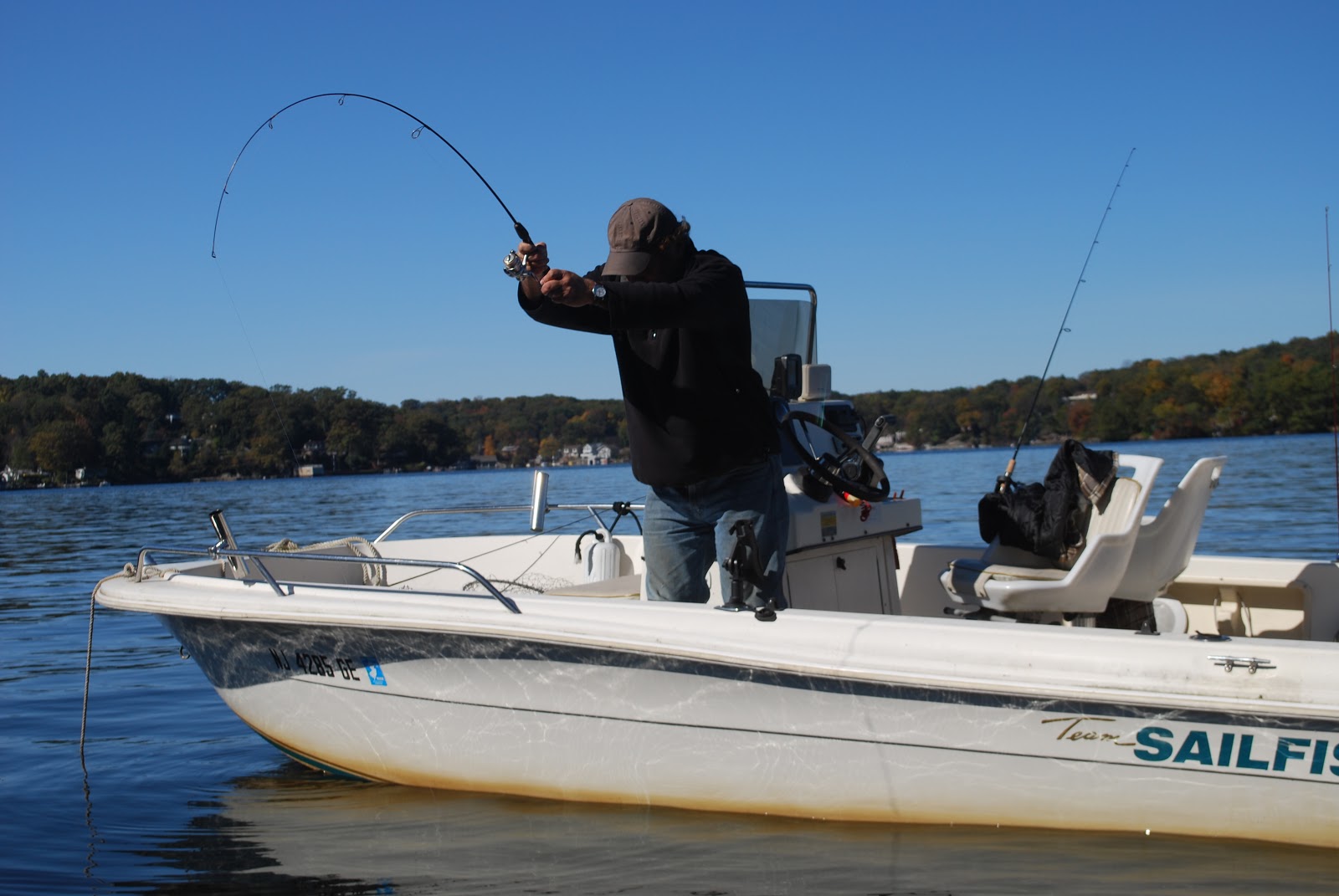
I desired to go out in the hurricane and fish largemouth bass at sundown Monday. Actually, I had the situation in mind for several days or more. As soon as I got the forecast I was ready for it, and my son, Matt, mentioned the same independently as a good possibility, but I felt so involved with writing since getting off my job early at 11:30 a.m. Monday that walking our black Labrador in heavy winds, awesome ghosts of rain traveling horizontally over the local pond we walked beside, a large branch deposited on the bank, served as sufficient experience of Sandy--the name of the dog a former girlfriend rescued from a shelter and gave to my parents in 1985. How's that for concrete? As if a Powerful Puppy Hound came down from the clouds. Abstraction is no enemy--so long as it's grounded. Abstraction is what makes us human rather than a dog like Sadie, the Labrador, or Sandy, the terrier. But that's really the only way abstraction proves effective, by making it concrete, so that life on earth is lived rather than people wasting their lives waiting on heaven. Psychiatrists have two names for ineffective or pathological abstraction: schizoid personality is the mild disorder; schizophrenia is the severe. You have no choice about possessing abstraction. If you can read and speak, you're abstract. Perhaps if Albert Einstein got out a lot more than he did--although he used to walk along Stony Brook in Princeton on occasion, parting brambles, deeply inspired--and actually lived in the unified field by frequent enough visitation, he might have solved the theory. Just playing with the idea, but a shopped photo does exist in which Einstein drives an Indy 500 car. That, I think, is the sort of field experience he would have needed--more than pedestrian speed.
But here's the situation I met perfectly, although without a rod and reel, and I admit I felt twinges of guilt for not fishing. Up above this pond we fish is another; a six-foot diameter pipe runs underground, under a roadway, and under large parking lots connecting the two. Essentially, a stream from a spring out of Schley Mountain, the mountain the very northernmost beginning of Watchung Ridge, which some 300 million years ago was a series of major volcanos, the stream connecting the mountain, the ponds, and North Branch Raritan River. Some of the largemouth bass in the North Branch Raritan and Raritan rivers have their origin in the ponds of our neighborhood. These mountains o 300-foot vertical elevation were once enormous, not as large as the Himalayas--as were the Appalachians--but much more than the worn down remnants, just as the American nation was greater in the 19th century; playful comparison that this is, we've been wearing down ever since, going more and more insane, which is why I prefer to be by myself much of the time. (As you might infer, I'm wildly extraverted.) My son finds pumice at the North Branch Raritan River. The mountain looms brightly over Bedminster and over the North Branch serving as the excellent river running through town, clean like champagne and inviting anyone for a summer swim; my son and I explore underwater nooks and crannies by snorkeling. Situations discovered can tell you all sorts of unexpected things. The Wood Duck Pond above the local pond we fish has been off limits to anyone but an occasional maintenance crew and whatever overseers, has for many years before my family moved to Bedminster, and is absolutely packed with largemouth bass. When we moved here in 1999, I just had to leap the fence once like a kid, take one cast, hook a bass and see the others trying to snatch the topwater plug from the hooked fish. That was all! One cast, and I got out of there fast because I was visible from the road; all I needed was to be arrested upon beginning here. (I can say so on the world wide web because you can't really know if I'm telling a tale or not.) So springtime bass spawn and some of the tiny hatchlings take a tunnel journey to the pond below. The pond is loaded. And certain rainy conditions also mean a load of water entering at that pipe. Bass move in to take whatever forage comes through--essentially they are attracted to the mud-thickened, fast water--and all I have to do is toss a spinnerbait and unless it's winter, it's bass every time, gingerly released. Bass sort of smell like ginger. If you ever try a bass on the dinner table, add Old Bay seasoning and it will very vaguely taste like ginger, although this can almost mean anything, but not quite. Walking Sadie, I viewed the water coming through that pipe at near perfect volume for action.
Well, at least I predicted it days ago and just walked out at sundown with my dog, having forgotten that I might go witness the storm. 


Try the Delaware and Raritan Canal for Pickerel, Largemouth bass, Muskies, Walleyes and Smallmouth Bass

By Bruce Litton
(Written for my Recorder Newspapers "Reel Time" column and updated for the Hurricane.)


          Having fished the Delaware and Raritan Canal in New Jersey since 1970 I hold a special affinity for this hand-dug waterway. Construction began in 1830, the same year Woolrich came into existence, maker of fine outdoor shirts appropriate for fishing this time of year, the best time to fish the canal. Mule-drawn coal barges on the canal had little to do with shirts or sheep, but the men leading these hauls got plenty of exposure to wind, chill, rain, and snow. Since they made their way from as far north as Bull's Island near Raven Rock to New Brunswick outside, some may have worn Woolrich in the spring and fall.

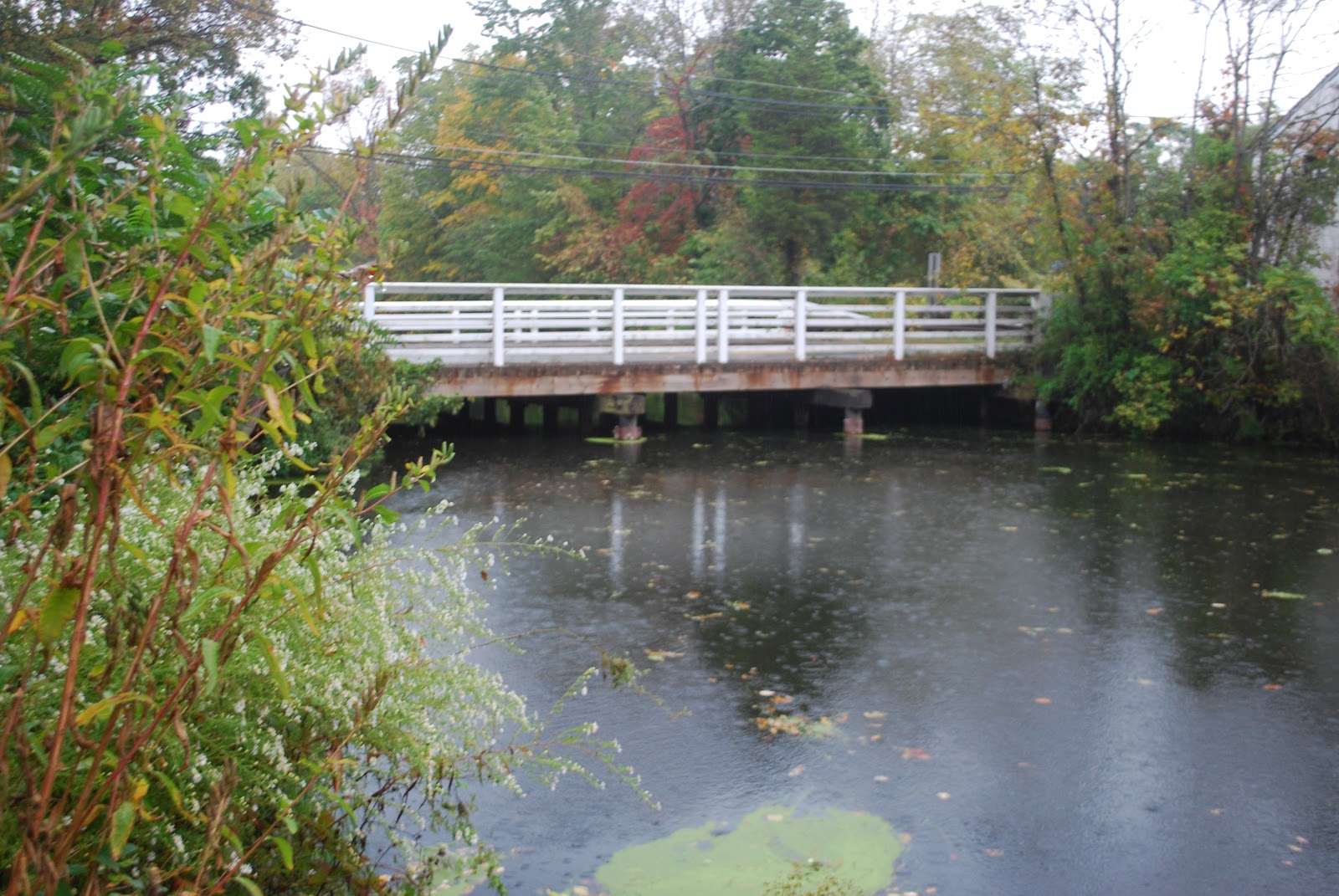
          Today the barge tow-path still exists, but between it and the water, trees and underbrush grow densely enough to provide excellent fish habitat. Between thickets space opens irregularly every ten yards or so where an angler can stand on the bank at the edge of water and cast. Depths of eight feet move at a very slow pace, most of this water irrelevant to finding largemouth bass and pickerel. Always fish for them near submerged brush, wood falls, aquatic vegetation, and shade, only a very few of these structures are out in the middle, and the best are combinations of wood and vegetation.

          Before the canal was drained and dredged during the 1980s, sand bars existed at Quaker Bridge Road in Mercer County. Every fall, shoals of shiners huddled in the shallows of these sand piles. Pickerel stalked them. On occasion a pickerel would rush up on top of a sand bar and take a shiner. It must have taken many years for such fish habitat to form, and I’ve never seen a sand bar in the canal since. These sand bars constituted the very best October structure for pickerel and largemouth bass.

          But another unusual structure will exist for as long as does the canal. Widely interspersed throughout its 66 mile length, locks regulate flow. Fast water below these locks attracts rare walleyes and smallmouth bass. I’ve never caught either in the canal, but I am witness to both. Since the canal flows out of the Delaware River, walleyes, smallmouth bass, muskies, and channel catfish make their way into it and have been caught all the way down to New Brunswick. The New Jersey Department of Fish & Wildlife took the clue from reports of muskies in the canal, and now stocks it with six to 12-inch muskies, 150 of them this year.

          While this is not a profusion of fish, muskellunge are solitary, uncommon, and large. Among most freshwater anglers they are understood to be the pinnacle prize--beyond Atlantic salmon--because of this mysterious and enormously powerful solitude they possess. Compared to other freshwater fish, each muskellunge is in a class by itself. I have great admiration for Atlantic salmon, and my son saw a live specimen in the Salmon River this past summer, but they lack the ghostly solitude of muskellunge, the paradox of muskellunge with their ability to vanish and be unseen, yet dominate singularly more area of a lake, river, or canal by their visceral presence than any other fish by a very long shot. Perhaps a single muskellunge will dominate an acre of Lake Hopatcong, for example, far and away with more power than any hybrid striper, channel catfish, or bass. And walleye in their lake bottom, stone palaces reminiscent of Aristotle's architectural glory in the darkness of hell, as accounted for by poet Dante--these couriers of messages too dark to be shadows, walleye have little status to compare with muskellunge. Though we hold them in great esteem, walleye. Not in Hopatcong, but maybe in Monksville and Cansitear they do indeed have such rocks. Without the fish, the Philosopher could not do business. But the philosopher's greatest courage is the secret of Elektra and the Greeks are not forgotten here below: The musky rides on lightning under its belly. Atlantic salmon, compared to muskellunge, are bound to fellow feeling, although they are more independent than other salmon species, and this, I believe, is their special allure. The New Jersey state record 42-pound, 13-ounce muskellunge came from Monksville Reservoir. As unlikely--I think absolutely impossible--as the canal is to host a musky close to this size, 15 or 20 pounds is certainly not out of the question. Fifty-five-pound grass carp have been caught, so it’s clear that the canal produces very big fish. But leave it to a monastery to produce a giant muskellunge. A certain slant of light so transforms Hopatcong, even though honey can seem out of place. Monksville certainly cannot be far behind the Philosopher's shoes. It's all in the words.

          In 1977, I experienced a musky of about seven or eight pounds attack my large Redfin floater/diver plug at the mouth of Lockatong Creek where it enters the canal in Hunterdon County. I knew this was a likely spot and used a much larger lure than I usually do for pickerel and bass. It was also the right time of year—October. The fall produces a forage shift from summer morsels of many kinds to fish forage, especially fish with soft-rayed fins, that affects all gamefish species, and besides, muskies are most active in cooler temperatures. Most streams flow underneath culverts that support the integrity of the canal’s steady flow. The Lockatong Creek near Raven Rock is the most interesting exception.

          From the mid-state Highlands and Piedmont region, the canal is easiest accessed in Somerset County, near Manville and Millstone, far from the Lockatong and Hunterdon County. Solitude is abundant, interrupted on occasion by a biker or tow path walker who usually is friendly. I find it much more interesting and enjoyable to achieve a comfortable pace moving from one clearing along the bank to the next, rather than staying in one place. I've always roamed and will never change. If I'm not walking in my 90's, what's the use? Better to live beyond age 61 but vitally and with encompassing range. No insult to Stephen Hawking; he remains productive long after his estimated time of death. Even ice fishing--which often involves some sitting--I best enjoy while walking on bare ice. To walk on ice is elevating. I feel the lift. It is water, in fact. I like it best when I'm successful at the fishing, running after tripped flags, but walking on ice transcends success or failure. No doubt, more fish will be caught in the canal this way, too, by covering range, walking, although I believe I never have ice fished it, but considered doing so in the winter of 1977/78.. The object is to locate fish with your lure or bait, not sit in place and wait for a fish to come along as if you are dependent on what they do, instead of defiant of everything but what you choose to do.

          The canal is stubborn to yield in the winter. But don’t give up—keep placing a small, weedless jig, or live shiner on a size six, plain shank hook near submerged brush and aquatic vegetation, keeping retrieves fairly slow, and you will be surprised. Pickerel often race out of cover and strike magnificently in clear view. Most fish are fairly small, but four pounds is possible.

          Don’t forget that pickerel have razor-sharp teeth. I recommend 15-pound test fluorocarbon leader tied to a small barrel swivel. This little piece of metallic technology is the link between you and a fish on a lighter line you can cast effectively. The main line can be 15-pound test Power Pro braid—the diameter is about as thin as six pound test monofilament--but braid is more visible to fish than fluorocarbon and vulnerable to pickerel or musky teeth anyhow. I’ve never had a problem moving a fish from cover using six pound test, but heavier braid is good insurance. You never know if a tiger muskellunge will boldly attack when least expected. 


Friday, October 26, 2012

Rainbow Trout Round Valley Reservoir at the Surface

Each time I reeled the m & m (marshmallow and mealworm) rig in, the two marshmallows tore off the hook and floated to the calm surface, and trout took them within seconds. If flycasters could get the needed range, I think they would have caught rainbows left and right, possibly some browns by now too. As for everyone else with shiners under bobbers and m & m's floated off bottom, I heard of one trout caught.

We saw more than a dozen leap in an hour's time. And more that tailed at the surface over 10 or 15 feet of water like permit or bonefish on shallow flats. I've never seen this happen before. I've seen plenty cruise in very shallow water, but not oriented to the surface over the depths. 


Wednesday, October 24, 2012

Enlightenment for the Sake of my Novels: Eternal History and Being Down to Earth

Put out a line at Round Valley Reservoir. In an hour's time I saw one rainbow almost caught. A couple of them cruised by in water almost too shallow to cover their backs.

Thought I might have to take a long hiatus from my work on the novel, but I came right back around after spending time in the 5th dimension or whatever you want to call it. About two months ago I told my brother Rick that I would be toast if I didn't fish. I really need to get my feet wet and I never complain that my boots stink. They seem clean as a whistle.

Some achieve enlightenment for enlightenment's sake, but hiking boots represent what is more important to me. Life on earth. I think of the entire event of the last week or so as having informed my novel; that's what it was all about. I intend to finish it and continue on with other works I have in mind. There was a lot more to the experience than I may put into words, but the point is that I do have a purpose as an artist rather than being someone divested of endeavor for the sake of God.  


Tuesday, October 23, 2012

Drama of the Orange Monk: Temptation, Resistance, and Release

 Haven't fished since the 13th, with Landolfi. Thought I would put in a playful post that might make sense as a little game. No big deal, just a little fun.

Our featured animal in the photos is an oyster cracker, also known as an orange monk, related to monkfish prized for the table. Supposing that a monk represents certain possibilities, rather than that these ultimately existential realities are limited to monastic life, I have caught on film an analogy to a drama of force and temptation.

But look how our little fish came out of being surrounded in the attempt to get the hook out. I snapped a picture of a smiling orange monk just before the line was cut and fish released. 


Thursday, October 18, 2012

Round Valley Reservoir and Ancient Greece: Shoreline Rainbow Trout in Abundance

 With the camera I told a Bedminster friend--after my son's recent football game loss--never loses, I shot these photos. Interjection--my natural grammar (lack of it!!!) is ancient Greek. That's how I spoke in my teens. Very often. And it's how I wrote before revision, and grammar is still difficult. Ancient Greek is a straight line.

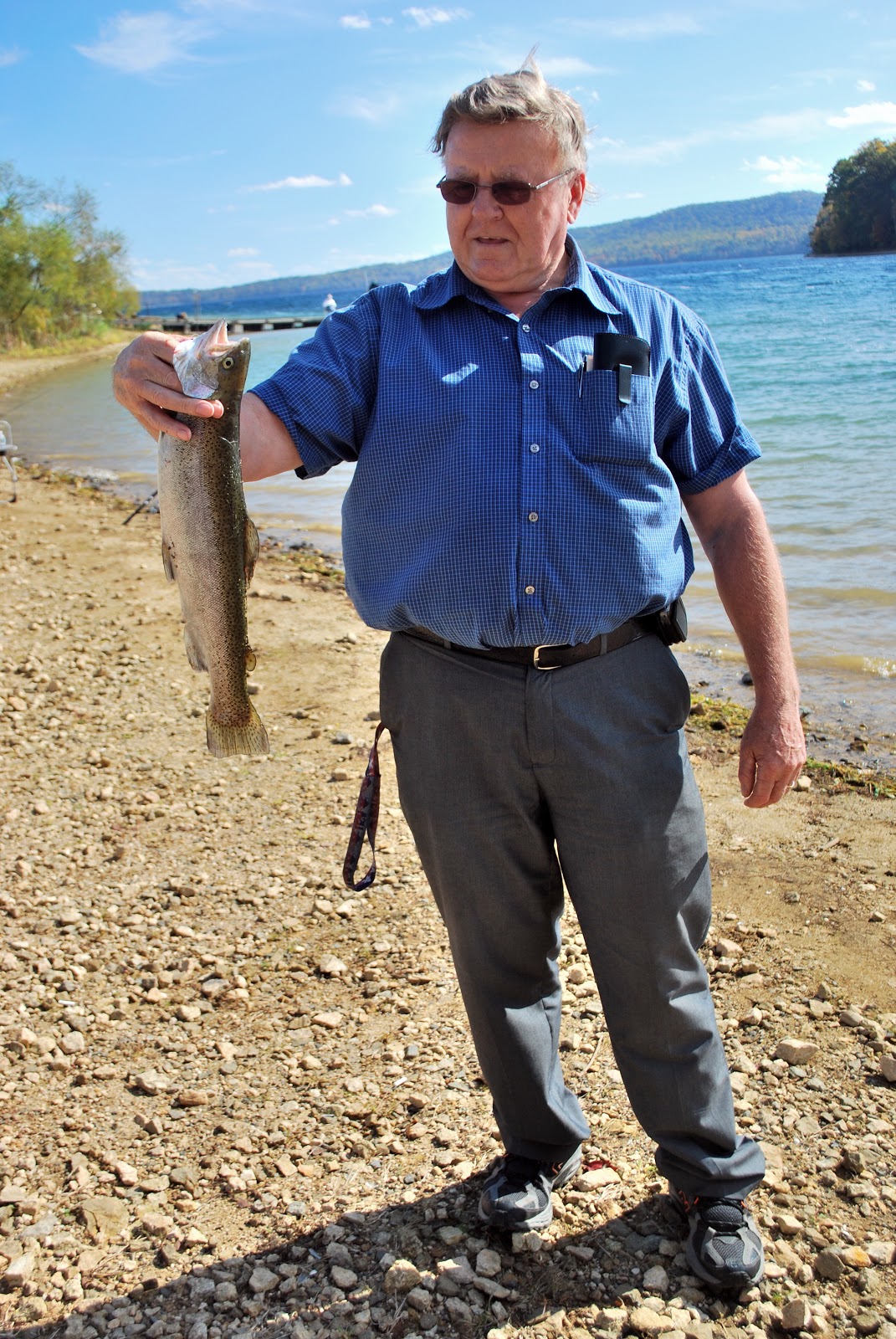
Surprised by best neighbor friend arriving on the scene. He's the guy in the photo below, blown away by the energy in the air. Steve and I have no plans at all but the agreement that another fortuitous lunch meet at the reservoir would be nice, my getting some more photos than I have today.

The Western Dream is gloriously more than west of the continental divide.

One of the anglers shore fishing rainbows called me over from my perch where I photographed. A whole school of close to a dozen rainbows, the largest about 20 inches, foraged in the broken whitecaps, the sediment roiled by the blow from the south. 70 degrees. Right there. Eight feet from my legs. You can make them out in my last shot.


Monday, October 15, 2012

Why Ayn Rand Despised Ronald Reagan and What Capitalism Really Is

Litton's Line expands upon angling. I didn't anticipate with the first post that the blog would communicate so many ranging ideas, but I am well aware it's still only a blog. I type very little compared to what I pen in notebooks.

I read Atlas Shrugged in Brant Beach, New Jersey, at age 21, and felt very pleased that Ayn Rand: 1. Voiced an appreciation for given nature through her character Rearden. I would expect this. All true creators begin with elemental nature, and as far as I know, all have personally spent time in the wilds to absorb nature. 2. I felt distinctly thrilled that a woman is described fishing in Galt's Gulch.

But I felt much more than thrilled to later read of clammers in The Simplest Thing in the World. A deep level of plot suggests itself. Living in Brant Beach during the summer of 1982 when I read Atlas, I clammed to earn a living, and I held commercial licenses for each of 13 years beginning 1980. Long Beach Island, New Jersey, became my home and yet sort of an outpost from which I would later return to live in mainstream society, my purpose at the shore to study and write. I had come upon some of Rand's works on my mother's bookshelf during that first summer of 1980 doing this self-employed work. I took her novella Anthem back to Beach Haven Crest to read. 

No reading experience before or after has ever enthralled me to such intense degree. When I enrolled at St. John's College, Annapolis, for the spring semester of 1982, one of my fellow "Febbies" (students who enrolled in the spring) made a sarcastic comment about how stupidly simple Anthem is. I find it lean, spare, and direct with an amazing power to elevate, if you are young and know what it's like to be marginal for being intellectually gifted.

Rand herself never liked that description of giftedness. Her whole emphasis is on what we achieve, not on what is given to us, and yet each of us is born with a given potential, and I think it's important to begin with that and honor it as a birthright. 

This primary motivation from native consciousness connects me with the ultimate substance of originality. Postmodernism claims nothing original can be done anymore, but this misses the point. Originality is a matter of beginning anew from fundamental truths, which Rand encourages her readers to grasp. Ultimately, it's not a matter of truths restated in pastiche arrangements, but an act of union with what Rand named the metaphysically given, and fishermen call the great outdoors. 

I wrote a paper at Hampshire College on Ingmar Bergman's character Isak Borg in the film Wild Strawberries, a title which might obliquely recall The Beatles, but for me the theme of Borg's alienation from nature became readily apparent, and though the paper came as a surprise to my instructor, John Roosevelt Boettiger, he lavishly praised it as thorough and insightful. Boettiger happened to be Franklin Delano Roosevelt's grandson, and even though my politics were and are radically pro-capitalist, rather than quite liberal as FDR began the tradition, John and I began a dialogue I wish had gone further. 

More important than capitalism as a system of produce and money, the system of the mind begins at the bottom, not at an indoctrinated top tier cut off from origins. 

I think the question of our times involves whether we will regain original substance, whether we will unify with nature and create culture and civility, or whether we will collapse like a top-heavy skyscraper with no grounding on bedrock.   

Most of the stay I mentioned at the shore, we clammers shelled it out during the Reagan years, and it never surprised me that before her death in 1982, Rand utterly despised him. I don't think this indicates her "alienation from reality," as came out in a published conversation between Nathanial Branden and someone else I don't recall. Reagan was a conservative. Rand clearly not a conservative, but a radical. The fitting definition for radical she offered is common in dictionaries. It means, "to the root," a metaphor for the origins of nutritional substances. And although an actor, Reagan's affinity with art and philosophy is dubious. Even though I came upon a writing sample of Reagan's in Artful Sentences by Virginia Tufte that moved me as revealing a poignant gift for experience portrayed in poetic language, why, I ask, is no President like Thomas Jefferson present in today's world, or Abraham Lincoln with his profound literary grasp? And though I read Theodore Roosevelt's The Strenuous Life with trepidation for what I felt to be an inflated assertiveness--after all, that life didn't last long--he was a man of passion, literature, science and the outdoors. 

Rand made it abundantly clear that every human being has affinity for art in order to have any motive and a necessity of philosophy to be able to think and guide any of those motives, and yet many conservatives lack profoundly in the personal qualities of culture that art and philosophy create. I don't mean to blame them, but enjoin them to take part. Remember that art and philosophy serve schooling secondarily. It's not as if an either/or division necessarily exists between great American can-do, on the one hand, and "books" on the other. It's not even necessary to graduate with a four-year degree to become educated. I never did. A bookshelf is needed, but never forget that Galileo implored people to learn from nature, more than he urged them to read. Nevertheless, reading is practical like anything else, and it does wonders for making the will effective at doing anything.  

Consider that personal value is ultimately intellectual and hard won, because without thought and effort, no one can emerge by any name. This is exactly why education should never be made into a game of testing, and shared essay writing, for example. The essence of capitalism is art and philosophy, for without art there is no motivation, thus no incentive--personal, business, or otherwise--since any form of driven achievement is emotional in nature while being rational in essence. Without philosophy there is no reasoning to guide any choice whatsoever.

I cannot hit the mark directly to reveal the reason of Ayn Rand's contempt for Ronald Reagan, but have a look at America today and consider judgment.

Saturday, October 13, 2012

Lake Hopatcong Hybrid Stripers and the Sunglasses Story

Eventful day on Lake Hopatcong. I haven't seen Joe Landolfi since November last year because we had no ice, but I can tell we will be fishing at least once a year for many to come. I remember the two outings last year as if they happened this fall. 

Today we fished a hump out away from the shoreline, and I recognized Marty Roberts immediately, called over to him, and the fun began. He had just begun to nail small hybrids of about two to three pounds, battling them on a couple of ultra-light rods, each baited with a live herring on a simple hook and split shot rig. Anchored, he insisted on putting the bait directly down in 29 feet of water. No more, no less. Who could argue? He seemed to have a magic touch. Joe and I agreed it was uncanny; we both felt this. That depth wasn't exactly the breakline between flat bottom and the sharp rise to shore, but the graph alarm rang constantly like Christmas chimes. And constantly, Marty retrieved presents.

I had met Marty at Dick's Sporting Goods in Rockaway Township a year or so prior. I was looking for something, don't remember what. He dropped me a question about what I examined, and conversation ensued. He had read a blog just before coming there, on hybrid stripers at the lake. I told him the title of the post, just guessing.

His face lit up. Absolutely astonished, he said, "How did you know that?"

"I wrote it."

His eyes opened wide as silver dollars, "That's you!?"

Now Marty relaxed in his boat. "Bruce, fishing has a lot to do with attitude," he said. "It needs to be positive." He sat back, legs stretched over the port gunwale. I felt his leveling with me--right there and then--would be one of the best rewards of the day.

Joe and I caught a couple of hybrids, missed a couple of hits, and against Marty's advice, we prepared to move on for what Joe hoped would be six- to eight-pound fish.

"You should stay right here," Marty said.

I laughed and shrewdly pointed at restless Joe, "Marty, I'm obsessive enough to stay right here another five hours. Joe never knows where to begin." 

Joe's the veteran. He's been on Hopatcong for decades, and for a time was a large presence on the lake. He still knows an astonishing number of people here.

Marty phoned later to report four- and five-pound hybrids coming over his gunwales, and we did return, this at the end of our five or more hours in total out on the lake, although by the time the 9.9-horsepower Mariner got us there, action had slowed.

Earlier along our haphazard way, we gave a point of land scant attention by vertical jigging, but we passed through another range of water by drifting herring, wind allowing us to pass horizontal to shore. Joe was absolutely determined to teach me how to drift bait. Wildly edgy by turns of success and misfortune in life, a talented cabinet maker who ran his own business, hiring employees and enjoying a net gain of a quarter million one year, and then losing everything but black depression, he's turned his life around time and again, a man who never loses his appreciation for living, devastating depressions never convincing him going on isn't worthwhile. He never gives up. That determination is what I like best about him. The liveliness resulting from it he always contributes to an outing, and his focus of concentration is a talent in more than one respect. It includes making sure he gets across to other people by finely detailed explanations. But I'm sometimes as stubbornly skeptical as any you may find about what he says. I couldn't buy his idea that hybrids on the bottom--and walleye--would swim up from 32-foot depth to a herring passing over 17 feet up. I still don't trade my feeling about that for his. It's dark down there. Could lateral lines sense a target from that distance, given that vibrations from surface chop send even more information downward for fish to pick up, washing out a little blip from a herring? I don't know. Maybe those lateral lines and those little fishy brains are advanced enough to tell the difference. Anyway, fish marked on the sonar at 15 feet as we passed over depths twice that. Were they hybrids? Probably.

As far as I know, walleye at this time of year don't suspend, but I could be wrong. Maybe some of them do, but they seem in their element among rocks on bottom. But herring do suspend. So walleye may suspend among them; even with the lake turned over this isn't out of the question, just beyond presumptions I feel strongly about. It makes sense that herring would avoid schooling right down among rocks where walleye would typically lie, but walleye eat just about nothing but herring in Hopatcong, so maybe they do rise, even though oxygen in the depths this time of year allows them some suitable habitat, rather than open water. I don't know. But there is more to consider. Most of the rocks--schist for the most part, if I'm correct--situate shallower than 20 feet, by what I'm informed. It's not that more walleye are at bottom 20 feet or shallower this time of year, but that they don't have stone providing habitat for them in most of the deeper water, anyway. 

So.....who knows.

But I catch a lot of walleye on bottom 35 feet deep or more. Whether rock or other cover is in those depths or not, walleye hug bottom.

That stubbornness I mentioned got the better of me as we continued to drift. I let my weighted rig down to bottom on the sly and got snagged. (A bottom bouncer rig supposedly avoids this, but I used an egg sinker.)

"I have to fail first before I learn anything," I said.

I retied, committed now to adjusting my way of fishing to the one Joe insisted on.

No one I know of has failed in life to the extent I have, proportionate to potential I have always known I possess. The relatively little I have complained about it has blown back at my face, so while I may lack positive attitude in some respects, to recall Marty's observation of me, the situation isn't petty; it's a life-long refusal to get altogether indoctrinated to going styles, educational or otherwise. I like to carefully turn the table on what is commonly perceived as the truth, by a truth I have originated. Often it solves a problem. But in the big picture, it still appears as if an awful lot of solutions have to add up to my getting ahead in the eyes of the world.

Besides, when I let too much weight to bottom, I'm set back. 


We both lay back in the bottom of the boat to relax, Joe launching into one of his many fascinating stories from life. He told me half-a-dozen or so. Just before he began his best, the Sunglasses Story, I quipped that I was a little tired, and actually I was afraid the week's lack of virtually any sleep, busy at writing projects, was going to make me nuts if I didn't watch out. I drive about 1100 miles a week for my job, and while I don't complain about it--plenty to be proud of with writing efforts in addition to it--staying sane really is an issue, and while I never give in to helplessness, never let nerve fail, I do have to be careful sometimes. Have to think and act to balance what could be a lot of trouble. Thinking always gets me through to normal life again, even when it seems impossible.

Here's what it can be like in another way:

Joe dropped sunglasses into Lake Hopatcong. He swung the boat in their direction to try and retrieve them, but the water was rough and he couldn't see them as they must have suspended just under the surface. There's a reason I don't say they sank, and I will get to it. Joe's told me he can't write for beans, but he tells stories better than anyone I know. Hours in a boat after fishing years together can get interesting. A great Jewish prophet, who knew he didn't have to be a prophet to say so, said that all true living is in meeting. In other words, if you can't share stories, you're missing out in a dire way. Print doesn't offer a stage for gesture and expression, but it does allow deeper comprehension, if you will engage it, so here's the story. To lose Gucci sunglasses to a 2680-acre lake, then to catch them inadvertently the next year while trolling for muskies, alludes to another theme of age-old prophets--redemption. Something fouled the thrumming of the foot-long lure, the rod taking on a little bend, but not bouncing to the vibrant resistance of a fish, as if otherwise a perch or crappie got inadvertently snagged. Hopatcong's water mass flows, but very slowly. The sunglasses hadn't traveled very far in the direction of the Musconetcong River below the dam, but they neither floated nor sank to bottom. The plug--the lure--ran about 10 feet down, where the Gucci glasses suspended in-between surface and bottom like a fish. The event signifies how Joe manages to live by so many amazing falls and rises. Life comes back if you troll for it.

Getting those sunglasses back from a lake that big. Joe beat the odds.

On that first, long drift for those suspended hybrids I was skeptical about, we talked as a hybrid nailed my herring over about 30 feet of water. Joe's stories had revived me completely. I was no longer tired at all. Never felt pulled precipitously close to the edge, even though I could feel the possibility in me. 

Hours earlier, we had taken one of Laurie Murphy's boats out from Dow's Boat Rentals. Reality makes all the difference to living a good life. Places off the screen. The nation still struggles to recover from recession. Upon return to Laurie's shop, I said to her, "The whole country's dead."

She said, "Business is down to about 10 percent of what it used to be."

It was no occasion to be a chump and speak any words of hope. "The issue, rather than money, is fundamental. People's motivation is lacking," I said. Not long ago, I visited a 50-acre woodland preserved by Green Acres funds. I found no trails. As a boy, I explored the woods thoroughly, as did other boys from the neighborhood, trails leading through. Now they follow pathways on screens.

I changed the subject and the three of us laughed about Joe's sunglasses, the story still vividly present in Laurie's mind, as Joe had come in that day of their return happy as a high-flying kite.

My story would end well on that note, but I must explain Joe's hybrid mounts, one of them now up on the wall of a local bar where Joe knows people. But Joe didn't know Marty. For once, I knew someone on Hopatcong Joe doesn't. Just before we parted company with my acquaintance, Joe said to him, "I have two hybrid mounts on Laurie's wall, an eight-pounder and a six or seven."

"Oh, yeah!" Marty said. "Laurie gave me a mounted hybrid from the shop!"

"Oh, no!" I said. "I bet Marty has your striper!" I was laughing all the harder because I sense social connections already there before people meet. And I felt confident Joe will be on the lake at least once more this fall, while I have only more outing ahead here this year, with my son.

It's confirmed. Marty has Joe's striper. Joe took the other mount off the wall of the shop, and placed it on the back seat of my Honda Civic. I never asked why, respecting instead his personal privacy, because the one thing I knew for certain--it's his fish, his mount. After more than a decade admired by countless of Laurie's customers, I soon discovered it will spend time at McKenna's Pub near the lake. Joe directed me to the place, a favorite of his. The mount may finally grace a wall of Joe's own, but just after I snapped a photo of him with the striper, he went in and placed it high over people at the bar.  


Marty tells me I need positive attitude.

Joe caught a sunfish on a Gotcha Jigger deep.


Joe and his stories.


Small hybrid I caught while drifting.

Hybrid angler Joe had us stop to speak with.


Joe's other mount now at McKenna's.