Thursday, September 15, 2016

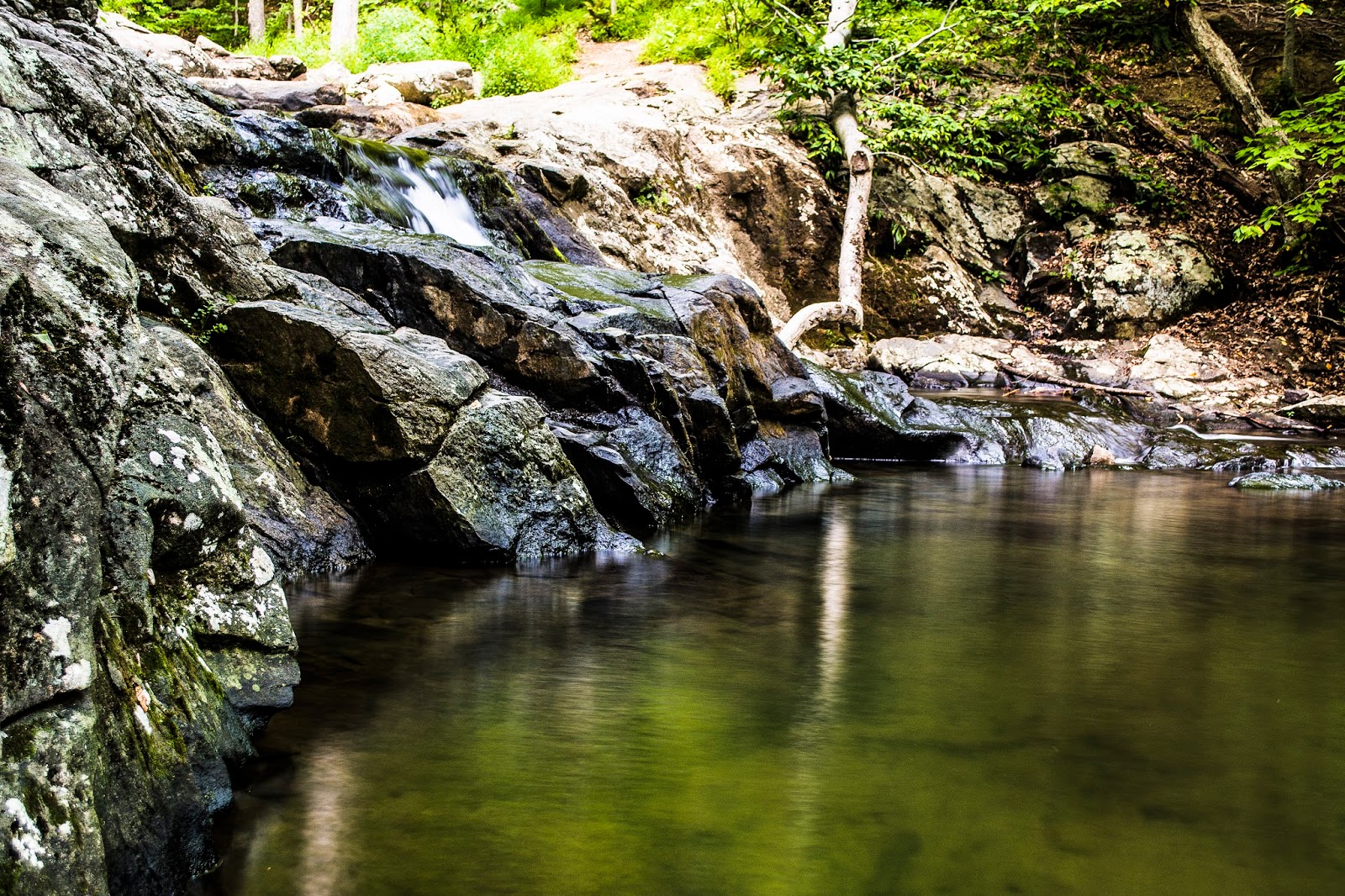
Pond Purview


With just a short window between working on an essay about a redfish adventure my family took in Charleston, South Carolina, and making the monthly Round Valley Trout Association meeting on time--which I did not make on time, due to traffic--I grabbed my tackle tote in search of Wacky Worm O-rings, and failing to find them, too harried to dig around in my study/tackle storage room, I managed to pull a Senko pre-prepared off a pile of nick-nacks on my desk, tie it on, grab my camera, and take that favorite rod to the neighborhood bass pond half a minute's walk from my front door.
I must have fished 15 minutes before I caught my first bass, feeling despair lurking somewhere down there safely at least a few miles deeper than any possibility threatening me with sinking, but I really like this pond I fish a lot less than visit nightly with my black Lab Sadie, often viewing meteors overhead, sometimes scouting a fox (Sadie barking), and once encountering a black bear.

I've reported on the fish kill here of a couple winters ago. Obviously, the pond has a long way to go before it fishes as well as used to. All three bass I caught weighed less than former average, and it took me nearly 45 minutes to catch them. But they're real, beautiful bass, and to encounter any of these fish anywhere always signals hope to me. I live in the most corrupted state a free country has ever seen--New Jersey--and yet these wild predators of astonishing vitality, coloration, and innocence coexist amidst the most dense society in the nation. Why not laugh at ourselves and take that word dense more ways than one? Our crumbling roadways may be loosening up, but we're as stiff as mythical Jimmy Hoffa's bones somewhere in the Meadowlands when it comes to change that serves everyone's well being.


Monday, September 12, 2016

River Recharge


Day off, I got some writing done, and then took our black Lab, Sadie, to the North Branch Raritan River at the exit from AT&T, sort of hoping to add some photos to my river collection, but mostly just following through on my commitment to get away from nonsense we call real life. I didn't stay more than an hour, quickly catching the little longear I photographed on the same Muddler Minnow I've been using it seems forever now.

When I first stepped in the river wearing the Simms wading boots I enjoy not for the name but the result of design and workmanship, it felt cool--like fall--and the weather's shifted to cooler temperatures, well into the 90's late last week...and I had hoped those 90's would remain indefinitely. (Not good for trout, but I love really hot weather.) But the river's really low, and what will happen when October 11th arrives we might all guess--a lot of trout that would have been stocked in rivers like this one, may get shipped to South Jersey ponds. I hope to fly cast at least once or twice for whatever trout remain when I get at them.

Some other longears took the Muddler, and then I saw a smallmouth bass that wouldn't, so I cut off the Muddler and tied on a beadhead earthworm. Nothing seemed to want to take it, until finally a largemouth of about eight inches in clear view whomped the fly. I set the hook, feeling just for a sliver of  a second as if the hook might catch before the fish vanished.

I got some photos I'm not displaying that I like, only because they suggest future possibility. (I need to use my tripod well after sundown to get them sharp.) These photographs involved my interest just as I thought I was leaving, and more than anything else today, the effort went deep and sort of flushed out refuse that accumulates working a full time job at a specialty meat counter. It's not good form to complain about jobbing, when more than a few of us are out of work and need it badly, and it's not my intention to complain but to point out--as I try to do in this blog in so many different ways--that work and family and friends are just two of three basic necessities in life. The third is recreation. Whatever form re-creation of your human self takes. Tonight is another example of fishing and photography--dog walking too--merging seamlessly together.

Result? I enjoyed a long, deeply solemn--but solemn like drinking pure mountain spring water from between rocks--moment when hope just welled up from the river I stood in the middle of up to my thighs. Re-creation. Motive to move on. Had I not gone on this little venture, my batteries never would have recharged. Either you move towards some personal goal in life, or you go backward not to childhood, but to the inhuman animal.


Sunday, September 11, 2016

Fall Largemouth and Smallmouth Bass: Forage Shift


Fall Forage Shift for Largemouth and Smallmouth Bass


          At first, I dislike the change of season. I enjoy fishing a plastic worm or topwater plug as if the retrieve will take all day, because summer is the home season. An early September cold front presents a chill that makes me feel loss instead of anticipation. Nevertheless, bass fishing will get more exciting. By the third week in the month, I’ve adjusted to the new season just as bass begin to feed especially on fish as the summer smorgasbord recedes. Chilly days feel invigorating. By early November when bass fishing slows, I’m hoping for ice fishing. How odd for someone who likes a day when temperatures peak over 100, and yet fall is a transition I celebrate before eagerly accepting what comes next.

          With temperatures falling, adult insects, larvae, crayfish, leeches, newts and other salamanders, tadpoles and frogs, and the occasional small snake or baby muskrat become less and less available to bass. If you watch damselflies skitter about over an aquatic weedbed on a calm summer afternoon, you may witness a bass or two leap for these bugs that don’t seem to offer much of a meal. Most of the time, the damselflies seem too quick to get caught, but I’ve seen bass score by pointed leaps. The range of forage alternatives during summer amounts to a massive availability bass often don’t have to expend much energy to obtain.

          Fall bass prefer prey they can chase. The forage particular to summer recedes, as do weedbeds and terrestrial vegetation which help support it, and forage fish of all descriptions become vulnerable to bass’s increasing diet. The situation amounts to a fall forage shift.

          The most dramatic example occurs in the Delaware River. I’ve never seen it happen, but more than one angler has told me about smallmouth blitzes in late September and early October reminiscent of cocktail blues after spearing. By the billions, shad fry come downriver heading for the Atlantic. Rich in Omega 3 fatty acids, some evidence exists that shad fry is particularly healthy for smallmouth bass. Fish farms, for example, include Omega 3 in fish feed because it’s healthy for the product.

          In any event, forget live crayfish bait and tube plastics on the Delaware when the shad head down. Half-ounce lipless crankbaits cast a mile and can be zipped by quick retrieves right through pods of herding bronzebacks. Sweeping the rod to provoke aggressive reaction strikes may give you some of the best thrills you’ll ever experience on the river, because the bass strike as they do no other time of year. Topwater plugs effective also, quick, churning retrieves produce, rather than attempts to tease out reluctance. And in the shallower, fast moving water with eddies and slack behind boulders where bass stage to snatch fry headed downstream, a jerkbait like a Rapala or Smithwick’s Rattlin’ Rogue gets slammed like thunder.

          The lure doesn’t have to look like a shad. Nevertheless, I prefer chrome patterns for any and all plugs, if only because I think the flash better provokes quick, aggressive response. Sunlit afternoon or misty evening, the bass hit, and especially with sun rays to reflect, chrome adds appeal. Diving crankbaits especially produce around deeply submerged boulders and through deep currents. For open river situations, go with lip-less crankbaits you can retrieve at various levels of the water column.

          Small rivers experience the forage shift without shad fry in the mix. A wide range of species including spotfin, common, rosy face and satinfin shiners; blacknose and longnose dace; creek chubs; banded killiefish, and juvenile panfish and bass. They serve smallmouths’ need to increase in size and vitality. Nothing seems to work better than smaller jerkbaits like size 7 and 9 Rapalas, Rebels and any of the multitude of plugs from all over the world. Recently, Noel Sell introduced me to an Ecogear jerkbait from Japan, which cost him $18.00. It has an internal rattle and the rear lifts high as it floats upward. As the fall season deepens, live shiners become most effective in deep pools. Use a light wire, size 6 hook so the shiner swims freely hooked through the lips, and allow 18 inches between the hook and a medium split shot.

          Many New Jersey ponds have no soft-rayed fish forage, but lots of sunfish of a few species. Bluegills especially prevalent, other sunfish include the green and pumpkinseed variety, and on rare occasion a few warmouths may inhabit a pond, which resemble rock bass in shape and mouth size, but sunfish in coloration. Some ponds have crappies, and although I’ve never encountered yellow perch in any pond of just a few acres, I know of a 15-acre pond with plenty. Bass feed on the smaller of their own kind, also, and many ponds contain bullhead catfish. Small, slow-swimming bullheads serve as a summertime treat for largemouths, but may get eaten in the fall, also.

          Ponds thick with summertime forage cool faster than lakes, and a shift can happen overnight with largemouths slamming spinnerbaits and jerkbaits the next day. Despite a prevalence of bluegills and no soft-rayed forage present in many ponds, minnow-imitating jerkbaits produce as if shiners scatter everywhere. Any remaining weedbeds should be fan casted, and if a pond has no weeds, always fish any shallow flat and close to shorelines, particularly where any cover or overhanging trees present themselves. Corners and spillway areas may be especially productive.

          Lakes and reservoirs do have soft-rayed forage. Many host alewife herring—another example of forage loaded with Omega 3. Whatever the reason, gamefish of all kinds gorge on herring whenever they can. In lakes like Hopatcong, Greenwood, and Swartswood, reservoirs like Spruce Run, Manasquan, Monksville, and Merrill Creek, smallmouths may feed on herring more than largemouths, because of shared habitat. Round Valley Reservoir is also worth mention, but has seen a sharp decline in herring forage base, although I spotted a smallmouth of at least six pounds recently and caught another pushing three.

          Beginning in October, herring bunch together on the rocky drop-offs of points and ledges, and smallmouths seem to have the advantage of feeding on them, although largemouths approached with spinnerbaits in declining weedbeds and near wooden structures like docks will feed on any herring in their senses’ range. Besides, October largemouths associated, oddly enough, with rocks at the shallow end of drop-offs strike jerkbaits.

          Diving crankbaits with lips allowing the plugs to bounce off boulders and stones possess great effectiveness for largemouths and smallmouths alike down to depths of 15 feet or so, so long as the habitat isn’t weedy. Crankbaits tend to trip over submerged branches and other snags, but weeds get caught on the treble hooks. In addition to spinnerbaits, weedless jigs tipped with twister-tail or tube plastics get through thin vegetation with ease. Moderate retrieves broken by jerks of the rod tip cover water range and provoke hits, but if weedbeds remain too thick, a jig will get messy.

          We all feel the change in the air of fall. But in the water, where it counts for anglers, the bass never feel the loss of summer fervor.   

Saturday, September 10, 2016

Complete Guide to Round Valley Rainbow, Brown, and Lake Trout from Shore


Mike Petrole and Lake Trout

Round Valley Reservoir Trout from the Gravel
 
November offers some of the best shore-bound action for rainbows and browns at Round Valley until April or early May, but although at its best the fishing can be fast, it usually involves persistence over the course of a number of outings. Rainbows come in close to shore first, sometimes feeding in a foot or two of wave-churned water as soon as surface water temperature falls to 70 degrees, usually during the third week of September. By sometime in October, brown trout traditionally begin to get caught. Although this species has suffered sharp decline without recent stockings, there's a great upsurge of interest in the species, as I update my post in 2026, and that has resulted in additional stockings by the state. 
Round Valley Trout Association began stocking 200 11-inch browns in 2016—identifiable by tags. The intent remains is to see them reach trophy size. RVTA supplies members with a monthly newsletter, a monthly meeting that is optional to attend, and tournaments. In addition to the browns, they stock Trophy Trout and other rainbow trout, and from what I've gathered online, they're still stocking shiners as forage for the trout. Around 2016, it was 250,000 to 500,000 forage shiners each year. Joining the club, and thus augmenting the stocking fund, is something people who trout fish the reservoir continue to do, because it aligns with their interest, augmenting their characters with greater responsibility for the fishery. 


I interjected some information years ago now: It's January 13, 2019, and way back in June or July one of those tagged browns got caught and measured at 25.5 inches, estimated at six pounds and some ounces. It was stocked March 2016 at about 11 inches. The tag photographed on its jaw proves this. Amazing growth rate, but the rainbows grow fast, too. The 16-inch average size, for example. These fish caught in the fall were stocked in the spring at the same size of stream-stocked trout. More or less 10 1/2 inches long. All this speaks very well for a reservoir notoriously low on fertility with alewife herring now all but absent. Lake trout were stocked years ago and ever since, they have reproduced freely, no longer stocked.


Lakers never seem to meet the gravel at angler’s boots until mid-December. Fishing is tough after November, and yet a few of us fish through the entire winter, sitting on fold-out chairs or flat slates in temperatures as low as 15 degrees especially trying for the lakers. Fifteen degrees is the lowest temperature at which I've fished from shore as yet, and it was painful. But if the reservoir freezes thick enough, some of the same group who fish from shore—plus others who don’t shore fish--pursue trout through the ice. Successfully. 


Motivated to spawn, all three species behave as if they will reproduce, but without any streams entering the reservoir, rainbows and browns don’t reproduce. Lake trout spawn with great success in deeper water; the catch and release season is from September 15th through November 30th. Fishermen unfamiliar with the Round Valley cold water shore scene tend to think everyone bottom fishes, but a number of approaches prove effective in the main boat launch area and Ranger Cove sections of Lot 2. You can hike into the back of the reservoir if you’re adventurous.


Marshmallows and Mealworms


Most popular, a single small marshmallow to float a mealworm on a light wire hook, weighted by a 3/4-ounce steel egg sinker, separated by a small barrel swivel and four-foot leader of six-pound test--these are called M & M rigs and they catch rainbows and browns and may possibly work for lakers. Occasionally, lakers get caught on Power Bait employed on the same rig, although better ways exist to fish the frigid band of a month or two when lakers may dominate catches.


Using three rods and reels serves any of the bottom methods, medium power and six-pound test line sufficient. Rod holders you can stick through the sand and gravel at shore edge keep things in order. Some of the guys close the bails after casting to 10 to 30 feet of water and place bells on rod tips to alert themselves to a hit. Subtle trout aren’t supposed to wrangle with bait that resists a free take, and tight line forces trout to chomp on the bait in place, but plenty get caught this way. Nevertheless, I witness bait get dropped, so I simply position my rods with opened bails and keep an eye on them. The line runs freely through the egg sinker, and then it’s a matter of setting the hook quickly, so you can release a trout back into the reservoir safely.


Rainbows average 16 inches. Fish less than 15-inch legal size infrequently get caught. In the past, the average brown trout was the same size as an average rainbow. Lakers in 2016 averaged a little better than three pounds. People think the trout migrate to the boat launch area and Ranger Cove, but this is just a self-serving notion reflecting the fishing there where it's convenient. The reservoir holds a lot of trout, and they range around the entire shoreline by rules other than our ease at catching them. However, the more familiar you may become with the fall and the hardcore winter fishery near the road entrances, the better nuances and details, and secrets, present themselves to guide your choice about where to cast an M & M. 
I will say more when I discuss lures and shiners.


Lure Options


I met a guy casting a spinner on a 30-degree afternoon in February, shaking ice out of the guides of his ultra-light, having caught an 18-inch brown on two-pound test. The fight seared him like heat, but his description of a solid strike impressed me most. A hard-hitting trout in water colder than 40 degrees is exceptional compared to other species, but this trout is not the only one the man has caught on spinners in the middle of winter. He told me about others he'd caught.


If you want exercise, fish eighth and quarter-ounce spinners; bladebaits like the Binsky; jerkbaits sinking, suspending, or floating as lengthy as four or five inches; lip-less crankbaits, especially in chrome; spoons like the Kastmaster. Some guys never touch bait. And in the fall, Round Valley features a contingent of fly casters. Streamers will catch these trout that frequent very shallow water into November. It’s not impossible to catch a January laker on a streamer, though unlikely because fishing in any event is usually slow. Fly casting for them would require dedicated stamina and I haven’t seen it happen.


Steep drop-offs of Ranger Cove afford the possibility. Someone I met fishing from shore years ago, Mike, opened the belly of a laker full of sunfish an inch long, indicating that the trout fed in the shallows. Most of the winter lake trout are associated with channels and trenches as deep as a hundred feet during winter, and I’ve never heard of any more than eight pounds caught from shore. And despite the forage fish crisis at the reservoir, rare lakers as large as 18 pounds get caught by boaters who know the whereabouts and deep water methods. The greatest of the lakers apparently forage largely on other trout, cannibals that put a small dent in results of prolific lake trout reproduction, but smaller lakers feed voraciously on Gammarus and whatever small forage fish, obviously not limited to soft-rayed, lingering alewife herring or the shiners stocked by the state and Round Valley Trout Association to boost the food supply. Some of the lakers ranging from two to six pounds apparently pick off little baitfish as shallow as 10 or 15 feet deep, like the sunfish, making a streamer a possible target, though I usually set my shiners deeper than that.


Whichever lures you may decide to cast, hugging bottom isn’t always necessary. Trout get caught on floating jerkbaits fished four feet down over bottom another 12 feet down. The reservoir’s pellucid clarity allows trout to sight a lure from a distance, and despite the metabolism of browns and rainbows slowed in the coldest water, when these fish motivate to feed, they will give chase and strike.


Naturally, the best fishing conditions will be windy, wet, or snowy. I’ve fished under 45-mph gusts driving rain against the side of my face to get skunked, and another year fished in nearly identical conditions and enjoyed steady action. No hard and fast rule guarantees success, and we’ve caught trout under the severest of cold fronts without a cloud in the sky, but nasty days have proved the best.


Lures give you the chance to scout the reservoir’s shores under any conditions. The back of Ranger Cove, for example, is accessible by trail and productive. I spoke to someone who reported a brown trout suspended near the surface as long as his arm; it wouldn’t hit anything. (I hope he didn't mistake a carp for a brown.)


Wherever you try, do so with an open mind that may subtly guide casts in directions that count. Life attracts life, and deep in the back of the human mind, intuitive connectivity exists that helps sense where action might happen. We’re animals like any other, and although all species use all of their senses to hunt, more is involved than the outward five, though it is nothing simple like the use of GPS coordinates.


If you regularly scout the reservoir’s shores, casting as you go, over time you will come to know spots better, developing a total affinity for the main launch and Cove regions accessible by foot, like a map in the mind with a live report cluing you into the present situation. This hardly makes the fishing any easier—especially in the dead of winter—but the gains in interest far surpass the dull blindness of random luck. Even a one-time outing can be plenty interesting for anyone who pays attention.


Live Shiners Catch Lakers


Shiners will catch rainbows and browns also, so after the flourish of November M & M action, I switch to shiners and hold my breath. Some winters very few lakers get caught. Mysteriously, other winters produce many. During the winter of 2015, during three weeks before the reservoir froze over, I got word only of lakers, no rainbows or browns while a laker or two hit nearly each time out. Possibly, rainbows refused our shiners. Browns take shiners better than rainbows.


Some fishermen experiment with floats and catch trout, setting at four feet and casting the rig over 10-20 feet of water. Others go to the opposite extreme with limber 12-foot rods capable of casting a one-ounce weight a great distance. I marvel at how the shiner isn’t ripped from the hook, but these slow action rods soften the blow of forward momentum. By keeping bail open for the weighted bait to sink straight down, these anglers set bait as deep as at least 35 feet.


I catch lakers using the same rig as I do for M & M's, only I slide a Styrofoam walleye nightcrawler float—painted black to reduce visibility—through the leader line just like an egg sinker. Others simply take white Styrofoam and cut into a small piece with the leader line so it stays in place. Styrofoam seems to make a difference in keeping a shiner out of rock crevices or from hugging bottom.


In pursuit, I’ve micromanaged a 150-yard stretch of Ranger Cove over the years, deepening my familiarity. Last winter, I reduced the possibilities until I seemed to know exactly where to expect hits. And those hits came—most of the fish lost, unfortunately. Fish don’t really behave by random senselessness, so the better we guess whereabouts, the better come results.


As a rule, when bottom fishing three sets, space them as widely as comfort and accessibility allow. If you learn enough in the process of experimentation to guess a good spot, set bait there, and move the other two rods wherever best guesses lead, but don’t crowd a spot unnecessarily.


The Sporting Life in Whitehouse Station on Highway 22 sells shiners at a reasonable price. They also have a large selection of lures for fishing the reservoir, Power Bait, and possibly mealworms.


I call this a complete guide, but like most articles that go under that a heading, someone else can think of more to add. In any case, I've organized some pointers to action at the reservoir. That action probably won't be fast, although even days when you end up without a trout can feel satisfying. Fall involves the best action you’ll likely see until next year. The winter scene can show you the slowest fishing you’ll ever know, but patiently catch a laker and suddenly the natural wonder of Round Valley can seem yours.

6.9-pound shore-caught rainbow. Notice the two yellow beads. The fish had broken someone else's line. I caught it on a marshmallow and mealworm, fished on six-pound test.

Nineteen-and-some-inch brown trout photographed underwater with a GoPro. 
Shoreline brown caught by my son Matt, late December 2022.

I'm in the process of writing a book, The Microlight Quest: Trout, Adventure, Renewal, which I intend to
get published.

After COVID, Park Police have kept closed the walkway over the dike to the right of the Main Boat Launch as you face the reservoir. They also restrict parking access to the lower lot of the Lot 2 area where relatively few--especially during winter--campers park. Power is asserting itself to punish offenders, but it is punishing everyone else--the majority--who are innocent. The people who abuse the park are not its committed stalwarts who respect the park. I would bet virtually all of the abusers from the COVID era are long gone. Forgiveness lasts, but the allowance of proper access wouldn't be a break for the offenders anyhow, if they no longer come. After all, in a few decades the excesses of the COVID era will all be forgotten. Ability to walk the dike is aligned with what should be the legal precedent of free and easy public access, and possibly that precedent already exists. I would be surprised if it's not constitutionally guaranteed. I'm leaving a link to the letter to the editor I wrote to Bernardsville News about the issue of access denied elsewhere. 

Monday, September 5, 2016

Headwaters North Branch Raritan River Outing


Places exist, accessible, where owner's rights don't make it impossible to enjoy the wild in good conscience, even though most of the headwaters flow off limits to anyone who doesn't live on the land that edges the water. Sometimes you have to get a permit to cook hotdogs, but to my mind, that's an equitable deal. The township makes the cookout possible, so why not uphold their accountability in the matter?

Water's really low. All this year, I've seen the river down here in Bedminster flood only once, and that time it really didn't come close to breaching the bank.

I got down below a falls to mount my D7100 on tripod for a shoot, knowing in advance this effort just wouldn't cut the margin. I'm going to have to come back for more pictures when the falls behave that way.

And then I took out my two-weight fly rod, wading in sneakers, cast a dry Muddler Minnow that floated, cast it well back in the shade, and a wild brown trout struck with a splash. A tried to set the hook, but the trout was gone before the point grabbed.

The main thing to remember is that all of this land and water, owned privately or not, is wild and free, most of it unknown to anyone, because it takes effort and time to really experience what's in front of you. And you have to get to what's in front of you, too. It's so easy to measure acres and miles, and then pretend you have what the quantifications represent. But to see infinity in a speck of sand breaks all the rules.


Thursday, September 1, 2016

Saffin's Pond, Mahlon Dickerson Reservation Bass

 Mike got a shot I would have liked to have saved for magazine use, but this bass was a bleeder hooked in the gills, one of the few inevitable unfortunates an angler can only hope for upon release. I said to Mike after the bass bolted, "I could have kept it for my wife." "Yeah? She likes bass?" "Loves bass." "You?" "Not really." Habits are hard to break. You hope a bass like this survives when you let it go. Doesn't look like it at all.


Another hour-and-a-half outing before work, to Saffin's Pond with Mike Maxwell the Trout Assassin. I promised bass, waiting on a cloudy morning. This I was able to plan since Monday. We even got a little rain. I knew the two shorelines to fish. Promise fulfilled, but shucks, all mine. Devoted time to showing Mike the casts: pointing where, naming targets, even pitching for him from high atop the gravel trail down a 12-foot high embankment between branches narrowly spaced...I've hooked bass this way. And otherwise. To stomp down to water's edge and then cast is to miss about 25% of opportunity, bass scooting out of sight.

This is pond fishing. Twelve acres. Lakes larger than 50 acres typically don't have such overhangs, trunks and limbs in the water, bass inches from banks that drop pretty sharply. What's the wooden structure of Lake Hopatcong, for example? Mostly docks, by far. Landowners keep things pretty neat and trim.

So I caught four. That was our total. All on weightless. The favorite Chompers. Not the watermelon color now. I like some purple, blue and green fleck mixed with a green underside just more than half the length. Guess the bass do, too. It's not that I've never noticed differences in numbers of takes by color, but I usually ignore switching around. At least if bass take, as usually they do.

As we hiked out, I said, "They say it's just chucking a worm in, but worm (plastic) fishing really isn't easy. Takes some experience." And as I've said in earlier posts, I could do this for my rest of my life and never totally perfect the art. That's not to say that most every outing, I make casts I see in my mind before I begin my swing--actualized exactly as I pictured. Tight in to cover. Under a bush with inches between leaves and water. But when I'm off a foot, I've missed. I only reach perfection a few times on an outing, and the best part about it is that it's no big deal.


Tuesday, August 30, 2016

North Jersey Bass, Salmon with the Sun Watching Overhead


The new job's going well, exercising my back and other muscles; we're getting out despite tight time, and today fully confirmed I'm back to normal. Let's just hope things stay this way. Now it's a little hard to believe that during my 40's and early 50's I was 55 pounds heavier than I am now. I couldn't lose it by exercise, not that I didn't try at all, but I hated working out in the gym, except weight lifting brought back just a touch of nostalgia for high school afternoons when I lifted regularly. Before going off to fish. Instead of running a treadmill, I listened to Gary Null on WNYE and WBAI at noon while on the job as a driver for many years. I took his advice on what to eat and what not to eat; what to drink and what not to drink--and lost the weight. Now that my new job is physically demanding to mild degree, I've gone from very uncomfortable pain in my upper back to barely feeling any in about a month. I feel more in step with time moving along at ground level, and I'm fitting outings into my schedule, which I feared I wouldn't be able to fulfil.

Someday, I want to have every minute my own: writing, shooting photography, fishing, hiking, boating, urban outings, travel. But that's not to waste time dreaming about. If I live to retirement age, its a given anyway, though I'd like to achieve enough earnings from writing and photography before I'm that old. It's just that--I'm pretty old. It's not so long off now. If I don't make those royalties, that's not the most important thing anyhow. The man I consider New Jersey's greatest outdoor writer, Jim Stabile--who was my favorite reading when I was 16--told me last year: "It's not about you. It's about the reader." The debate over whether writers should write for money or not has gone on for millennia and will never end, because writing isn't on the clock. I think anyone who wouldn't accept a check gratefully doesn't understand appreciation implies trade, which necessitates the medium of exchange, just as I also think an artist--writer or otherwise--who doesn't well practice the business end of his endeavor fails at the best antidote to states of mind that might make him a little crazy. But I never forget Jim's words, and also memoirist, novelist, and poet Sheldon Vanauken's, who wrote me, "Books are letters to friends."

Initial plans had Matt and I fishing on Friday, but the head chef had to change the work schedule, so I got this one day off this week instead of two. I got up this morning late and set directly to loading the car, needing Matt's help to car-top the squareback canoe, which weighs about 100 pounds. For a moment there, I felt loading and unloading four times altogether might be so much physical work as to cross the line on what's worthwhile, but the busy work felt invigorating as it should, and rolling the canoe fully loaded--70 pound marine battery, 55-pound-thrust Minn-Kota on the transom, etc.--about an eighth of a mile to the lake never became very difficult, just testy with the dolly pretty weak near the center, weight shifting.

We got out there, and I realized I had left behind my box of jigs. After I took account of the cloudless sky, that is. No doubt, bass could be deep. Sun already burned my face. I swished another cast, the weightless Chomper's worm touching down where I had my doubts any bass would lurk, but after 20 minutes total, I caught a two-pounder. Or a little better. Maybe 45 minutes later, Matt caught his only fish, a bass, though later--near sunset--an Atlantic salmon would crash the surface where he lifted his Binsky bladebait after retrieve, missing the hooks by less than an inch. (My wife took my word yesterday as a promise that we would have super-fresh salmon for a late dinner tonight....)

And sometime after Matt's bass and no more hits from anything but very small fish--like sunfish--it finally came back to me, especially with moderate wind a problem, that allowing weightless worms to sink as deep as 15 feet or more among weeds just wasn't getting to where most of the bass might be, so I reached for my tackle bag, hoping to find a few jigs. None. But I found a pack of quarter-ounce bullet weights and rigged up Texas style, feeling a little giddy, thinking I haven't done this since I can remember. Second cast. That's all it took. I was into another near two pounds hooked 25, maybe 30 feet down at the end of a rocky point.

If you fish, you know how that goes. As if you've found--the pattern. Another word for Holy Grail. As if bass after bass will now come over the gunnel.

But Matt hooked a nice one 15 minutes later.

"Now we're gonna get 'em," he said. His grin belied a mischievous quality unlike his sober intellectual self. His hit 25, 30 feet down also, at the bottom of a drop to the left of the point I thoroughly plumbed. Net in the water, the bass suddenly dove straight for bottom, drag crackling, and pulled free.

"How big would you say it was?" Matt asked.

"Close to 18."

We never quite got 'em. We took an interlude, trolling for salmon and marking very, very few and small. Finally, we visited a spot that's only failed me once. We fished outside the little area that always responds, with those weighted worms. and nothing happened. Finally, I told Matt we should retie and go weightless. I moved us in a little closer. The worm the way I'm used to it alighted right where I knew--beyond any doubt, right?--it belonged. Immediately, I felt a heavy take and knew this bass had to be big. Or at least three pounds big. More like three-and-a-half, and that's about the size it proved to be. Could have been 18 1/2 inches and an ounce or two more, but I didn't measure her. About eight feet of water, vividly clear with an emerald tone beneath the surface of blue reflection. Sunlit as can be.

"I should have told you to cast there," I said.

"No, I was still taking the sinker off," Matt said.

It was a long six hours or so. The sun accompanied us. Or at least me. I never found the words to express the feeling to my son, a feeling yet tentative, as if all that sky-blue had weight in a balance to judge me yes or no: is this still worthwhile, this sort of thing? A few times, Matt had his mobile device out, and I asked him if he were on that farce of reality, Facebook, though I didn't denigrate the tool for him. Just asked simply.

"No, I'm communicating with friends," he said, and I don't even recall whatever the medium he uses to do that, though he told me, a little ashamed. I quickly thought of how absurd it seems to chat with friends while out here, but said nothing, and further felt the doubt--not oppressive, just iffy--about whether his being out here in "nothingness," as a high school friend of mine once called wild places, is really worth the time.

Now we were after those salmon again, but tolled on far back, where I figured 20 feet of water at most covered any fish, to try bass out of the wind. Instead, I found an interesting drop, and realized we entered the vicinity of the lake's deepest depths. Coming back up a little, the sonar registering a hump, I saw herring on the graph--and lots of salmon on them. We made a number of passes, marking more fish yet from 28 feet up to as shallow as 14, though only a very few small ones in water that thin. And I just knew. None of these fish were going to shoot up to grab a Phoebe spoon as one had in July. So we tied on Binsky bladebaits and began jigging where a few marked directly under the boat. Soon, the graph revealed many dozens of salmon swimming under us, a few of them leaving the trace of the unit's largest fish icon. I had told Matt that by now, some of these salmon are at least 22 inches. Well, maybe 26. Who knows.

Unexpectedly, five or six did bust the surface. I tried to remember. Was it August when I've seen them crash surface herring in recent years? Or only July? I'd have to check my handwritten log. Water temperature at 82 on the surface, I'd like to know what it is 20, 30 feet down. Not so cold bass don't like it.

Matt got his best thrill when the salmon slashed at his Binsky by the boat, and that's all the attention we got. I sure took off on some more trolling passes with the Phoebes flickering under the surface just after that incident. And then we returned to dozens of salmon directly under us that wouldn't hit. I tried jigging a Phoebe, too.

On the way towards the gravel where we would pull the canoe, scuffing the polyethelene a little, we cast weightless worms to another predicable spot, and I caught a bass of less than a pound-a-half. Then we tried a shallow little cove just beyond, a pickerel rushing the worm as I quickly retrieved for the next cast I never made. I tied on a topwater plug. Sun had set a half hour ago. The lake had calmed, though a very slight breeze persisted in the main. This brought back Lake Musconetcong memories,  where we only fished topwater during summers. We spoke about this, some of the best fishing we've done, and my feelings warmed.

On the way home we talked like we haven't talked in a long time. Hours before, I had brought math up, but he's occupied with summer school work and had nothing to say, as if we could have conversed on stuff he probably finds as difficult to verbalize as the sorts of things my mind processed through long silences out there. Now we talked--fishing. Took us 35, 40 minutes to get home, and though we did not talk non-stop, we both voiced values we share.