Showing posts with label structure. Show all posts

Saturday, July 20, 2024

The Outdoors is Good for Your Health


There's never a time I don't escape the lethal routine when I go fishing, despite the influence of the former mention on my initial attitude--the resistance to going I always exert better will over to get out there. I say lethal routine, because making a living will only kill you, if you don't counter-act the stress by life-affirming activities like fishing. And anything outdoors is good for your health. A proven medical fact. 

What stress? I question it, too, Much of my typical work day is free of it. So I can imagine people out there who experience little or no work stress. Besides, most of my "work stress" is really post traumatic stress. That's not normal stress. I'm like a rescue dog. But when I get out and fish, I get over any of that altogether. 


I drove west on Interstate 78 when Brian Peterson from work messaged me. He and his daughter Kinsey needed to be reminded of the meeting point, so I exited at West Portal/Pattenburg, pulling into a convenience store lot, taking note of the sign posted to a telephone pole--Live Bait. (Well we didn't need any more than Brian bought, I figured. Two dozen nightcrawlers, I had suggested.)

I told him we'd meet at the green space between the Free Bridge and U.S. Highway 22 (Phillipsburg). For me, just to think "green space" feels refreshing. Even though Phillipsburg is a city, the bank along the river is wild. I got there some five minutes before they did, not surprised that people's access to open space here has restrictions now. Some 17 years ago, I fished with my son here on multiple occasions. I believe even in the middle of the night with live eels for stripers. I know others fished the stretch at night. I remember even more clearly at present that we did. I'm all but certain Matt and I fished there after midnight. Free parking. No time restrictions. As you can see in the second photo below by clicking on it to expand it, the 30-minute free parking is suggested for activities other than accessing the river. It's like politicians do not want you to be healthy. 

There's no money in being healthy.

Well, as we were finishing up our preparations at our cars parked in 30-minute slots, cops drove by. By the time the police unit faced us on its way back out, we walked towards the river entry, carrying rods. Since they did not stop to tell us we were improperly parked, as the sign might be interpreted, I figure they were OK with it, anyhow. 

We fished 25 minutes. We lost a few Yum Dingers. Nice depth and the bass have cover down there for sure. Brian caught one, a smallmouth. 

He knew of a spot on the Pennsy side. Since our licenses were good on either side of the river, (Brian lives in PA), I looked forward to exploring.

Brian's spot is good water for sure. A long seam between rapids and slow water, a huge eddy, good depth. I had one bass on a Yum Dinger that got off, and I missed two whacks to a Ned Rig. I felt befuddled, because, clearly, bass would stage among those rocks beneath that eddying current. I'm sure they were there, and I told Brian as much. 

I began this post talking about the outdoors and health. You're reading Litton's Fishing Lines, so you probably get out to fish. Catching a few may only better that health. As I told Brian, there's an encompassing approach to the river's bass: 

These bass see dozens of lures, but it's good to start with one you can fish fast, covering water, 

and though for me, that was a Yum Dinger when it could have been a jerkbait perhaps with better results, smallmouths will swim at least a few yards to grab a Dinger dropping by, and besides, you can retrieve it pretty quickly. My first bass hit it as I reeled fast to cast it again. Yes, I had a Rapala on my mind from the very start when I threw that Yum Dinger. Oh, well.

It's a good idea to switch out search baits, though it's a losing game.

Because the bass will see what you're throwing and only become less interested in that offering. Something else might jog a reaction, but then it, too, will get ignored, and so on... 

Then you need to slow down, fish subtly to tempt fish that would be turned off by the noise of search baits.

Fishing a Yum Dinger by twitching it lightly in the depths, for example, though that wasn't working. 

Ultimately a nightcrawler might out-fish anything else.

The bass were certainly there in this second area we fished, but since they've seen just about every kind of lure we could offer, drifting a live nightcrawler through the currents might have worked. 

Brian had got his fishing license at Dick's, which had no live bait. I said, "Check your phone for nightcrawlers along Route 611."

Minutes later, we headed for a convenience store 3.7 miles away. 


"I know a boat launch across the street from a cement factory," Brian said. 

We cast Yum Dingers and let the swift current carry them well downstream, but nothing hit in the visibly shallow water of three or four feet. I believed if any bass staged in that current, they'd grab a Dinger. We soon left. 


The next spot was a park where Brian told me the Belvidere Free Bridge was right around the corner. We didn't see an easy way in, so we crossed that bridge in hopes that the green space my son and I enjoyed there about 17 years ago is still open.

It is. We parked--freely--as I excitedly expressed the fact that I had caught a bass and a little striper. Privately, I thought, "A bass. I would hope for at least a few." When Matt and I fished down below in Phillipsburg years ago, I think we caught seven of them. 

We fished nightcrawlers. Something did pull most of one of mine from my hook, but other than that, go figure. Obviously, fishing pressure. Brian had a few bites from something. Kinsey reported nothing.

And...my channel catfish. Nice fish. Twenty-two inches long. Good fight. 

We had relaxed and we settled in. You know you've reached that point of letting all the stress go, when you no longer feel anxious to try what's next; when you openly accept all you're doing from now and until you go home. That's a real pleasure, fish or not. After all, you look at the quality of the spot and you know fish could be around. You see that carp or whatever makes a mess of the surface. Kinsey felt awed at seeing, I think, two big fish make a ruckus.  

The weather was perfect. A setting sun. Temperature warm. 

You feel healthy--directly--and have no doubt it's good for you in the long term.


A boat launch existed nearby. As we walked out, I spoke to someone I had seen launch. 

"I didn't catch a single smallmouth bass," he said. 

I told him about my catfish. 

"There was a guy here mid-day," he said, "Caught a 10-pounder." 

I don't target channel catfish, but I might. I'd enjoy catching a 10-pounder on a light rod.  


The Second Spot


Belvidere


Belvidere


Saturday, June 8, 2024

Dock Discovery for May Fishing Conditions


We pulled 12 fish over the Dow's rental boat gunwale, but like all of these I photographed, they were small. We never hooked a good-sized fish, though my remembering a 2020 outing in May on Lake Hopatcong with my son somehow led to discovery of future possibility. If conditions serve that possibility. I told Kevin Murphy early on about Matt and I catching 10 largemouths, four of mine over two pounds, one of them 20 inches. It's fascinating how that memory presaged what we would discover near the outing's end, as if we might someday fish under similar conditions again in May and do even better than Matt and I did that day years ago.  
Kevin I had begun unloading shortly after 6 a.m. The night before, I messaged him, saying I might phone in the morning. The weather forecast had improved since I had last seen it--no thunderstorms expected until noon--but no one knew what morning would bring. I actually woke up an hour ahead of my alarm when rain fell heavily. I went back to sleep and soon got up with that alarm--to peace, quiet, and humid warmth at 70 degrees. Kevin had left a message 15 minutes earlier and was on the road. I like his determination.

He arrived two minutes ahead of me. No sign of rain existed besides clouds hanging low. Later, as we persistently trolled plugs, the sun came out. When we docked back at Dow's at 2:22 p.m., that's exactly when rain began to fall, but for only about 10 minutes. Not very heavy; not very light. Otherwise, we escaped rain all day, and those promised thunderstorms never came. I had been told I might as well cancel for next week. but bottom line, I go by what the planet presents. I pay attention to the media, but I judge what I see out in the world itself.

Trolling to Begin With


Beginning in my favorite hybrid striper trolling lanes, I quickly surmised that with the 74-degree water and otherwise summer-like conditions, we weren't going to hook any. I took us through our second pass and abandoned that approach, imagining a certain cove would produce that fishes well for pickerel and crappies once the water warms well. Otherwise, I've done well trolling for big hybrids with the water as chilly as 57.

We trolled the cove, never getting hit, but Byram Bay proved to be productive for small fish. We began by casting Senko-type plastics among rocks--getting snagged a few times--where I caught my first smallmouth bass. Neither of us could buy a second hit, so we moved on to another rocky area that's produced smallmouths in the past.

I began there by fishing a Z-Man paddletail, almost catching a sunfish, but I soon went back to the Senko, never getting hit. We trolled out of the area, and I soon caught a small hybrid striper on my favorite Rapala Sinking Minnow, Kevin trolling another of the same plug. The rear treble of my plug got snagged on my portable graph unit's fabric housing, and I pulled it out with pliers, breaking two of the tines. So I switched out, using from thereon--when trolling--a smallish Rapala X-Rap.


More Than Expected

The forecast still had thunderstorms on the agenda. I decided that rather than doing our usual tour by following the far shoreline around and beyond Cow Tongue Point, we would fish the far shore of Great Bay, where we could easily duck back and dock at Dow's, if we heard thunder. 

"That shoreline produces fish," I told Murph. "We've trolled brown trout and nice pickerel." 

Instead of beginning with trolling, I immediately got interested in casting Senkos to docks and boathouses, a little underneath them, and between them. We ended up fishing a couple hundred yards or more of really interesting structure that I didn't remember discovering, besides once taking note of it when ice fishing almost two decades ago. It seems as if by trolling by, the spots never registered as worth casting to. 

Worth Waiting on Favorable Conditions?


We fished a long range of docks and boathouses pretty hard. All for one rock bass on a Senko. Why no bass, I couldn't guess, besides thinking they had taken to 16-foot depths at the bottom edges of weedlines. And why that on a low-pressure day when it's not quite summer, I don't know. Besides, I often let my worm sink into 16-foot depths. 

But for sure. That memory of Matt and I in 2020 re-emerged, and I said to Murph, "If Matt and I had thought of fishing here four years ago, we might have done even better!" 

Four years ago, wind blew very heavily from the southwest. Since Murph and I fished the western shore of Great Bay, Matt and I would have been out of the wind. That was requirement Number 1 of the conditions we faced. To get out of the wind. Second requirement--fish five feet deep or shallower. And plenty of water that shallow exists along the shoreline I had re-discovered.

And I knew about, not only this particular shoreline, but the similar western shoreline of Lee's Cove, too, where Matt and I have caught both largemoths and smallmouths on different occasions, but it just never occurred to me that day to try either area. So who knows. Maybe Murph and I will, once again, set back our spring Lake Hopatcong outing to mid-May like last year, when we did so poorly in Byram Bay and around towards Henderson Bay, besides an 18 1/2-inch smallmouth. 

If we can remember!

One Last Shot at Trolling

I knew about these docks and boathouses, have passed them by while trolling more than once, and yet they definitely served as a discovery. Similar spots surely exist on other lakes nationwide, too.

We got tired of throwing worms around. I couldn't quit for the day without one last troll. Kevin still felt eager. I caught my third smallmouth bass, really little at eight or nine inches. We put a couple of yellow perch over the gunwale, too. 

Nice to know the shoreline still trolls well, but will the docks ever produce?   
  

Even a little hybrid about a foot long takes drag on runs.

We caught a couple of white perch.

Crappie nearly a foot long.


Second smallmouth on Senko. I knew the floating mat was a bass magnet.


Largemouth I caught by casting underneath a big willow-like bush overhang. I lost another largemouth of about 13 inches on the jump that hit under there.


Rock bass.

Yallor

Apparently the orange floats are for sailboat laning.

Couple of boathouses in Great Cove.


Sunday, June 2, 2024

Inconsistent Sunlight Good Daytime Catches

Brian Cronk's 19 1/4-incher

I haven't been on the lake in two years. Memory needs to inhabit you, if continuity is going to be met at the start. It has nothing to do with the likes of the breaks between sunlight we experienced, as such are discontinuous rather than the opposite, but has to do with the nature of human interiority itself--whether it's accustomed to the wilds, or civilized constructions. The poet Robert Frost wrote of "inner weather," and I would say it's a fine thing if you can afford the sustained reverie of an inner life as attuned to nature. I don't mean that as a complaint, because I've known it myself, and working hard for not much more than minimum wage is an experience in its own right that teaches me to shut up and get the job done. It doesn't give me much time to entertain the comings and goings of leisure. It doesn't add much to my wealth. But as I struggle to constantly do the job, which means improving on it, I learn something about demand and creating supply. 

Partly Cloudy from the Beginning

We waited until 6:30 a.m. to meet at Brian's house, having planned at first on 5:45. When I pulled into the driveway, my car thermometer registered 52 degrees. We had wanted to make sure the rain would be gone, and Brian reminded me the fish hit there all day anyhow, a point the outing would prove abundantly correct as a kind of half-measure, as I believe our last attempt at them failed when the inconsistency of sunlight gave way to a completely clear sky, which I'll get to. 

Partly cloudy skies accompanied us to the lake and we paddled downwind towards an island with the same overhead, the temperature remaining chilly though we were dressed for it. As I say, I didn't feel as familiar as I know I've felt in the past. It's not that the job "takes it out of you," but that you "give your all" to it. That way it's there for you in the morning as something you've already achieved. Anticipations are reserved for the work, getting home, and other home activities. I'm not oriented to the Grand Affirmations I enjoyed through most of the previous decade of fishing, when I worked an easier job. 

I man a specialty case that was its own department when I began working at the supermarket eight years ago. I worked under a salaried manager and an executive chef who oversaw our department and others pretty much the same at different supermarkets. The executive chef often worked with us. Some of the time we also had a part time worker in the department. The salaried manager is long gone. The executive chef quit and moved to Georgia. No part-timer is assigned the case. 

I do it alone.

We fished a spot we've found good during the early season, where I had a nice fish on for a moment, having cast a blue Chatterbait with a blue Dinger trailer. Brian was intent on the area in front of the island where our Chatterbaits did get hit a few times. He observed that when he was here three weeks ago, the water was weedy. "It seems to have been weed harvested," he said.

We moved further up lake by taking the narrow passage between the island and shore. I felt concerned about how cold the weather, about how that might be affecting the fish negatively. Consistent sun might have warmed the lake a little, and though the mist rising off the surface gave away the fact that it was cooling, it also proved that the water temperature was much warmer than the air. I switched-out for a Yum Dinger and soon caught the first fish. A largemouth my bait found lurking near a stick-up, the bass a product of my typical effort at casting accuracy. About 16 inches. Brian soon thereafter hooked up on a Chatterbait. Largemouth, 18 inches and chunky.

Inconsistent Sunlight Advantages Largemouth's Predation

Brian did catch three pickerel, a crappie, and a 13-inch yellow perch. I don't know how inconsistent light affects those species, but I read Will Ryan in Field and Stream, academic studies cited by him in his article, on largemouth bass having an eye structure (not the same as walleye's) that advantages them for predation when light is changing. Situations include the magic hours early and late, and any time during the day when partly cloudy skies mean the quality of light is inconsistent. 

Will Ryan is on the staff of Gray's Sporting Journal, last I checked, and teaches at Hampshire College. By what I understand, he has privileged access to a large academic database, finding out all sorts of fishing facts. I fished with Ryan on one occasion. He was a good friend--maybe the best friend--of my economics professor and academic advisor, Stan Warner. I fished with Warner at least twice during my second semester at Hampshire College, Amherst, Massachusetts, when I knew him. Last I checked, Ryan still teaches there.

Action Until the Sky Cleared

We got into a pattern of paddling against the wind out into the middle of the lake and further than that, nearer to the opposite shore. Then we would drift under force of that wind almost to shore. It worked in spades. Every drift yielded at least one fish. At one point, Brian called the big, low hanging cumulus of dark grey "storm clouds." His Chatterbait got hit too many times to recall. He had fish on he lost, and my Pop-R took hits I missed, also. Right off the bat we discovered weeds that rise from bottom about five feet deep almost to the surface, and my having remembered Lake Musconetcong topwater success from decades ago, that Pop-R got violently assaulted on my first cast!

Topwater is fishing I love. It helped wake me up. After nearly three hours. 

We paddled and drifted, paddled and drifted, and eventually we began to talk about going home. We gave the weeds one last long try, and I felt puzzled about why nothing was hitting. After persistently trying for one more, we decided to engage the long paddle. Against the wind and back to the launch and pullout site. On the way, we got closer yet to that opposite shore, where weeds became more visible, and I felt moved to a deep reverie. Such reveries are natural to me, but instead of resenting the job that denies me many hours of them, I accept that social structure has further lessons to teach me, which should be helpful when I begin writing a novel once I retire.

I also realized that something Brian had said earlier, now made a load of sense. Brian had spoken about fish moving from the front of the lake to the back. Whether a weed harvester--a device mounted on a boat that pulls aquatic vegetation from a lake--or a chemical treatment had removed weeds from between in front of the island to the lake's dam, it made all the sense that fish would move to where weeds provide habitat.   

When we got to the launch and pullout, I noticed there was not a cloud in the sky. Instantly, I understood why the fish had stopped hitting. Cold front conditions had set in, and the sameness of the open sky had surely put the fish off the feed for the time being. 

The temperature hadn't risen all that much from when we began, either.

It was about 11:00 a.m. Brian had caught four largemouths, three pickerel, a crappie, and the 13-inch yellow perch that also hit the Chatterbait, as had the crappie. I caught four largemouths and two crappies. If I remember correctly, both of my crappies hit the Pop-R.  


My first and one of several largemouths on Yum Dinger.

Makes you wonder sometimes why the small bass don't get caught.

Brian caught all four of his bass on Chatterbait.

My 19 1/4-incher, one of four largemouths on the Yum Dinger and Rebel Pop-R.

Brian's crappie


One of three pickerel Brian caught on Chatterbait.

One of two crappies I caught, this one 12 3/4 inches.

20 1/2-inch pickerel. 

19 1/4 inches

Brian's measuring board.

After partly cloudy skies--some dark clouds at that--the bite suddenly ceased as the sky overhead became completely cloudless.


Saturday, July 27, 2013

Pepacton Reservoir Smallmouth Bass, Channel Cat, Rock Bass; East Branch Delaware River Fly Fished


We began by drifting out of the large cove or hollow where the rented rowboat is kept. Using 3/4- ounce slip sinkers, our herring or sawbellies as they're called in the Catskills rode at almost a vertical angle, line easily measured down by two-foot increments to just deeper than 30 feet, barely below the thermocline. We had tied eight-foot leaders to barrel swivels and hoped for the best. I found the batteries to my graph recorder dead, must have forgotten to turn it off after Hopatcong. Perhaps the one item I forgot to bring along was a Phillips head. But a couple of other boats fishe
d nearby and marked trout, so we moved through the vicinity.

The day had begun before sunup at about 48 degrees and as we trolled, four and  five colors of leadcore line out and a very thin metal Sutton spoon tied to a fluorocarbon leader six-pound test, a cool breeze felt just like October. I had a look at a topographic map before we left New Jersey and found that no shallow flats exist. All the shorelines fall off into great depth quickly, some from sheer faces of giant boulders and continuing down underwater with shelves and cavities below--excellent smallmouth bass habitat. Pepacton is about 20 miles in length with even the back sections very deep. The reservoir's mean depth is 70 feet; deepest water is over 160 feet and acres of it exist.

We rowed to the shoreline at the right of a cove facing out upon the reservoir's main body. My son caught a couple of rock bass and I noticed--through very clear water--the bottom become too uniform a mix of gravel and small stones as we drifted, no real structure to hold bass. I heard a wood thrush in the woods--my favorite songbird--and my son spotted a deer maneuvering the slope. All was very quiet out here. The area has very high quality wilderness value and you feel at the center of things, since after all, reality is mostly without us. We rowed out of the cove and headed just to the right, trolling again over water that must have been at least 70 feet deep, attracted to rock formations on shore which, if they extended into the depths, would certainly be bass habitat.

On my first cast, I hung something good-size and soon felt puzzled. Could this be a walleye? It wasn't a bass, I could tell. Not even a largemouth. It fought just like a walleye, but we soon saw in the clear water a channel cat. It was a beautiful, white fish with black spots like a trout and a gray back and head. The bottom here had more boulder-size rocks and Matt soon caught the first bass after I released the cat. Further west, underwater shelves and surely cavities inward in relation to what we could see form magnificent structures. I got into casting my jig on top of the shallow shelves I could plainly see and letting it slide over the edge to drop in front of the recesses from two down to 15 feet or so. I fished the jigs right in the rocks as deep as 35 feet or so and lost plenty to wedge snags, although I suppose most or all of the bass stage shallower than the thermocline at 30 feet, although every bass we caught was at least 25 feet down. Some of the rock bass seemed to be deeper, but I'm not certain.

None of the bass we caught larger than Matt's photographed, which is pathetic and unfortunate judged against my hopes that we might catch our year's largest, perhaps even that elusive five- pounder we've come closest to on Lake Hopatcong. But you don't let inevitable broken hopes determine a day's value. We had a deeply absorbing time and it's not easy fishing from a heavy rowboat with strong breeze and water too deep to anchor effectively. And once the mist burned off, the sky felt like an empty expanse with a huge blue curtain, letting all that light in. We heard of two trout caught, one by each of the guys who marked fish to the left and right of us as we drifted herring early. Two browns about three pounds each.

We drove back to Roscoe Campsites, had a late lunch in town, and stopped in at Beaverkill Fly Shop, picking up a couple of #20 sulfurs as fit the report for the East Branch Delaware. We grabbed power naps and then headed out. And then we drove as far west as some grove or other, stopping along the way where we could to judge the water, but not actually walking and wading the river to find any holes. The spot that looked best was at Downsville by the covered bridge. Nothing rose at all, so I cut off the sulfurs I had tied on back at camp, and we tried to provoke interest with Woolly Bugger streamers. A fast run and pool down below looked better than the run and pool below Roy Bridge on the Flatbrook where I always catch trout on streamers in late May, but I got no hits at all. Finally evening came on, and I tied the sulfurs back on. We did see a very few rises, but I suspected at least most of these were carp! Here we were at the fabled East Branch Delaware with its 55-degree water in July and trout tales to fill volumes, and I had spotted a school of small carp of some unusual specie I couldn't judge, from between a pound to three pounds. I watched the water surface intently and finally I clearly made out the back of a carp break the surface.

Oh, well. Back in Roscoe, before we arrived back at camp to fix a steak, we checked out the confluence of the Willowemoc and Beaverkill. Both of these streams were about 70 degrees, so we didn't dare fish them, although we saw quite a few more rises than at the East Branch and suspected these were indeed trout. It's a beautiful hole at the confluence. It would be sacrilege at this world famous fly fishing stop, but if you were to roll a nightcrawler along the bottom at night--given that the water is lower than 68 degrees so as not to kill the trout by lactic acid reaction--you might find that hole holds some real lunkers. I think the real reason it's so famous is because back in the 1940's a train connected Roscoe to NYC and the wealthy came in the spring, summer, and fall. Not that some real nice trout don't reside there. I don't know if it's fly fishing only or not, but we didn't fish it with water warm to the touch, although a size 20 dry fly of some sort would have been about perfect.


 The blue haze wasn't really that dense.


Friday, June 14, 2013

Largemouth Bass Weedline Outside Edge


Noticed aquatic vegetation--think I came upon the name of the weeds once, forget--had thickened and when retrieving a cast I had made deeper, collected some at the head of the Chompers worm. So I figured the bass lay deeper along the outside weed edge, not having had any hits in the shallows where I get them in May. I caught one fishing my usual time of less than an hour. Took the worm in about seven to 10 feet of water, the worm cast straight out from shore.

Habit always resists. I've caught so many very shallow here at Mount Hope that I felt reluctant to fish deep, even though the thought made sense. It got much easier to try once I caught the bass.


Monday, June 10, 2013

Bass at Rain Swollen Feeder Stream


Walking our black lab well after sunset, I noticed a lot of water entered our neighborhood pond from the stream that feeds it. Minutes later, I was back with a spinnerbait, but not getting any strikes. So I walked the pond's length to a drain pipe and caught a bass of about a pound-and-a-half, swooped on it in the wash.

The situation had looked very inviting. I've known times when bass crowded a flooding stream entrance. Maybe it was too dark.

Thursday, May 16, 2013

Pitching the Shadow Line for Largemouth Bass

Finally caught some fish after going skunked since that big bass, besides a seven-inch white perch fishing stripers on the Hudson. I tried Round Valley Monday and yesterday. On Monday it was 52 degrees at 2:00 pm, way too cold for reservoir bass and not a hit in the pond either. Yesterday I went to Beher's and bought shiners to try for brown trout. Sky overcast with light showers, I hoped this would hold out. But once I got to the reservoir, skies cleared. I put a shiner down 20 to 30 feet deep twice for trout, two spots in Ranger Cove, but having noticed a bass fisherman catch one on a minnow plug after telling me he had caught three. So bass are active. I tried live lining the shiners shallow and had a pickerel cut off. But I spotted a smallmouth bass--the largest I've ever seen--six pounds to my estimate. The notion that I had just the right bait to tempt a hit wasn't convincing. I figured this bass would ignore persistent offering and did.

Today I pitched a bright blue Chompers worm to the sunny sides of Mount Hope shadow lines--and well outside in the sun too, which is where I caught both bass associated with fallen timber. (Could have been under the logs, but the logs were about eight inches in diameter.) The idea behind fishing the shadow line by placing a worm in the sunlight near the shadow edge is that sunlight highlights the worm, particularly if brightly colored. Bass in shade rush out and take.

I had to persist like a pro today. My last bass, 14 inches, I caught on my last cast. But I was up for fishing hard. Some days energy fits like hand in glove and whatever means are at my disposal get used well with an effortless feeling. I felt a little critical of my pitching. Every cast or pitch counts. I fished some complicated sticks and getting the worm right on the spot can make all the difference. But those pitches and casts that didn't fall right I just ignored once I noted them and tried again.


Wednesday, May 8, 2013

Weightless Plastic Worm for 4 1/2 pound Largemouth Bass


This bass hadn't spawned yet, unless it had devoured a big lunch--19 1/2 inches, over 4 1/2 pounds, third cast with the Chompers. I use an inset hook at Mount Hope Pond, since the abundance of cover means getting snagged otherwise. Also caught a two-pounder.

Got there about 11:30 and left an hour later just before the deluge. Guess my little romance with Mount Hope and Round Valley begins now. From May 8th last year, I had 16 consecutive outings without getting skunked. Each outing is recorded in a handwritten log that uses shorthand symbols. I can dip into memory of outings from 1974. The shorthand encapsulates what comes alive. The margin for notes helps, too.

No weight for the Chompers, just a barrel swivel to connect 15-pound fluorocarbon to 15-pound Power Pro. I use six-pound test at Round Valley. The Chompers sinks slower than Senko-type worms.


Wednesday, June 6, 2012

Largemouth Bass in the Grass: What to do When Weeded Over


Largemouth Bass in the Grass:


What to do When Weeded Over


I did fish the eight-inch Chompers over the duckweed at Colonial Park today as mentioned I would, but would have done better with a weedless frog. I had seven strikes and missed all of them. The worm is too long a target for what bass can't see. Several of these fish leapt straight into the air attempting to take it, but I only came close to hooking one.

I'm posting an article on the subject I got published in The Fisherman five or six years ago. Hope it's helpful.


I got a tip that the other pond in Watchung is full of bass. Neither of us had a hit fishing the larger, so my son and I rode up and parked below the embankment, climbed, and saw wall to wall carpeting—not a single pocket of open water. 


I thought we’d been played for a joke, but my son wanted to fish. A couple of weeks before, he bought a package of Mister Twister Hawg Frawgs. I remembered this once I found them in his box as we stood on the bank. An inset hook assured me they would ride over the weed mat.


Hawg Frawgs made trails over duckweed retrieved at a steady medium pace. I wondered how deep the water beneath. I heard a slurping sound, and before I could turn to see my son, he exclaimed, “I got one!” I noticed the bass had hit right near the dam.  


Fertile and Foul


Some ponds, like the one in Watchung, amass fertility to the point of producing huge amounts of vegetation, and these weeds die in the late fall adding more muck to the bottom as they decay. But it turned out the pond in Watchung does have some depth. This I discovered later with the weeds gone. Now that it’s been dredged, it's deeper than ever.


Usually such fertile ponds have combinations of vegetation species in areas of greater and lesser density, with or without open pockets and areas of deeper open water.  Lake Muskenetcong in North Jersey is a 329-acre lake that used to have many large weed mats in the summer, but invasive water chestnuts virtually covered the entire acreage by late in the summer of 2009. Other New Jersey lakes like the Swartswoods have dense mats that cover depths of eight and ten feet, plenty of water for lunker largemouths. (Don’t be too surprised to find them in very shallow, weed covered water.)


Some ponds have shallows covered mostly with an algae mat. If the water quality is good, other vegetation species exist under the algae, and maybe some lily pads grow in the midst of the algae mess. Such combinations of aquatic vegetation provide fish with more cover and possibly forage diversity--choice targets.


Strategies


How do you approach an ugly mass of algae and take your casting onto it seriously? This time of year, the water may be very warm everywhere, and under bright sun it’s a good bet the biggest bass fin in the shade of some of the densest vegetation, so just imagine they’re there and give this infrequently performed approach a chance.


Largemouths seem to hover just underneath these surface mats, not only around the edges. A big algae mat over a broad shallow flat can produce anywhere, and methodical fan casting is the way to go. In the pond at Watchung, I found the bass seemed to be anywhere: right by the dam, out from it by ten yards, and so on, all up and down along the banks of its three acres. Don’t be too picky about making a plastic frog behave like a frog, although sometimes a bass will short strike, as if the retrieve is just a hair too fast.  Reel in and cast right back out behind the hole left behind from the strike—sometimes a bass will connect the second time the plastic is offered.


On some outings, fishing on top of the weeds is just one strategy among a number of others. On Lake Musconetcong, for a past example, I used to fish the open pockets and weedline edges early, late, and in the rain or thick cloud cover. But a Mann's Phat Rat served the purpose of thick vegetation as the morning wore on. And with sun overhead, fishing right on top of the weeds anywhere may yield a few stubborn fish. It’s much the same on the Swartswoods. While the heat of the day suggests fishing a plastic worm along deep weedlines, a big bass may explode right through algae mats over two or three feet of water.


Lily pad circles or fields amid other weeds, or other combinations that catch the eye, tend to attract largemouth, too, as I've mentioned. Always fish combinations of vegetation and other structures like deadfalls, stumps, or submerged boulders. But don’t get stuck in your idea of where the bass should be. Give an honest, thorough effort to the spot you’re fishing, then move on.


Lures and Retrieves


Two basic choices: plastics like Senkos, traditional plastic worms, and Hawg Frawgs, all rigged with inset hooks, and soft plastic weedless surface lures like Scum Frogs, Phat Rats, Phat Frogs, Snag Proof Frogs, and the Laker Mouse. Don’t weight your worms or Hawg Frawgs unless you want them to fall through small pockets. A large split shot at the eye of the hook does that—or a tungsten bullet weight especially. A steady medium retrieve over a mat usually does the trick and covers water.  But if you’re not getting action, make the retrieve erratic, but teasingly so. Bass may blast the weed mat and leave holes two feet wide behind.


Tackle


I fish on the light side because it affords better casting range and I prefer the smaller lures. Some would think it nuts to fish with six-pound test in weed mats for bass, but I’ve hustled some fairly big ones out. Nevertheless, as a rule, these situations demand 15-pound test quality braid, and I've never gone back to fishing too light for what a really big bass would require.  A medium power rod at the least--fast action--gives the advantage of quick and firm response to a hit. Set the hook after a pause when the hit comes.


Conditions


Bass tend to come out to the edge of open water early and late, in the rain, or under thick clouds. But during the day under sunlit heat, the weed mats can be the best place to fish.  There are those exceptions, like the pond in Watchung, where no matter what the weather, a weed mat extends from shore to shore, and all four corners. The Phat Rat is good in the rain on Lake Muskenetcong and the Swartswoods because it can be maneuvered over the weeds and through small open pockets where standard topwaters will foul.


It may seem counterintuitive that a fish situates underneath the thick turf and can blast through it to a lure on top, but you may find they blast basket holes through the stuff.


Thursday, May 31, 2012

Shadow-Line Largemouth Bass: High Pressure, Sunny Day Technique

 With that much sun on the water, I feared getting skunked, but caught this first Colonial Park ponds bass my second occasion here. Way back in the photo below, you can see deep shadow. That far shoreline is off limits because of gold course. Looks very bassy--shadow, brush and limbs in the water, and it even seems to drop off quick, whereas most shorelines are very shallow sloping.

Anyhow, today was a shadow-line day. This is how I caught the bass: pitch the worm just outside shadow so it is visible to bass in sunlight.

Saturday, May 12, 2012

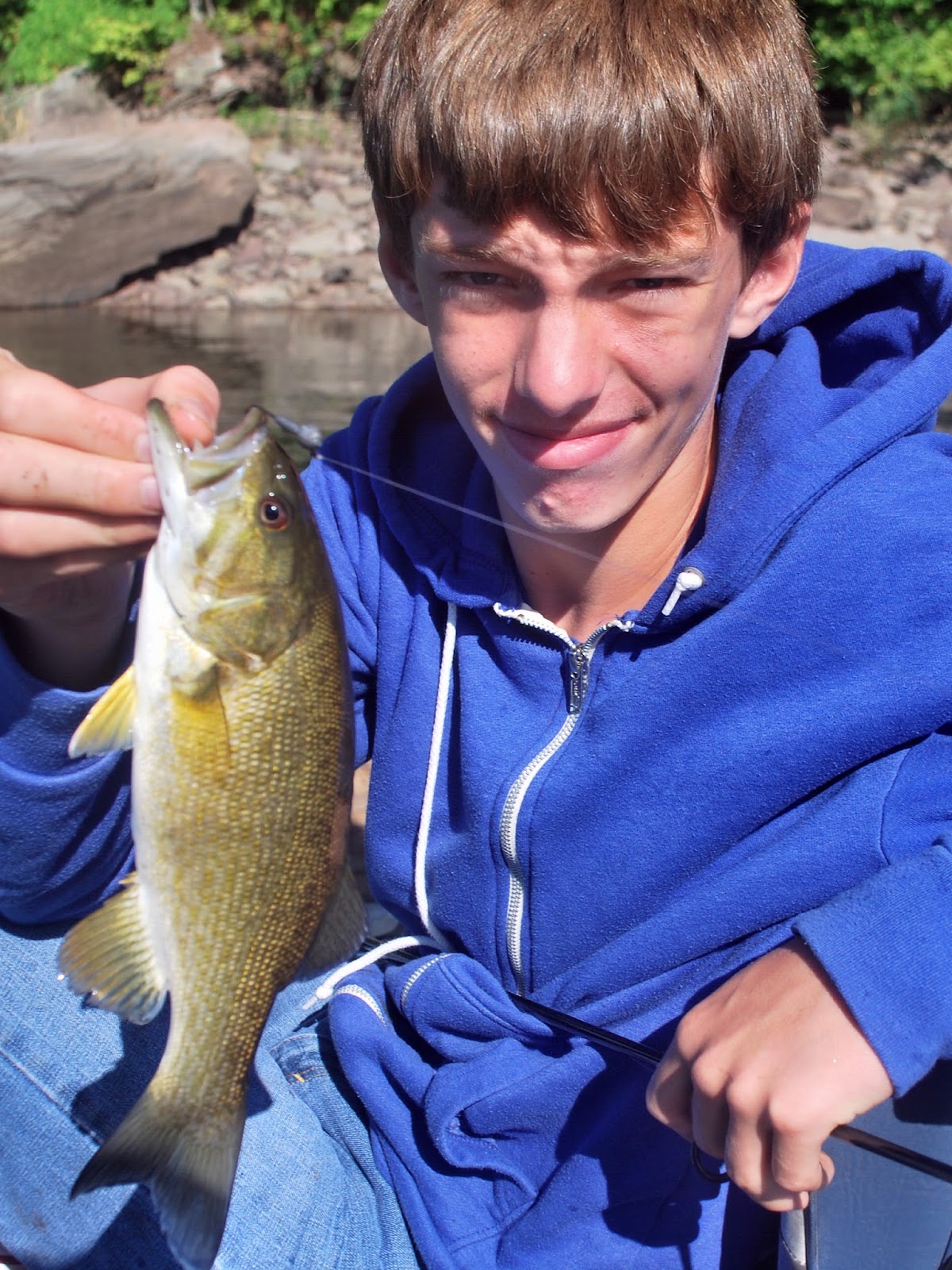
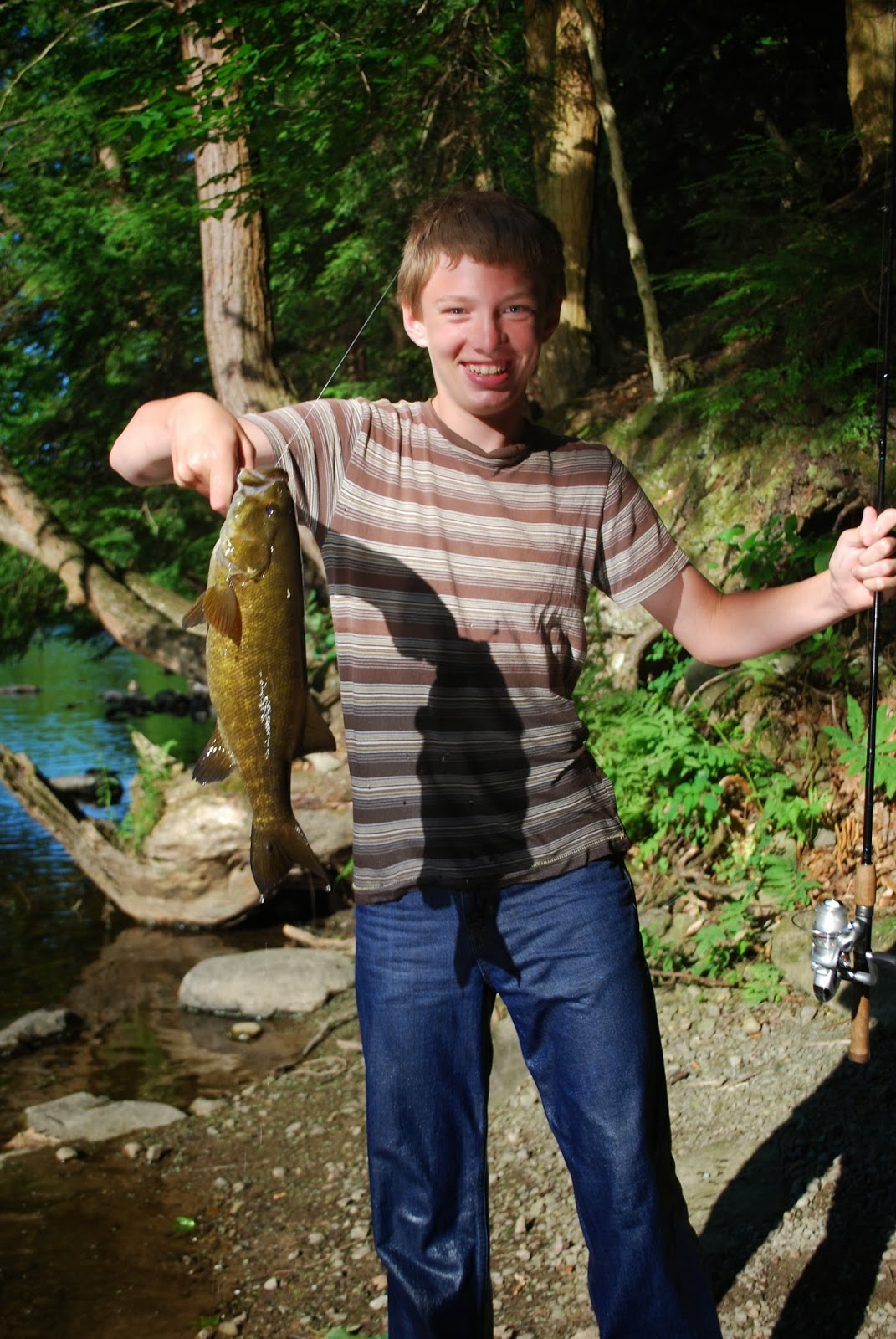
Catching Smallmouth Bass in Streams and Small Rivers


Catching Smallmouth Bass in Streams and Small Rivers


Less common than their larger cousin the largemouth, smallmouth bass are special not only because they fight harder than other freshwater fish, but because the rock strewn environments they inhabit have something of mountain purity about them. Clean, clear water has a quality of vitality and levity that turbid water lacks.


More than 35 years ago, aged 13, I discovered smallmouth bass in Stony Brook, Princeton Township, New Jersey. I caught a few seven-inchers on panfish poppers and a fly rod. The next year, I tried a three- inch Mister Twister grub set just right on a size 2, plain shank hook so that it rode straight on the retrieve. The results blew me away. I caught smallmouths in every stretch and riffle two feet deep or more. I had been surprised that seven-inch smallmouths existed anywhere near where I lived, but now I was suddenly catching good bass to 14 inches.


It took a year before my friends and I discovered really good smallmouths in Stony Brook, approaching three pounds. Then I learned that all such streams have good bass in them. Even little Beden’s Brook near the Mercer-Somerset border has 17-inch bass. Smallmouths over five pounds are very rare, but they are caught. Last summer, Raritan River South Branch yielded a 6.6-pound smallmouth which before 1990 would have been the New Jersey state record.


It's that time of year when stream smallmouth bass respond regularly. Most of the techniques I discuss are for late spring and summer--during the early fall I use floater/diver Rapalas and the like rather than plastics. And to catch stream smallmouth when really chilly weather sets in it's best to use live shiners. Some anglers catch a very few during the winter on nightcrawlers.


Hunt a Lunker


It’s so easy, once you get the hang of it, that keeping one of these special fish—smallmouth bass over two pounds—is a disgrace. It’s not easy because lunkers are abundant, but simply because virtually any hole of about 6 feet deep or more will hold at least one bass two to 3 ½ pounds, and possibly better.  


Since depth charted maps aren’t available of streams and small rivers, get out, wade, and use polarized lenses during the day while catching eager smaller bass nine to 13 inches or so. Often big bass can be seen, but not caught, in the middle of the day. They need to eat more than the smaller do, and take larger meals near sunrise, sunset, and at night. Smaller bass feed on morsels throughout the day. Trout nymphs using a fly rod are effective for them during summer.


Once the whereabouts of a big bass is known, it’s usually easy to catch. But nature may dash a plan. My son and I once sighted a large bass in the North Branch Raritan. Some days later we learned of a bass the same size we had estimated that had been caught in the Lamington upstream perhaps a quarter mile from the confluence. The bass we had seen apparently was not in the same hole where we left it; we tried for it to no avail.


The surest method is to use a large shiner, or other soft-rayed baitfish—large killies work wonders—on a plain shank, size 6 hook, no weight, just the hook tied to 4-pound test mono. The first cast is most important near sunset or sunrise. The lunker will have awakened from its aloof mood to an aggression that may move it to the bait before a smaller bass. Large bait gives you two advantages: you can cast from a longer distance so as to not spook fish, and the smaller bass may hesitate to strike while the lunker will rush without hesitation and blast the bait on the surface.


Use ultralight tackle, and especially if a downed tree or other cover is in the hole, the lunker has a fighting chance. You will know the satisfaction of having found a fish that has made it to the top of the ecological chain—besides you. And if released, it’s possible perhaps to visit the same fish next year.


Lures, Situations and Techniques


Plastics, such as Sencos three to five inches, other plastic worms, Mister Twisters and tube grubs rigged on a jig head or a plain hook; Berkeley Gulp! Imitations; minnow imitation plugs; topwater plugs; small crankbaits, standard and lipless; small spinnerbaits; in-line spinners; and fly tackle—poppers, streamers, nymphs, and crayfish imitations, may each be chosen depending on the situation and your taste. Each selection is limited to what they can do in a small stream compared to other lures.


Diving crankbaits are effective in deep, faster moving water. To rip a crankbait, or for that matter retrieve it slowly through a slow, deep stretch is a waste of time, but may work in deep, fast water. I’ve noticed over the years that stream smallmouths of any size, small or large, are more wary than on the Delaware, for example. During the summer I never use minnow imitation plugs, although during the fall I find them effective. An eighth-ounce spinnerbait, or in-line spinner also works in deep, fast water, but is too noisy in peaceful situations.


A skilled fly fisherman may out fish spinning tackle. For the latter, nothing beats plastics for all round effectiveness, but fly fishermen have a special advantage. Smallmouths feed on insects throughout the summer, and certainly on small molting crayfish, too.  Naturally, fly imitations work—so long as the angler is skilled with fly tackle, he will hook more bass. Sometimes even 3-inch Mister Twisters present a problem, especially with smaller bass, with whether the hook point is in the mouth of the bass or not.


During summer you can fish all day with a Senco, if simplicity is your desire, and catch perhaps as many bass as you would carrying a tackle tote. The advantage of five-inch Senco-type plastics is great casting range. You can get the lure way ahead of your presence. Nine-inch bass will hit this big, fruity lure with ferocity as will larger, possibly even a rare lunker. The best rod for heavier lures is a 5 ½-foot medium power, fast action.


Topwaters are best near sunset and sunrise. And if you find lugging a bucket of bait down a trail somewhere a cumbersome chore, lures like the Gudebrod blabbermouth, Heddon Baby Torpedo, Rebel Pop-R, and Arbogast Hula Popper are all certainly possibilities for an aroused lunker. Don’t be afraid to spoil tranquility by casting a big quarter ounce plug from a distance right onto the calm over a deep hole. But let it sit. Let it sit a full minute if you have to. Once a surface lure is on the water, the situation is dicey because the cadence you impart will make or break your luck. You may not get a second chance with the next cast.


Smallmouths are caught in rain stained water too. Spinners are especially effective.


http://littonsfishinglines.blogspot.com/2015/05/take-clue-from-river-bass-migrations.html  This link will take you to an article on river and stream smallmouth bass migrations.