Sunday, February 15, 2015

Super Ultra-Light Salmon Egg Spinning for Trout

With trout season approaching, I thought I would post an article on fishing salmon eggs.


Super Ultra-Light Rods for Salmon Egging Rainbow and Brook Trout


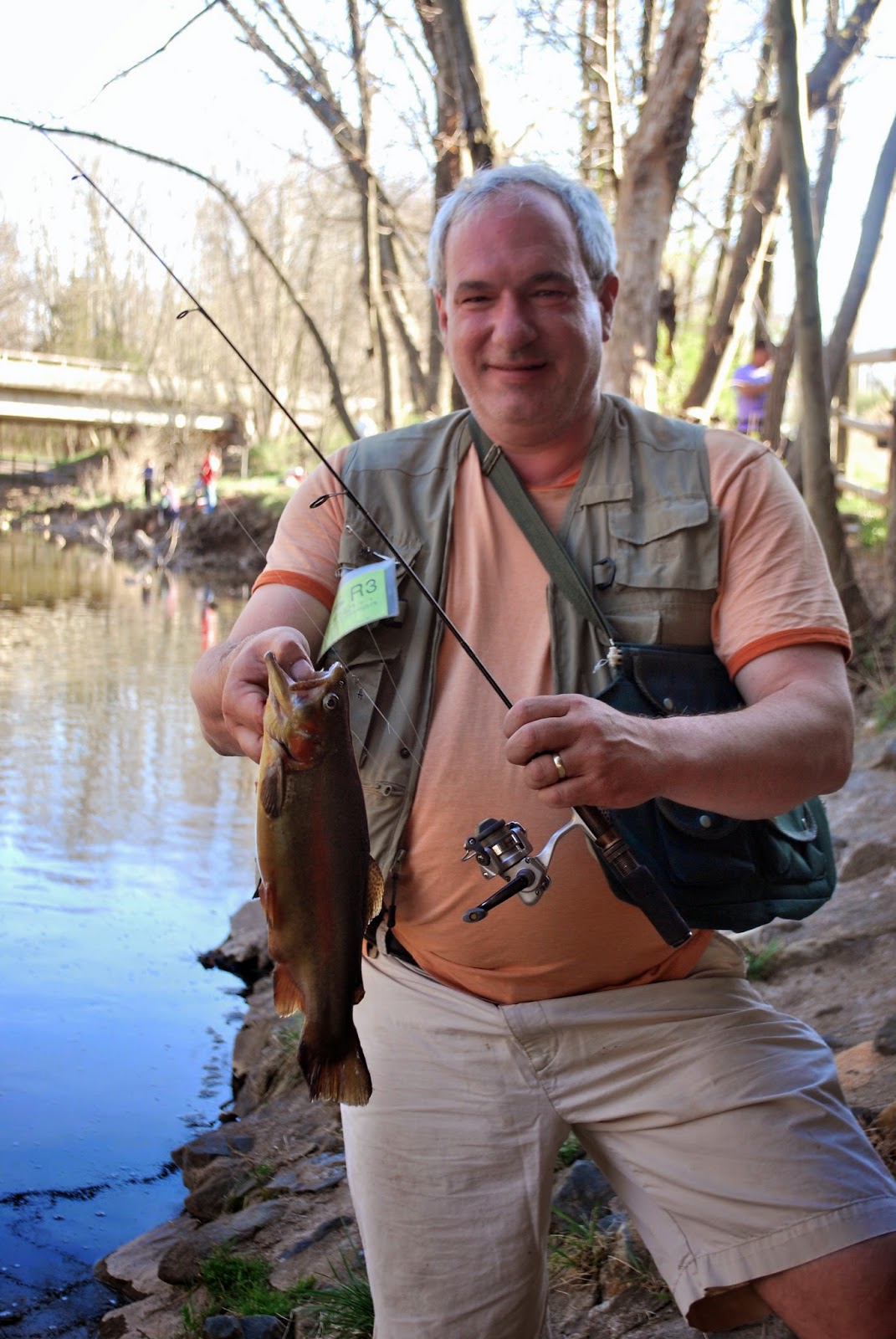
          Rod bending all the way to the butt, drag screeching, the line cut zig-zag patterns on North Branch Raritan River’s calm surface. I pumped all three-and-a-half feet working the trout up current, but once again the tiny spinning reel spool slipped. Three minutes later, I lifted a two-pound rainbow grasped behind gills out of cold water.

          I bought the rod I’ve used for the past 15 years at a sporting goods outlet, but more than 35 years ago, a fishing mentor and I built such rods from component parts strictly for use with two-pound test monofilament and salmon eggs. We sawed off the tip sections of flimsy fly rod blanks and created rods like no others, highly effective for this special purpose. Each spring we were lords of the streams we fished, mastering a method no one else quite knew about. We didn’t introduce three-and-a half foot rods, but we beat their appearance on the market by at least a decade or two.

          My brother, Rick, and nephew, Kyle, do well with ultralights just over four feet long, but I would never trade mine because it’s light enough to bend the tip clear back to touch the rod shaft. Every trout I’ve caught has put up a good fight. Low diameter two-pound test allows a single salmon egg on a size 14 snell hook to cast as many as 12 yards without any additional weight but the size 18 snap connecting a leader. Short rods make traversing the brush and brambles of a small stream easy, fine for small rivers, too. A trick for achieving longer casts without sacrificing weightless drift is to attach two leaders of different length to the snap and fish salmon eggs tandem.

          Salmon egg fishing is all about drift. You might think it’s more about setting the hook just right, since rainbow and brook trout are notorious egg stealers. (Browns are less inclined to strike eggs.) Nevertheless, if you can’t present a salmon egg in an appealing way, trout will ignore it. I’ve witnessed anglers using heavy split shots and still fishing an egg on bottom. A trout would not be tempted by the time the egg decomposed. The majority try to drift eggs on four-pound test, over-weighting the line with split shot so the rig gets caught on rocks, interrupting natural drift just off bottom.

          Situations exist—strong, deep currents—when BB or slightly heavier split shot is called for. Strip lead is a better option to break the habit of crimping a split shot hard. The pressure can compress and weaken line, and you would need all of its strength for a good-size trout. The usual weight we use is swivels.

          I don’t buy snaps for trout. I buy snap swivels and use clippers to cut the swivels off the snaps. I collect the swivel pieces, broken at one end, and put them on a few safety pins through the good loops. Attach pins to your vest and you have a handy way to access a swivel or two placed on the snap for just the right amount of weight needed.

          Figuring out that right amount of weight or lack of it is really a subtle aspect of reading water. Only practice can teach it.

          Trout occupy many different sorts of spots. Most fishermen never venture far from bridges or other access points close to where they park. But the best way to learn to read water is to see some. Don a pair of waders and start walking. Obviously, shallow rifts with a slate or two for a trout to hide under require no more than a couple of short casts to tease out a trout, if it’s there. Deep pools require longer stays. But don’t overlook the water in between. If you keep returning to a stream or section of it, you learn where trout lie in holes, become familiar with overhanging banks to count on, riffles that usually hold fish, etc. Home water is a personal possession that can improve fishing over the years.

          Overhanging banks on any stream sometimes situate deeper back underneath and out of sight. I’ve let eggs drift in visible water a foot deep right in among roots and caught several trout before action died. On closer inspection afterwards, it was evident that the depth increased to nearly three feet. The classic pool of five or six feet of water has faster current leading into it. Cast upstream at an angle and let the current bring the egg into deep water. When the line straightens out, retrieve and make another cast. Not all pools are like this. And sometimes the lead current isn’t best to drift. Long slow stretches often have deeper water interspersed that holds trout. Sometimes stretches have a long length of deep water, and you need to fish patiently and thoroughly, casting upstream and retrieving once the egg settles on bottom with slow current. On many occasions, trout bunch together in a pool or hole. If the water is clear enough, you may spot them. Otherwise, finding the zone is achieved by varying cast placement.

           Whether you hop by car from one bridge to another, or wade a section of a stream or small river, getting in the rhythm and flow of knowing how long to stay at a spot and knowing when to move on is something to learn from experience. But as a rule, when action slows significantly—move on. Otherwise, always make sure to fish thoroughly without getting stuck in place. It’s as if many anglers think fishing is all a waiting game, but fishing is just as said in common parlance. To fish around for something is to search.

          Drifting an egg the right way is rarely perfect. Current drags on line. Wind can wreak havoc. Eddies slacken line. But at least with thin diameter monofilament current and wind have less to bow, sag, and run away with. If you can find fluorocarbon two pound test, this line sinks and may be even more manageable without unduly weighting the egg’s drift.

          The chief consideration concerning line bowing, turning in eddies and lifting in wind is how these factors affect drift. Study what happens and try to cast so the egg is presented in as unhindered and natural a way as possible, just off bottom. Any lack of straightness between the line at the rod tip and a trout that has taken an egg makes setting the hook a problem. Pull the line straight and the trout may either slip the egg off the hook or drop it. It may be best to wait a second or two, even more, before snapping the rod back to set the hook. I like to wait until I feel a firm pull. Then I know the line is straight and the trout has the egg fully in its mouth. But not every trout takes an egg firmly. Many will steal an egg before you feel a tug.         

          Many years ago when I was in my teens, my fishing mentor taught me that when trout are fed up—full—they are reluctant to take eggs fully into their mouths. Getting a hook set in this sort of situation is not impossible, but it’s certain you’ll miss hits.

          Hook setting in general when it comes to trout and salmon eggs is trying. Even with years of experience, you will miss many. This is part of the game, testing patience and skill, skill never perfected, yet trout will usually bite another egg on the next or subsequent casts. Fishing dry flies, I find the hook up ratio is greater than with salmon eggs. Nevertheless, missing fish shouldn’t be a frustration or considered a flaw in the method. On the contrary, hooking trout should be a confirmation of the persistence required. It would be too easy if hooking trout this way was as simple as hooking bass, yet the flimsy tip of a super-ultralight is perfect for absorbing the hard tug of an active trout just before you lay back into it.

          The color of eggs can make a difference in how many hits you get. For clear water, I use pale beige eggs almost exclusively, but I’m not averse to trying a red egg if trout are reluctant. Muddy flows are obviously useless for salmon egg fishing, but off color water with a visibility of a foot or so can be challenged by using red, chartreuse, or fluorescent eggs.

         Place eggs on plain, size 14, baitholder snell hooks. Gold salmon hooks are unnecessary, although effective. Learn to snell your own leaders with two pound test fluorocarbon if you can find it, and vary the length of leaders if you plan on using tandem rigs. Monofilament will work fine, but fluorocarbon is less visible, so at least as a matter of form, when fishing very clear water it is preferable. The size 14 hooks are absolutely essential. The smallness fits an egg just right, and trout will ignore your offering if you use a large hook.

          Buy or make your own leader wallet out of thick plastic wrapping, using coat hanger wire to bind sleeves. Tape the sleeves together on the open ends with electrical tape. You also need an egg container with a quick opening lid to attach to your belt or vest. Losing eggs to casts, retrieves, and trout is a constant problem if you have to take a jar out of your vest and unscrew the lid each time. Missing hits is just part of the game, but making a mess of clothing due to spilled salmon egg oil shouldn’t have to be.

          Waders or hip boots are essential for cold water rainbow and brook trout, and take the following tip to mind. Especially when wading small streams, the chances of confronting briars or other neoprene or breathable wader damaging brambles are high. If you get a big rip or tear, there’s little you can do, but usually the penetration is just enough to spring a leak. So take a tube of UV activated wader repair fluid. Even on cloudy days, this stuff works within a minute. If it’s really cold, vermiculite toe and hand warmers are a must. If you want to carry a light pack on your back, streamside coffee from a thermos makes for a real nice break.   

          As a method for spinning gear, no other approach to trout has the subtlety of a single salmon egg on a super ultra-light rod and reel. Tiny jigs work sometimes for some anglers. They don’t likely work as well as salmon eggs. And besides, they take all the challenge of drift and line problems out of the game. They better ensure a hook up when a trout hits, so you don’t get all the play involved in judging when to set the hook. Again, this is not to say that salmon eggs are less effective. In my opinion, salmon eggs are the most effective bait for rainbow and brook trout. Brook trout especially may at times prefer a waxworm over an egg, but most of the time you may do best with salmon eggs once you master this method, and rainbows never seem to get temperamental over them.


Wednesday, February 11, 2015

Round Valley Lake Trout Dominate Catches


Here and Merrill Creek Reservoir remain active for open water fishing, although I've heard no word of anyone fishing or catching trout at the latter. Lake trout are all the news for weeks now, and this goes directly against the grain of what I assumed for a long time, that lakers are few and far between from shore, although apparently they wait until it really gets cold, and then they come in close, at least enough of them to dominate catches recently, not that I'm referring to a whole lot of fish. I had two trout on that got the shiners before I tried to set hooks. Lakers or not, they were surely trout, and while a hit is a lot better than nothing, losing the fish was disappointing.

Mike told me lakers over nine pounds are a rarity with the lack of forage in the reservoir. I've heard of some 10 to 14-pounders last year, though, and an eight-pounder from shore. Mike also told me about the shiners I heard got stocked last year, 800 pounds of them by the state. This just doesn't seem nearly enough to feed the trout populations, yet Mike pointed out the browns this year are fat compared to last year. The lakers are plump, too, compared to what I've seen before.

Mike slit this fish's belly and more than a dozen banded sunfish dropped out. I was amazed to see this species for perhaps the first time, tiny sunfish about an inch long, and they don't grow much larger. In addition, a killiefish, which made me wonder if the laker hadn't been feeding very shallow. None of the state-stocked shiners comprised the fish's recent diet.

 Sadie

They trolled along an ice shelf...

Monday, February 9, 2015

Ice Fishing Great Cove Lake Hopatcong

Maureen and Jeff's first time ice fishing, we had a number of options. State Park lots make the lake very accessible for pickerel fishing on the six foot deep flats. Possibly, we could access River Styx, though parking is dicey there. In any event, we had to visit Laurie's shop for bait first, and I had Great Cove in mind. After Oliver and I were all but skunked in mid-January--Oliver caught a tip-up perch--we got word of a lot of pickerel caught back in the Cove. My son and I once ice fished the mouth of Great Cove in depths as great as 35 feet, hoping for a musky, but since I never had fished back in the relative shallows, I decided to go this way rather than around the bend in front of the Jefferson House, where word had it some nice pickerel were caught recently. I've never ice fished in front of the House per se, but have a few times in that area. I like to try different places.

I found I was short a couple of tip-ups, but after we got, I guess, 13 in place, we settled down to coffee, sandwiches, crab dip and conversation. I've never experienced such fog while ice fishing, and some sleet, rain and snow spattered on a very light breeze. Very mild at 34 degrees or so, I thought the temperature was just right for initiates, although hard core ice fishing challenges have had my son and I active at 0. Tough morning for a nine year old, but the photos I have don't lie. He enjoyed it.

I watched the tip-ups now and then. All was quiet and still. I knew, like on many outings, things can seem unyielding quite as if nothing will happen, until something does. Hanging out was enough, and if we caught nothing, the day would have been fulfilling.

And yet, had that flag never risen--and a second flag after sunset as we packed up, perhaps a missed hit, Jeff wasn't certain if a breeze kicked it--Maureen and Jeff never would have got that taste of childlike innocence in so humble an event as a fish on, certainty no one can deny, no one who has experienced.


Thursday, February 5, 2015

First Lake Trout


Wind raced through in 30-40 mph gusts from the north making 24 degrees or so feel like who knows. Felt good to me, since I like the zest of my native response, but after submerging my right hand in the bucket of shiners, I stuffed it in my right pocket, drying it off while I cupped the shiner hooked through the dorsal in my left so it wouldn't freeze. Snow under boots gave way just enough to grip as I walked half a football length or so to where I could cast, the pocket frozen where the ranger boat is kept during warm weather. I made the round twice, each time jabbing a rod butt into the stiff snow to keep each upright, rather than hauling my bucket to the reservoir's edge.

Then I sat in my car, turned on the ignition, warmed, and wrote in a 4 x 6 notebook I stash between the seats. I checked on the rods a couple of times before Mike showed up, my having discovered I had left my SD card at home, camera useless, a crowd of three species of waterfowl present I desired to photograph--bufflehead ducks, gadwall ducks and common mergansers. They fed at the edge of ice, and I needed additions to my collection of photography, but what the hell, Fifteen years from now I may own a $7000.00 600mm lens. And then I'll really need to get out and use it.

Mike told me he gave up four or five days ago. Hasn't caught a trout since I saw him last week. I told him about the laker caught Friday. He said he's caught two on Power Bait over the years, news to me.

"I saw your rod bounce, is that the wind?"

"That's not wind," I said. I ran like the tumbling breeze, felt like a kid.

...I was into a good fish, Mike cheering me on. It took awhile, hoping it would be a laker, hoping it would weigh five pounds.

Good thing he wore rubber boots. I didn't want to soak my hikers. The snow right at the edge was thick, ice covered, making any maneuver a little difficult. Not a five-pounder, but good size.

Lots of praise for my fish and salutations to a good dinner tonight, I packed the trout and Mike drove off.

For the past 10 years, more than any other fish besides Spanish mackerel until 2010 when I finally caught Spanish after trying since I was 17, I've wanted to catch a laker, a desire shared with my son. We rented a boat on Wawayanda and really tried. Matt hooked something big 60 feet deep and lost it. We tried on Green Lake in Maine, marking lakers 63 feet down--lots of them--Matt jigging a Kastmaster as I backpaddled the canoe against wind to keep in place. None would hit.

I can't wait to go and try again.

Wednesday, February 4, 2015

Round Valley Reservoir Slow but Fishable


With lakers in mind, I bought shiners at Behr's, no word there of recent Round Valley catches, not surprising that not many have been fishing. My usual spot iced over, I looked further back into Ranger Cove and, as expected, saw open water I could fish. The situation much the same last year, the reservoir never really froze over until the very end of January. It's a cold winter. Is it as cold as last year's? In any case, I don't think quite as much snow has fallen.

I stuck the butts of two rods into snow coagulated by the recent rain mix and trudged back up to my car with two upright poles behind me. When I looked back from behind the driver's seat, I was surprised to see another angler setting up near my rods. Some 10 minutes later I went back down the bankside to check my lines, and we struck up conversation. He had caught a five-pound laker on Power Bait Friday, fishing the bait not far from shore, but at least 10 to 14 feet deep.

That's the only trout I've heard of since last I was out, and I don't expect to see any trollers out there for awhile. But I'll be back.


Friday, January 30, 2015

Furunculosis Outbreak in Retrospective


Here's an article published this past spring for my Recorder Newspapers column. The furunculosis outbreak of late 2013 will not affect trout stocked this year, although only rainbow trout will be stocked.

 
Furunculosis changes trout season plans

By Bruce Litton


          Many of us became informed last fall of the fish disease, furunculosis, likely transmitted from a heron or herons to trout at Pequest Hatchery. Caused by a wild bacterium, Aeromonus salmonicida, it’s assumed the birds picked it up somewhere else, since the hatchery is groundwater fed. The infection altered some of the fall stocking program, and we wondered what lay ahead.

          The changes for this spring are far reaching, but there will be trout for Opening Day, Saturday, April 5th, and weekly stockings through May 2nd. However, to protect native, wild, and holdover trout populations, no trout will be stocked in Trophy Trout Lakes (Merrill Creek Reservoir, Round Valley Reservoir), Holdover Trout Lakes, (Clinton Reservoir, Lake Aeroflex, Lake Wawayanda, Shepherd Lake, White Lake), and some of the Trout Production Streams and waters directly connected to them too numerous to list. Information is available online under NJ Fish & Wildlife postings, among other sites.

          Most of our Highlands streams will receive a lion’s share of pre-Opening Day stocking. Since rainbow trout are resistant to this disease, although they may carry it, don’t expect many brook and brown trout. Furnuculosis is not a threat to human health, although it’s understandable if the thought of the fish’s infection is not appetizing. Only fish unexposed to the disease will be stocked in any Trout Production stream associated with wild, and perhaps also native, trout. Exposed trout, testing negative for the disease, will be stocked in Trout Maintenance streams. Put and take waters will get fish treated by medicated feed, but don’t expect to catch deformed trout, although some may be carriers of the disease. CO2 is the quick and painless method of eradicating the many unfit trout. This is the first outbreak of furnuculosis in Pequest Hatchery’s history, although it has happened in Pennsylvania hatcheries.

          “They (Pequest) raise way over 600,000 trout every year, but they’re still stocking 570,000,” Brian Cowden, Trout Unlimited Musconetcong Coordinator, said. “It’s a conservative plan, and they will not stock fish that test positive.” While the disease is not likely to spread in the wild, the possibilities are unknown. The Pequest Hatchery’s care is important.

          Trout-rearing raceways will be disinfected, and in the future, the state plans to rear furnuculosis-resistant brook and brown trout. For the time being, remaining trout are being vaccinated. Over the course of the next few years, rainbows will mostly replace the other two familiar species until the resistant trout are established.

          It’s disheartening to know that our reliable trout stocks have taken such an onslaught from perhaps a few ospreys and herons. However, three years ago when I began this column, I noted that hatchery reared trout have been shown to have smaller brains than wild fish, and this raises a point about hatchery susceptibility. Wild trout thrive and survive by so many more environmental variables than a straight, concrete, crowded raceway. It may be supposed that positive growth, and ultimately health, depends upon multifaceted environmental opportunities for animals of any species—including humans—to make choices and respond, have impulses and address situations, if any animal other than human addresses anything. I consider that the way a trout overtakes a streamer fly displays impetus from within the fish, not a purely responsive swipe, but an address is a rational consideration.

          I’ve been unable to find anything online about an entire wild, or native, trout stream waylaid by furnuculosis, although Susquehanna River smallmouth bass have suffered an epidemic due to low water and heat stress. Again, Aeromonus salmonicida is a wild bacterium. “Aero” implies that the disease is commonly transmitted by birds. Wild trout, salmon, even minnows, chub, pike, carp, bass, etc. get it. As a boy, I saw it on minnows in Little Shabakunk Creek, Mercer County, never infecting all the fish. Nature is resistant; simplified man-made spaces vulnerable. It reminds me of Michael Crichton’s science fiction debut The Andromeda Strain.  

          In any event, if it weren’t for hatcheries, the Highlands would have no wild browns and rainbows, although these populations have been established for many generations now. Nowadays, the trend is to remove dams from rivers like the Raritan and Musconetcong, and if two of the three dams on the Paulinskill River are removed, the population of wild browns will increase, since dammed flows warm in summer, and without dams, rivers run more in accord with springs that cool and clean them.

          So this Opening Day, appreciate your surroundings a little more than usual, knowing that wildness, freedom, and health go together. Let some of your own neuronal dendrites spread out a little wider than they would with four walls around you.

http://littonsfishinglines.blogspot.com/2015/02/super-ultra-light-salmon-egg-spinning.html takes you to a comprehensive article on salmon egg fishing.

Wednesday, January 21, 2015

Latest from Round Valley Reservoir


Round Valley has been slow for us shorebound bottom fishermen. Mike hasn't caught any since his two nice-size browns hit shiners going on two weeks ago, and he fishes a lot. He has no word since then of any other being caught, besides four lakers between two guys trolling in all that rain Sunday, top fish about five-and-a-half pounds.

I fished shiners, and I was happy to be out with the usual fare of catching nothing. I guess that says a lot for a place that most find too desolate and forbidding to visit this time of year, waiting until May when colors of casual wear flourish in abundance like flowers. It should say a lot, because contrary to appearances the park is full of life year 'round, you just have to experience beyond the mental constructions that would tell you "nothing" is there.

And I hope to get out and fish Round Valley again soon. I caught the five-pound bass I wanted so much last May, and I've caught two rainbows over five-and-a-half, one of them barely under seven, but I've never caught a laker anywhere, though I've tried at three places total. Sticking to shiners, who knows. Mike caught a 21-inch laker just weeks ago. I have heard of lakers caught on Power Bait, Merrill Creek Reservoir, but among shore fishermen here at the Valley, lakers all seem to take shiners.
A few out for a stroll in the 30-degree weather.